

Why sharing pictures with a group is trickier than it looks
Most people learn how to share pictures with a group the hard way: a chat thread fills with fifty near-duplicate photos, someone asks to remove a shot they weren't ready to be seen in, and by the time everyone has looked, half the group has already formed an opinion from a single blurry preview. The technical part of sharing is easy. The part that actually determines whether the group feels good about the result is sequencing, consent, and restraint.
Framed this way, the question isn't only 'which app do I use' but 'what order of events produces a shared experience people are glad they took part in.' That reframing is useful because it applies whether the group is a family reunion, a work outing, or friends at a weekend trip, and it holds regardless of which specific tool ends up moving the files.
Start with consent, not with the send button
Before any picture leaves a phone, it helps to have a quick, low-friction agreement about who is comfortable being photographed and who is comfortable having those photos shared beyond the room. This matters most for identifiable faces in candid or unposed shots, since a photo that felt fine in the moment can feel different once it's visible to people who weren't there.
This doesn't need to be a formal process. A short verbal check before shooting starts, or a reminder at the point of sharing, is usually enough. The goal is to avoid the common failure mode where consent is assumed simply because a camera was visible.
- Ask before the session whether anyone wants to opt out of being shared, not just photographed
- Give people a chance to flag a specific photo they'd rather not have circulated
- Treat 'shared with the group' and 'shared publicly' as two different levels of consent
Decide on timing: live sharing versus a delayed reveal
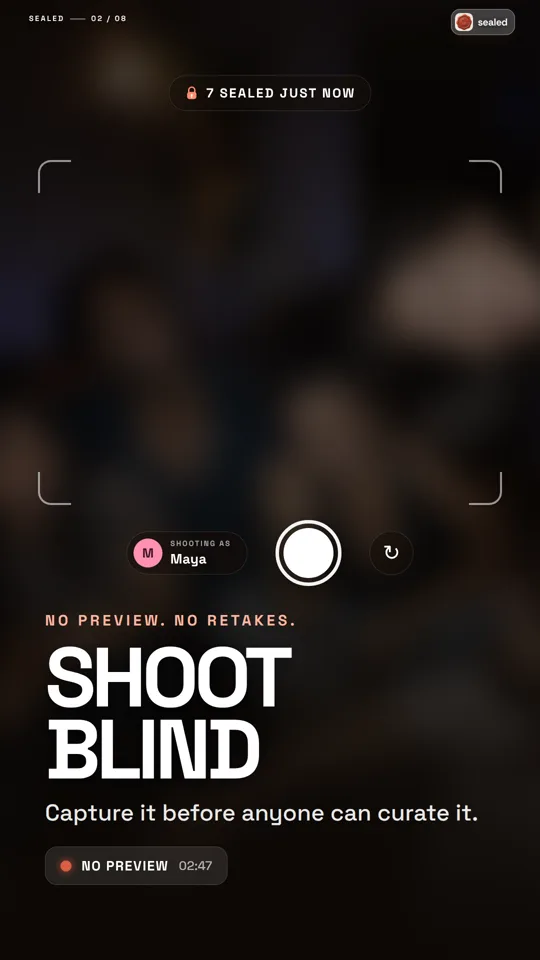
Live sharing, where each photo appears in a group chat as soon as it's taken, has one clear benefit: instant feedback. It also has a well-known downside, which is that people start editing their behavior around the preview instead of the moment. Once someone sees an unflattering shot mid-event, the rest of the shoot can turn self-conscious.
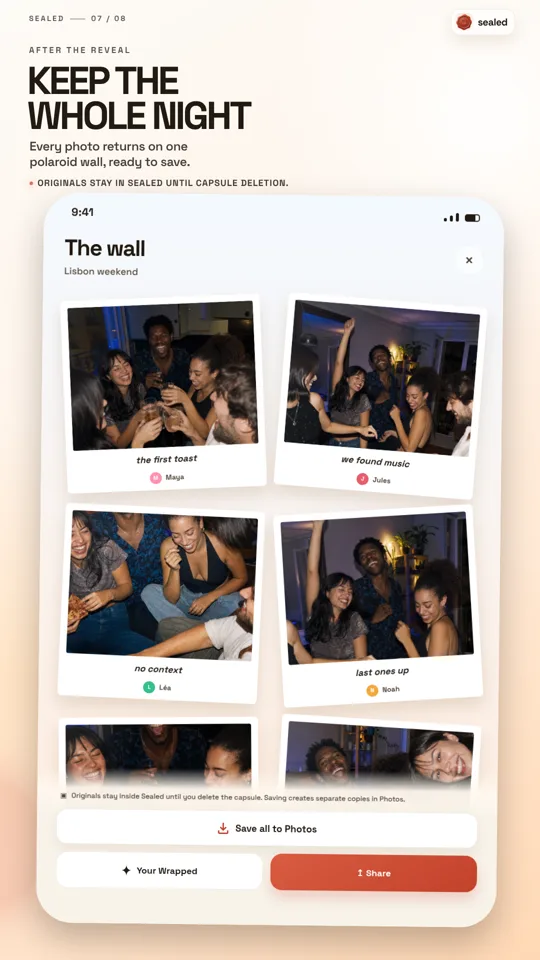
A delayed, shared reveal avoids that by holding everyone's photos until a set point, then opening them together. This is the idea behind Sealed, a group photo capsule built around exactly that mechanic: everyone shoots, nobody peeks, and the group opens the results together later. It's a narrow, specific answer to the timing question above, useful mainly when the group actively wants to avoid live-preview pressure rather than for every kind of photo-sharing situation.
Neither approach is objectively better. Live sharing suits fast-moving logistics, like coordinating who has the good shot of a group photo before everyone disperses. Delayed reveal suits situations where the shared moment of seeing the results together is part of the point, such as a trip or celebration.
Choosing where the photos actually live
Once consent and timing are settled, the mechanical question is where the images are stored and who can access them. Broadly there are two shapes: a shared album that syncs to a cloud service and stays reachable indefinitely, or a self-contained capsule that exists for the event and is opened once, then archived or deleted. Sealed's own comparison of these two models is worth reading if this decision matters to your group, since the tradeoffs (ongoing access versus a bounded, one-time reveal) are genuinely different and neither is a strict upgrade over the other.
A useful question to ask the group up front is whether anyone wants continued access to add or remove photos after the event, or whether a single finished set is preferable. Groups that want to keep contributing photos for weeks afterward are usually better served by an ongoing shared album; groups that want a clean, one-time moment are better served by a bounded capsule that closes after the reveal.
Whichever shape you pick, minimizing interruption during the actual event should guide the choice. If the sharing method requires people to stop and check their phones repeatedly, it works against the reason most groups are taking photos together in the first place.
A worked example: sharing photos from a weekend trip
Suppose six friends are on a two-day trip and want one shared set of photos afterward rather than six separate camera rolls. Here is one way to sequence it, offered as an illustrative example rather than a fixed rule.
Day one: agree verbally that everyone can shoot freely, and that photos will be pooled and reviewed together on the last evening rather than sent live to the group chat. Day two: continue shooting, with a quick reminder that anyone can flag a photo they don't want included when the group reviews together. Evening of day two: the group opens the pooled set together, discusses which photos to keep, and confirms nobody has an objection to the final set being shared more widely, for example on a personal account.
This sequence uses a delayed, shared reveal deliberately, because the group decided upfront that the moment of seeing everyone's photos together mattered more than instant previews during the trip. A different group, coordinating a same-day event where photos are needed quickly for logistics, might reasonably choose live sharing instead. The point of the example is the decision process, not the specific tool used to pool the images.
A short checklist before you share
Bringing the above together, a small checklist can keep the process reliable without turning it into a chore. None of these steps require special software; they're mostly about sequencing and communication.
- Confirm who is comfortable being photographed and who is comfortable being shared, before shooting starts
- Decide as a group whether you want live sharing or a delayed reveal, and say so out loud
- Pick a storage shape (ongoing shared album vs. one-time capsule) based on whether the group wants continued access or a single finished set
- Give people a real chance to flag a specific photo before it goes beyond the group
- Keep the sharing mechanism low-interruption so it doesn't compete with the event itself
Frequently asked questions
What's the simplest way to get everyone's photos into one place after an event?
Agree in advance on a single destination, whether that's a shared album or a pooled review, and set a time to review together rather than trickling photos in individually. Deciding this before the event starts avoids the scramble of collecting photos from multiple people after the fact.
How should a group handle someone who doesn't want a photo shared?
Take the objection at face value and remove the photo from the shared set without requiring justification. Giving people a clear, low-friction way to opt out before photos circulate widely is far easier than trying to retract something after it has already been seen.
Is a delayed group reveal better than sharing photos live?
Neither is universally better; it depends on what the group values. Live sharing suits situations needing quick coordination, while a delayed, shared reveal suits groups who want to avoid live-preview pressure and experience the photos together at a set moment, such as the approach used by tools like Sealed.
Sources and further reading
These resources provide the wider reference frame. Product statements on this page are limited to the public information provided by Sealed.