

What a program to share photos really needs to do for you
Searching for a program to share photos usually means you have a practical problem. Pictures from a trip, a party or a family weekend are scattered across several phones, and you want them in one place. Before you install anything, decide what sharing should achieve. Some people want quick access to every image. Others want a moment the group experiences together. Others just want a safe way to hand a few pictures to one relative.
Those goals pull in different directions. A tool built for instant access encourages constant checking and posting. A tool built around a ritual deliberately holds things back. Neither is better in general, but choosing the wrong one creates friction. Guests end up uploading duplicates, losing originals, or feeling uneasy about who can see what.
Four questions to answer before choosing a photo sharing program
Most decisions come down to visibility, timing, retention and consent. Visibility means who can see the photos: one person, a named group, or anyone with a link. Timing means whether photos appear the moment they are taken or at a set point later. Retention means how long the service keeps copies and whether you need to download your own. Consent means whether the people in the pictures agreed to be photographed and shared.
General-purpose services document these options in their help pages. Google's guide to sharing photos and videos in Google Photos is a useful reference for how a mainstream library tool handles shared albums and recipients. Features and menus change over time, so treat any help page as a description of the current version and check it again before you rely on a specific setting.
Write your answers down before comparing tools. If you cannot say who the audience is or how long the photos should stay online, no feature list will settle the question for you.
- Visibility: who exactly will be able to open the photos?
- Timing: should images appear instantly or at an agreed moment?
- Retention: how long will copies stay on a server, and who saves the originals?
- Consent: has everyone pictured agreed to be photographed and shared?
Live albums and delayed reveals are different rituals
A live shared album works like a group noticeboard. Anyone invited can add pictures as they go, and everyone can browse straight away. This suits practical tasks such as collecting event photos for an organiser or keeping a family archive current. The trade-off is interruption. People check the album during the event, compare shots and sometimes retake pictures until they look right.
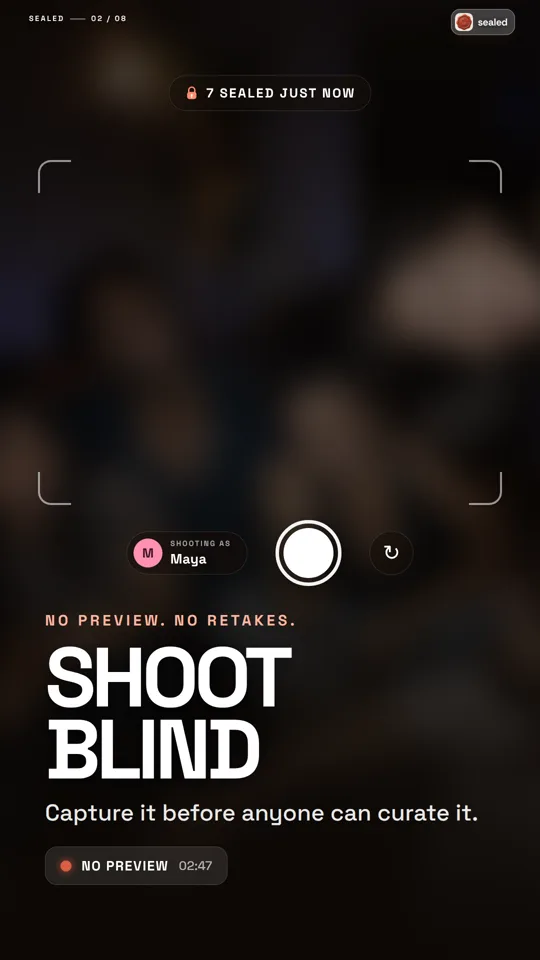
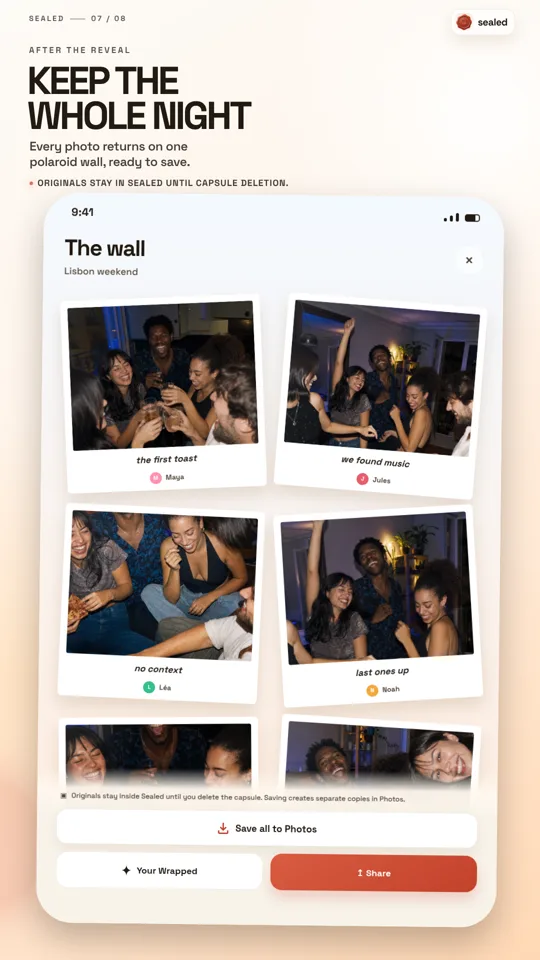
A delayed reveal works the other way. Photos are gathered without previews, and the group sees them only after a chosen moment. Sealed, the group photo capsule behind this guide, is built on that idea. Each shot drops into a capsule unseen, even by the organiser. The person who sets up the capsule decides when it opens, anywhere from roughly six hours to a week later, and then everyone watches the reveal together. The appeal is shared anticipation and fewer phones out during the moment itself.
Pick the ritual first and the tool second. If the group values immediate access, a delayed capsule will frustrate them. If the point is to stay present and enjoy a reveal afterwards, a live album quietly undermines that.
Consent comes before convenience
Any program that makes sharing easy also makes oversharing easy. Before photographing or distributing pictures of identifiable people, make sure they are comfortable with it. This matters most with children, with guests who do not know each other, and with settings where someone may not want to appear online at all. A quick verbal check at the start of an event prevents most awkward conversations later.
Tool design can support consent, but it cannot replace it. A private group is still a group, and members can save or forward what they see. Delaying the reveal does not cancel the need to ask, either. It only means people see the results later. Agree on simple norms in advance, such as not posting others' faces publicly without asking, and read the service's privacy and child-safety information before inviting minors.
Limits to plan for before you rely on any service
Every sharing program has boundaries, and the useful habit is finding them before they surprise you. Retention is the most common one. Some services keep shared copies indefinitely, while others remove them after a set period. In Sealed's case, server copies of shared capsule photos are deleted 30 days after the capsule opens, so each member should save the images they want. Photos taken in a local capsule never leave the phone they were taken on.
Device and account requirements are the next limit. Check whether every participant needs the app, whether an account is required, and whether the tool works on both iPhone and Android. Sealed is free on the App Store and Google Play, and participants need the app, though accounts are optional. Then check what a feature does not do. A shared capsule, for example, does not import existing camera-roll photos and does not detect screenshots, so it is not a way to control what members do after the reveal.
This guide follows the editorial approach described on Sealed's methodology page. It draws only on public sources and stated product facts, not on testing of other services. Confirm current details on each provider's own pages.
Worked example: choosing for a weekend away
Example (hypothetical): six friends are spending a weekend at a lakeside cabin. Two of them use Android phones and four use iPhones. One friend is wary of having photos posted online, and the group wants to spend less time looking at screens. They have two needs: a way to keep the memories, and a way to avoid the usual evening of scrolling through each other's camera rolls.
Working through the four questions, they find that visibility should be limited to the six of them. On timing, a reveal on Sunday evening would give the weekend a shared ending. On retention, they accept that each person will save favourites within a month. On consent, the cautious friend agrees to be photographed only if nothing goes on social media without asking first. That combination points towards a delayed, members-only capsule rather than a live album, plus an explicit no-posting rule.
If the group's needs had been different, for instance a running archive of a child's school year shared with grandparents, a live library album would fit better. The checklist below is meant to make that choice quickly.
- Name the audience in one sentence.
- Decide between instant access and a set reveal time.
- Confirm every participant's device is supported.
- Agree on consent and posting rules before the first photo.
- Note any deletion date and assign someone to remind the group to save copies.
- Read the provider's privacy page and, if children are involved, its child-safety information.
Frequently asked questions
What should I check first when choosing a program to share photos?
Start with who should see the photos and when. Decide whether images should appear instantly or at an agreed time, how long the service keeps copies, and whether everyone pictured has agreed to be shared. Those answers narrow the options more than any feature list.
Do shared photo services keep my pictures forever?
Not always. Retention rules vary by service and can change, so read the provider's current documentation. Some keep shared copies for a set period only. Sealed, for example, deletes server copies of shared capsule photos 30 days after a capsule opens, so members need to save the photos they want to keep.
Is a private shared album enough to protect people's privacy?
No. A private album limits who can open the photos, but any member can still save or pass them on. Ask for consent before photographing or sharing identifiable people, take extra care with children, and agree on posting rules with the group in advance.
Sources and further reading
These resources provide the wider reference frame. Product statements on this page are limited to the public information provided by Sealed.