


What camera rental for party plans really involve
Camera rental for party use usually means borrowing physical equipment for a short window, such as instant cameras, film cameras or a staffed or self-service photo booth, and handing it back afterwards. The appeal is easy to see. A dedicated device changes how people behave. Guests stop scrolling and start framing moments for the group, and the photos feel like a shared souvenir rather than a pile of private camera-roll files.
Before you act, it helps to separate the experience you want from the object you are hiring. Some hosts want tangible prints on the night. Some want a surprise later. Others mainly want guests off their phones for a few hours. Each goal points to different equipment, a different budget and different responsibilities, so start with the outcome and choose the hardware second.
Questions to settle before you rent a party camera
Rental terms differ between providers and change over time, so treat any agreement as something to read rather than assume. The practical risk sits in the details: who pays if a camera is dropped or goes missing, when the equipment must be returned, and what consumables are included. A cheap daily rate can become expensive once film, batteries, shipping or a late return are added.
It is also worth asking who handles the images. With film, someone has to develop and scan it, which adds time and possibly cost. With digital booths, ask how files are delivered, how long they are stored and who can access them. Those answers affect your guests as much as they affect you.
- Damage, loss and deposit terms, in writing
- Pickup and return times, including any delivery fees
- Consumables included: film packs, prints, batteries, memory cards
- How and when images are delivered, and how long copies are kept
- Whether anyone, including staff, can view photos before the guests
The limits that apply to rented cameras at a party
The first limit is supervision. A rented device belongs to someone else, so a host often ends up watching it all evening, which works against the relaxed atmosphere the camera was meant to create. Late in a party, drinks, dancing and crowded tables all raise the chance of damage. If you know you will not want to play caretaker, factor that in honestly.
The second limit is coverage. One or two cameras can only be in one or two places at a time, so the photos end up reflecting whoever held them most. The third is timing. Instant prints arrive immediately, which is lovely but removes any later surprise. Film arrives much later, which builds anticipation but can delay sharing for weeks and leaves some guests without copies.
Consent, interruption and a thoughtful reveal
Whatever you choose, the people in the photos matter more than the equipment. Agree in advance that anyone can step out of a shot, and ask before photographing or passing around images of guests who can be identified, especially anyone who did not expect cameras. A short line on the invitation explaining how photos will be taken and shared gives people the chance to raise concerns early.
Good party photography interrupts as little as possible. That argues for fewer devices passed around casually rather than a setup that pulls people into queues. If the photos will be revealed later, plan that moment with the same care: a small gathering or group chat where everyone sees the results together tends to feel more generous than one person scrolling alone and deciding what to forward.
Where a phone-based photo capsule fits instead
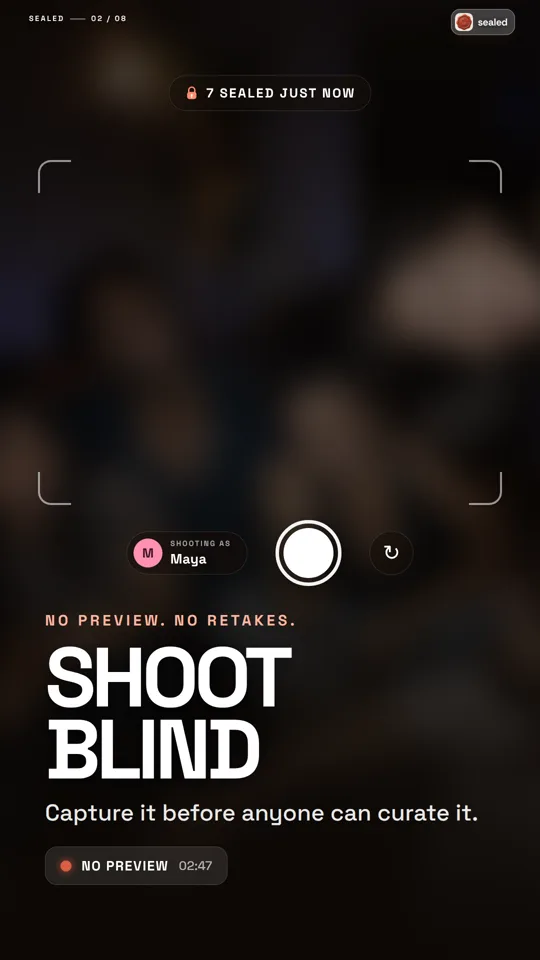
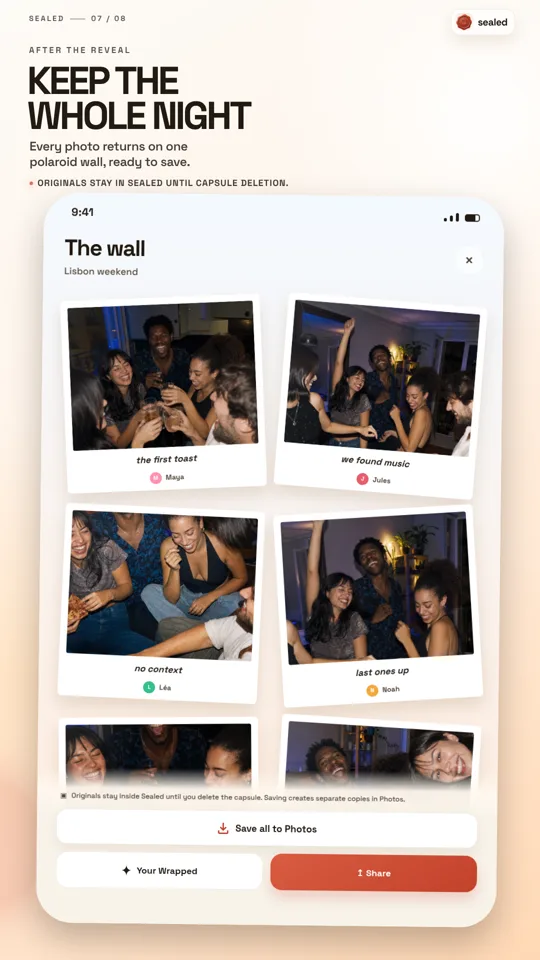
Some hosts look at camera rental for party photos mainly to recreate the no-preview, wait-for-it feeling of a disposable camera. Sealed, a group photo capsule app built around a delayed shared reveal, offers one way to get that without hiring equipment: guests shoot on their own phones, pictures go into the capsule with no chance to check, redo or filter them, and nobody, not even the organiser, sees anything until the opening time the creator picked, somewhere between roughly six hours and a week later. The app is free on iPhone and Android, and guests need it installed, though an account is optional.
Its boundaries are worth knowing. It produces no physical prints, it cannot add photos already on someone's phone, and shared capsule photos are removed from the server 30 days after the opening, so guests should save the shots they want to keep. If prints on the night or a staffed booth are central to your plan, a rental is the better fit. The same consent expectations apply either way. Sealed's guide to using a disposable camera app at parties and its methodology page explain the context behind this advice.
Worked example: choosing between rental and a capsule
Example (hypothetical): a host is planning a thirty-person birthday dinner followed by drinks. They want guests present rather than on social media, they would like a surprise the next day, and they do not want to monitor expensive kit. Running through the questions below, the next-day surprise and the no-supervision wish point away from instant cameras and toward a delayed shared reveal, either film developed later or a phone capsule set to open the following evening.
The same host, if instead they wanted guests leaving with a print in hand, would lean toward renting instant cameras despite the supervision cost, and would budget for extra film. Neither answer is universally right. The decision follows from what the night is for.
- Do guests need physical prints during the event? If yes, lean toward rental.
- Do you want a later surprise rather than instant results? Consider film or a delayed digital reveal.
- Are you willing to supervise and insure borrowed equipment? If not, reduce rented hardware.
- Have you told guests how photos will be taken, stored and shared?
- Who will save and distribute copies afterwards, and by when?
Frequently asked questions
What should I check before renting a camera for a party?
Read the rental agreement for damage, loss and deposit terms, confirm pickup and return times, and check which consumables such as film, prints or batteries are included. Also ask how images are delivered and stored, since that affects guests' privacy as well as your costs.
Is renting instant cameras or film cameras better for a party?
It depends on the goal. Instant cameras give prints on the spot but no later surprise. Film builds anticipation but needs developing, which delays sharing. Choose based on whether you value immediate keepsakes or a delayed group reveal, and on how much supervision you can offer.
How do I handle consent when cameras are passed around at a party?
Tell guests in advance how photos will be taken and shared, make it easy for anyone to opt out of shots, and ask before photographing or sharing images of identifiable people. Agree as a group on where the photos will go after the event.
Sources and further reading
These resources provide the wider reference frame. Product statements on this page are limited to the public information provided by Sealed.