

What is the best way to share photos with a group?
There is no single best way to share photos with a group, because the right answer depends on what the group actually values: instant convenience, image quality, storage limits, or the feeling of opening photos together rather than watching them trickle in one by one. Before picking a tool, it helps to separate the technical question (how do the files move from phones to a shared place) from the experiential question (what does it feel like for the group when photos arrive).
Most groups default to whatever is already installed. If everyone in the group uses iPhones, Shared Albums in Apple Photos is a natural option because it keeps photos within a familiar interface and lets participants add their own shots to a common album. If the group is mixed between iOS and Android, or already relies on Google's ecosystem, shared albums in Google Photos serve a similar purpose across more device types. Both are established, cloud-based ways to pool images after an event.
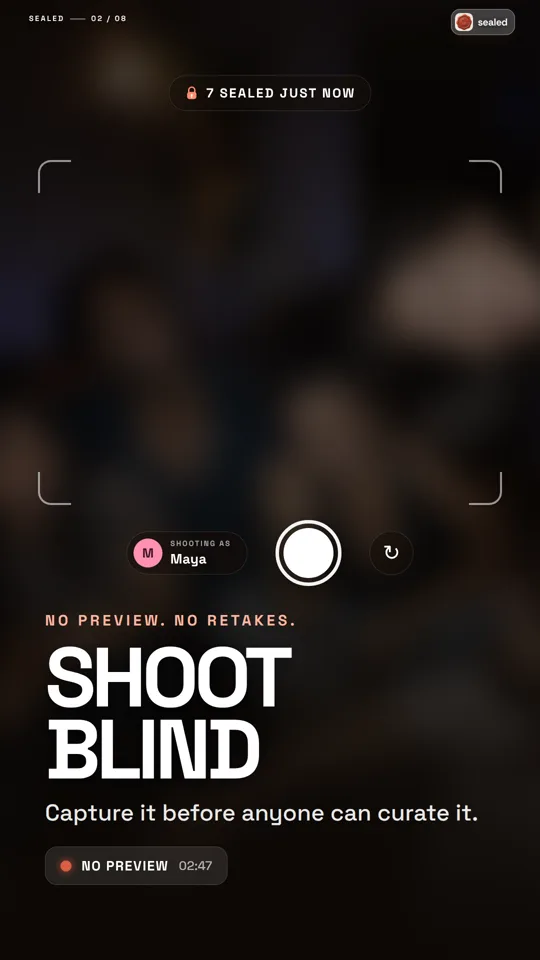
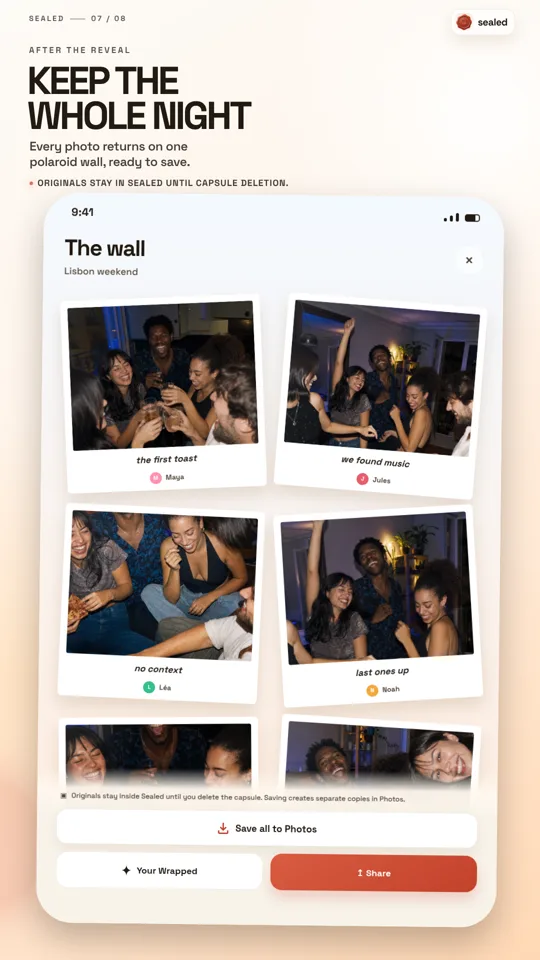
These mainstream options are built around continuous sharing: photos appear as soon as someone uploads them, and the group experiences the event as an unfolding stream rather than a single moment of discovery. That is genuinely useful for many purposes, but it is a different experience from a delayed, shared reveal, which is the idea Sealed is built around: everyone shoots, nobody peeks, and the group opens the results together at a later moment they choose.
Matching the sharing method to the group's priorities
A useful way to decide is to ask what the group is optimizing for. A work team documenting a conference likely wants speed and searchability, so a cloud album with instant sync makes sense. A group of friends on a weekend trip who want to relive the whole trip together, without anyone's phone showing spoilers along the way, is optimizing for something closer to anticipation and shared discovery.
Image quality and storage limits also matter in practice. Cloud services generally compress or cap free storage in ways that can affect long-term quality, and those limits change over time, so it is worth checking current terms directly with the provider rather than assuming a fixed allowance. Devices matter too: older phones, weak signal at a venue, or a mix of platforms can all affect how smoothly a shared album actually fills up during and after an event.
Timing is the least discussed but often most important factor. Continuous-upload tools are excellent when the group wants to see photos as they happen. A delayed reveal model, like the one Sealed uses, is suited to groups who specifically want to avoid the pressure of a live audience checking photos mid-event, and who see value in a single, shared moment of opening the results together afterward.
Worked example: choosing a method for a weekend group trip
Consider a hypothetical group of six friends spending a weekend away together, most on iPhones but one friend on Android. They want everyone to contribute photos, they do not want anyone anxiously checking how their photos looked mid-trip, and they want a moment at the end of the weekend where the group looks through everything together.
In this example, Apple's Shared Albums would work for the iPhone users but would need a workaround for the Android friend, since shared albums built on one platform are not always straightforward to open fully on another. Google Photos shared albums would solve the cross-platform problem, since links can generally be opened by anyone with an internet connection, but photos would still appear continuously throughout the weekend, which conflicts with the group's stated goal of avoiding mid-trip peeking.
A delayed-reveal approach, such as the model Sealed is built around, would more directly match this group's stated priorities: contributions from any device, no live preview during the weekend, and a single shared reveal afterward. This is a hypothetical illustration of how the goals map to the method, not a claim that any one tool was tested by the group or by Sealed.
A short decision checklist
Rather than trying every option, it can help to walk through a short set of questions before choosing a method. This is meant as a practical starting point, not an exhaustive technical comparison, and specific storage limits or platform behavior should always be checked against current provider documentation since these details change over time.
- Do all participants need to see photos immediately, or is a later shared moment acceptable or preferred?
- Does the group span both iOS and Android devices, and does the chosen method work reasonably well for everyone?
- Has each person photographed given consent to be included and shared, especially if some images will be visible to people outside the immediate group?
- Is long-term storage and quality important, or is this a short-term, one-off gathering?
- Would the group value a single reveal moment, or would a rolling stream of updates suit the occasion better?
Consent and minimal interruption during the event itself
Whichever method a group chooses, the process of gathering photos should not become disruptive. Constantly checking a shared album to see who has posted what can pull people out of the moment they are supposed to be enjoying together. A calmer approach, whether using a mainstream shared album or a delayed-reveal capsule, is to agree in advance on when photos will be checked or opened, rather than treating the event itself as a live broadcast.
Consent is a separate but equally important consideration. Photographing and sharing identifiable people, particularly in group settings where not everyone may want their image shared widely, works best when there is a clear, low-friction way for participants to agree to be included beforehand. This matters regardless of which sharing tool a group uses, and it is worth raising explicitly rather than assuming it is understood.
Sealed's editorial position treats these two ideas, minimal interruption and participant consent, as core to what makes a group photo-sharing ritual feel good rather than intrusive. That is a stated design philosophy behind the product rather than a claim about how any other specific app or service behaves.
What this means if you're deciding today
For groups that simply want the fastest, most familiar route to pooling photos, and are comfortable with a continuous stream of uploads, Apple's Shared Albums or Google Photos shared albums remain reasonable, well-documented starting points, and both are described in detail in their respective official support pages.
For groups who specifically want to protect the moment from live peeking and build toward a single shared reveal, a delayed-capsule model like Sealed's is designed around that particular need. Because store listings, language availability and specific features can change, it is worth checking Sealed's current public site and local store listing directly rather than relying on this article for up-to-date specifics.
In either case, the best way to share photos with a group is less about picking a single superior app and more about matching the sharing method to how the group actually wants to experience the photos together, and making sure consent and interruption are addressed regardless of which tool is chosen.
Frequently asked questions
Is Google Photos or Apple Shared Albums better for a mixed group of iPhone and Android users?
Google Photos shared albums are generally easier for mixed-device groups to access since links can typically be opened from any device with an internet connection, while Apple's Shared Albums are built primarily around the Apple ecosystem. Current access details can change, so it is worth checking each provider's official support documentation before relying on either for a specific event.
How is a delayed photo reveal different from a normal shared album?
A normal shared album, like those in Apple Photos or Google Photos, typically shows photos as soon as they are uploaded, creating a continuous stream. A delayed reveal model, such as the one Sealed is built around, holds photos back until a chosen moment so the group experiences them together rather than watching them appear one by one.
What should a group agree on before sharing photos that include other people?
Groups should ideally agree in advance on whether participants consent to being photographed and to having those photos shared, particularly with anyone outside the immediate group. This is a general good practice for group photography and applies regardless of which sharing app or service is used.
Sources and further reading
These resources provide the wider reference frame. Product statements on this page are limited to the public information provided by Sealed.