
What people look for in the Joy wedding photo app
Joy is a wedding planning website and app published by Joy Life, Inc. at withjoy.com. Someone searching for the Joy wedding photo app usually wants a way to collect candid photos from wedding guests without texting files back and forth for weeks afterward. The underlying need is simple: guests take pictures on their own phones throughout the day, and the couple wants those images gathered in one place without asking every attendee to remember to send them later.
This article does not describe Joy’s current photo features, prices or limits. Those can change, so check them on Joy’s own site and store listing. What follows are the questions worth asking of Joy or of any other wedding photo tool. Couples usually want photos that feel spontaneous and warm, not staged. That depends partly on how a tool frames the moment: a live feed everyone is watching, or something that unfolds later, away from the pressure of instant judgment.
Consent and photography at weddings: the part that is easy to overlook
Before comparing tools, it is worth pausing on something more fundamental than app features: consent. Any time a group of people photographs each other, especially at an event with alcohol, dancing and unguarded moments, people should be able to agree to being photographed or to having images of them shared, particularly when they are identifiable. This is not legal advice. It is a practical courtesy that couples planning a wedding photo collection can build into how they brief their guests.
In practice, this can be as simple as a verbal note at the start of the reception (feel free to take photos, and please check with anyone before posting their picture elsewhere) or a short line on the welcome screen of the wedding website or app. The point is not to create friction. It is to make sure the moments the couple hopes to capture do not come at the cost of someone else’s comfort.
Where a delayed-reveal format changes the dynamic
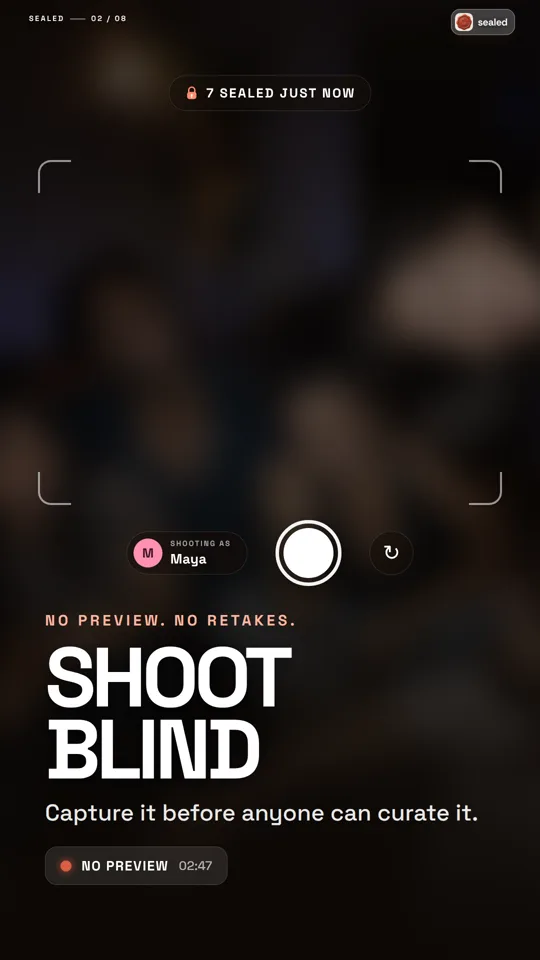
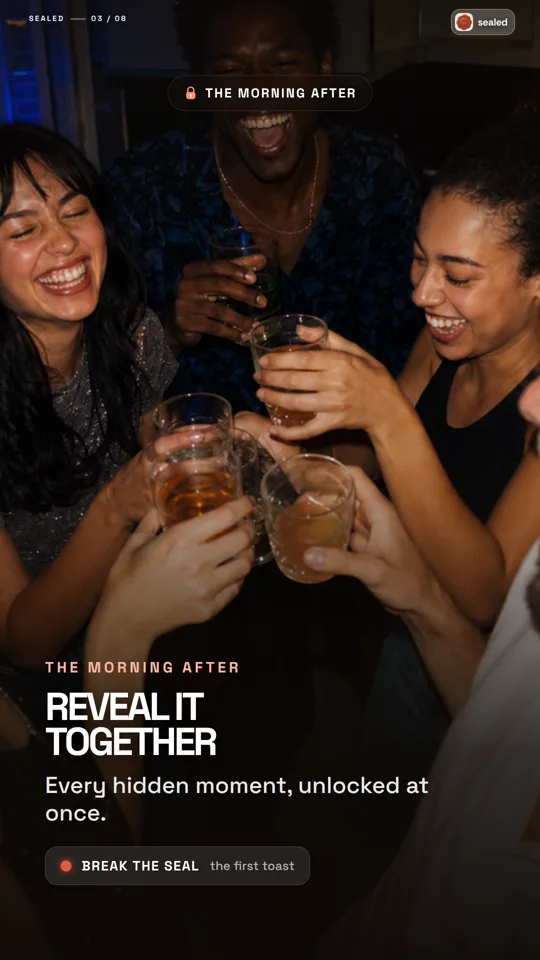
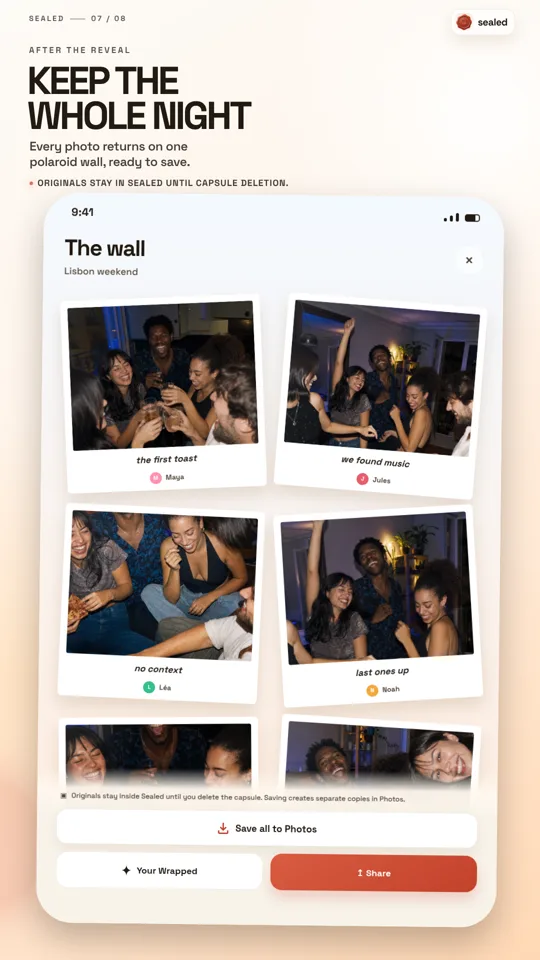
Sealed is one example of a tool built around a specific idea for group events: everyone in the group takes photos, nobody sees them as they are taken, and the whole group opens the resulting capsule together at a set moment. Applied to a wedding, guests could shoot throughout the ceremony and reception, and the couple, or the whole guest list, would reveal the collected photos together later: the next morning, or during a follow-up gathering.
The reasoning behind this format is that removing live-preview pressure changes how people behave with a camera. When guests know their shots will not be scrutinised in real time, they may photograph more naturally rather than performing for an immediate audience. This is a design rationale, not a tested outcome. No study or guest survey is cited here, only the stated intent behind a delayed reveal as one option among photo-collection formats.
The trade-off is real. A delayed reveal gives up the instant gratification of seeing photos appear during the event. For couples who want a live slideshow at the reception, that is a mismatch. The right choice depends on whether the couple values in-the-moment sharing or a more considered experience unveiled together the next day.
A worked example: choosing between live and delayed formats
Consider a hypothetical couple, Priya and Sam, planning a 120-guest wedding. They are deciding between a live photo-sharing app that displays uploads on a screen during the reception and a delayed-reveal capsule that guests fill throughout the day but that nobody opens until brunch the next morning.
This is an illustrative example, not a case study of actual usage. If Priya and Sam prioritise entertainment during the event itself, with guests seeing their photos appear on a big screen and reacting live, a real-time app serves that goal better. If they care more about guests feeling free to be unguarded with the camera, and about a second, quieter shared moment the next day, a delayed format like Sealed’s fits that goal better.
A practical way to decide: ask which moment matters more to the couple, the shared spectacle of the reception night or a calmer post-wedding reveal that extends the celebration. Neither is objectively better. They serve different goals.
A simple decision checklist
Rather than comparing every feature of Joy or any other app, which changes over time and is not stated here as fixed fact, it helps to ask a short set of questions before choosing a wedding photo tool.
- Do guests need to see photos live, or is a shared reveal later acceptable or even preferable?
- Has the couple told guests what to expect about photographing and sharing other people?
- Is uploading or capturing effortless enough that guests will not need reminders?
- Is there a plan for the photos after the wedding: who can download them, and for how long?
- Does the couple want a single big reveal, or ongoing access to photos as they arrive?
Checking claims before you commit
Joy’s current interface, photo features, pricing and store availability can change, as can those of any app. Check Joy’s own site at withjoy.com and its store listing before assuming it works exactly as described in any guide, including this one. An editorial description does not guarantee that a local store version matches it.
For couples interested in the delayed-reveal approach, Sealed publishes its privacy, terms and child-safety information on its public site. That is a reasonable place to verify how Sealed handles guest data and images of minors before using it for a wedding with children present.
Frequently asked questions
What should a wedding photo app such as Joy help with?
Collecting candid guest photos in one place, so guests do not have to text or email files afterward. Some tools show photos live, others delay the reveal so guests shoot more freely. Check on Joy’s own site which of these it currently offers.
Do I need guest consent to collect and share wedding photos?
It is good practice to tell guests that photos may be taken and shared, and to encourage checking with anyone identifiable before posting their photo elsewhere. Requirements vary by context, but it is a reasonable courtesy for any group photo collection.
Is a delayed photo reveal better than a live photo feed at a wedding?
Neither is universally better. A live feed creates in-the-moment entertainment, while a delayed reveal, the format Sealed is built around, aims to reduce self-consciousness while shooting and to create a second shared moment afterward. The choice depends on which experience matters more to the couple.
Sources and further reading
These resources provide the wider reference frame. Product statements on this page are limited to the public information provided by Sealed.