

Photos to take at a wedding when you are a guest
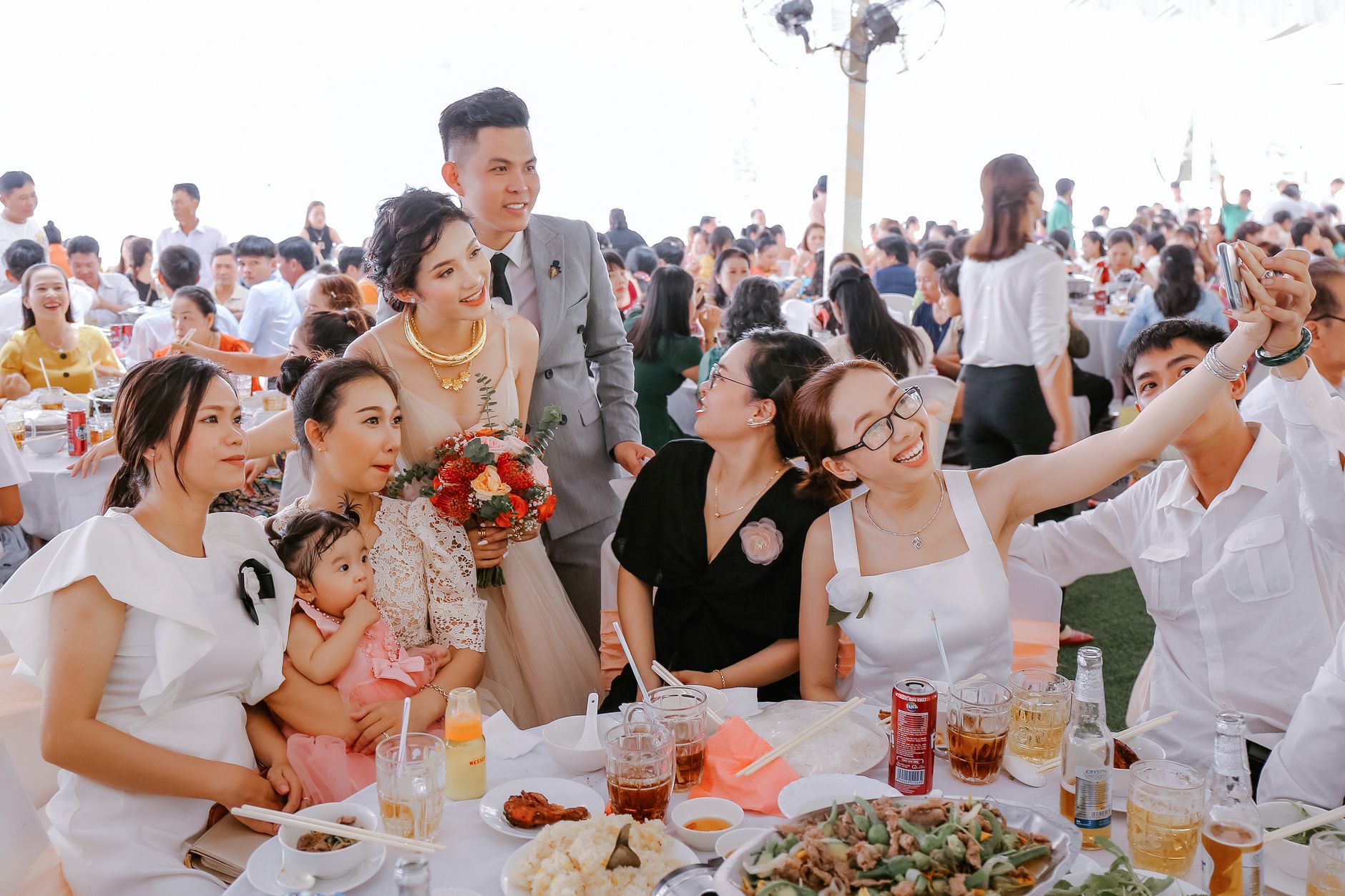
Most advice about photos to take at a wedding is written for the hired photographer. A guest has a different job. You are not responsible for the official record, and nobody expects you to cover the vows from the aisle. Your photos are most useful when they show what the day looked like from your seat: the people you came with, the small moments around you, and the details that only someone at your table would notice.
Before you plan any shots, find out what the couple has asked for. Some couples request an unplugged ceremony. Others set up a shared album or a group capsule. A few would rather guests not post anything until they have shared their own pictures. Those wishes outrank any shot list, including this one.
Moments worth capturing from the guest side
A professional photographer cannot be everywhere at once. While they are working through family portraits or following the couple, plenty is happening elsewhere. That is where guest photos add something the official gallery may not have.
Aim for moments that are informal and close to you rather than staged:
- Your table before the meal, with everyone in frame and looking relaxed
- Friends or relatives who rarely end up in the same place, photographed together
- Small details near you: place cards, a handwritten note, the view from your seat
- Reactions during toasts, taken quietly from where you are already sitting
- The dance floor once it fills up, when the mood is loose and nobody is posing
- The end of the night: shoes off, a last group shot, the walk out
Where to put the phone away
Some moments are better left to the professional and to your own memory. During the processional, the vows and the first kiss, phones held up in the aisle can block the photographer's frame and the view of guests behind you. Unless the couple has said otherwise, stay seated, keep the flash off and be present.
The same applies when a photographer is clearly setting up a shot. Stepping in front of them, or crowding into a formal portrait to grab your own angle, costs the couple pictures they paid for. Minimal interruption is the simplest rule: if your photo competes with the official one, skip it.
A quick decision aid before you raise your phone:
- Has the couple asked guests not to photograph this moment?
- Am I blocking the photographer or another guest's view?
- Would I be comfortable if this person saw the photo and knew I took it?
- If any answer gives you pause, lower the phone.
Consent comes before the shot list
Weddings bring together people who did not choose to be photographed by every guest. Some are private about their image, some have safety reasons for staying off social media, and children are present at many receptions. Before you photograph or share anyone who can be clearly identified, it is worth having their agreement, and for children, the agreement of a parent or guardian.
In practice this is rarely awkward. A quick "mind if I get one of you two?" covers most situations. Posting is a separate decision from taking the picture. A photo that is fine in a private group album may not be fine on a public profile, so ask again before publishing, and respect any request to delete.
Example: one guest's shot list for a full day
Example only, a hypothetical plan: a guest attending a ceremony followed by an evening reception decides on six target shots. Arrival with their partner outside the venue. Nothing during the ceremony itself. One wide shot of the room before dinner. Their table, with permission. Two or three frames from the dance floor. A final group photo at the end. That comes to about six or seven pictures, which leaves most of the day for actually attending it.
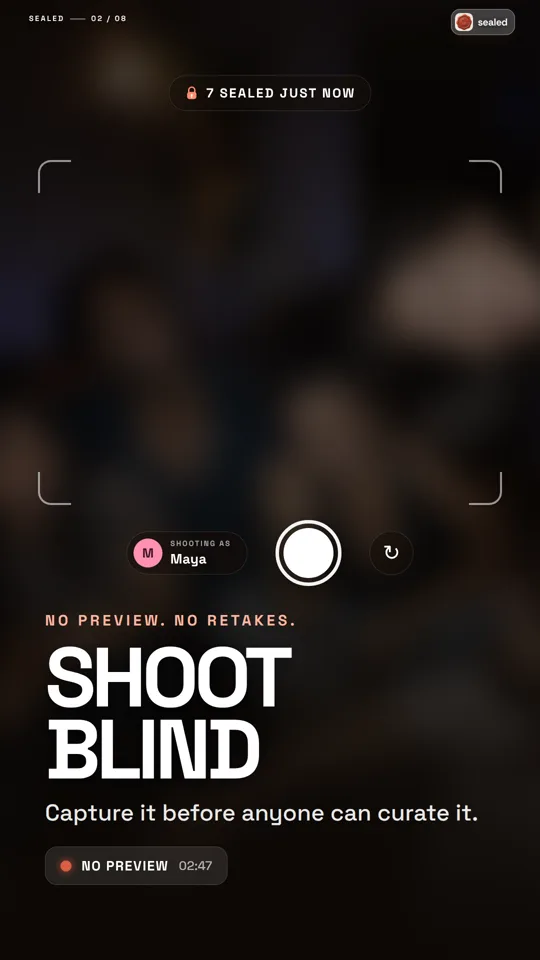
Shared anticipation can make this kind of restraint feel natural. Sealed, a group photo capsule app for iPhone and Android, is built around that idea: shots go into a shared capsule with no preview or retake, and nobody, including the person who set it up, can look until the chosen opening time, between about six hours and a week later. Its limits matter at a wedding. Sealed's wedding guest guide describes a shared capsule as suited to a group of up to 30 guests, so it fits a table or circle of friends rather than a whole large wedding. Every participant needs the app, though accounts are optional; existing camera-roll photos cannot be imported; there is no live gallery before the opening; and the host cannot moderate photos remotely. This article's advice is bounded by Sealed's public guide and methodology page, not by any study or testing.
Sharing and keeping the photos afterwards
A thoughtful reveal can be part of the celebration. Rather than flooding a group chat during dinner, some couples prefer guests to wait and look through everything together after the day is over. That keeps attention on the event and turns the photos into something to look forward to.
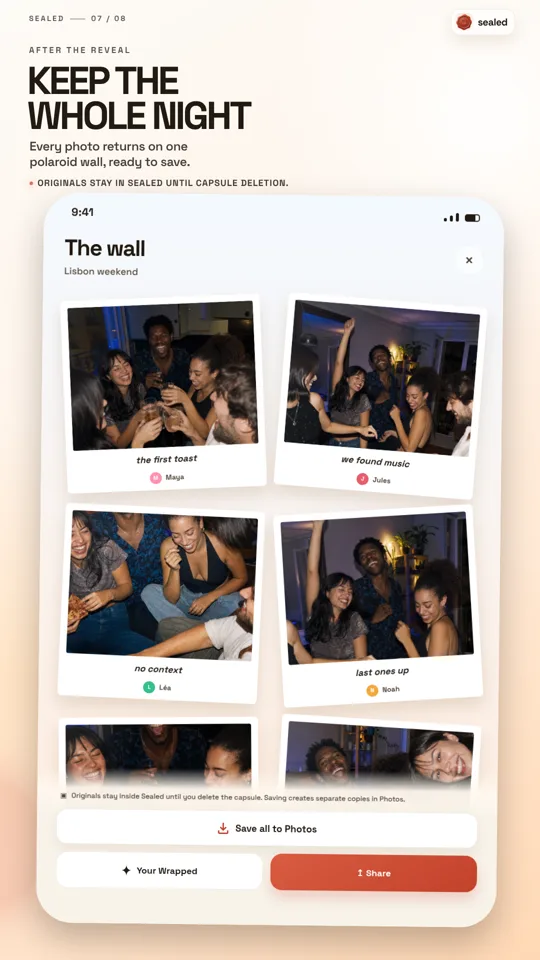
Check how long any shared album keeps your files. With Sealed's shared capsules, for example, the server copies are removed 30 days after the capsule opens, so guests should download the pictures they want to keep. Other services set their own rules, which can change, so read the current terms before relying on any of them as long-term storage.
Frequently asked questions
What photos should a wedding guest take?
Wedding guests are most useful when they photograph what the hired photographer may miss: their own table, friends and relatives together, small details nearby, toast reactions taken from their seat, and the dance floor later in the evening. Always follow any request from the couple first, including an unplugged ceremony.
Is it rude to take photos during a wedding ceremony?
It can be. Phones raised in the aisle often block the professional photographer and other guests during the processional, vows and first kiss. Unless the couple has invited guests to photograph the ceremony, it is considerate to stay seated, keep the flash off and leave those moments to the hired photographer.
Do I need permission to post photos of other wedding guests?
It is good practice to get agreement before photographing or sharing anyone who can be clearly identified, and a parent's or guardian's agreement for children. Taking a photo and posting it publicly are separate decisions, so check again before publishing and remove a photo if someone asks. This is etiquette guidance, not legal advice.
Sources and further reading
These resources provide the wider reference frame. Product statements on this page are limited to the public information provided by Sealed.