
What a disposable camera app on phone is really for
Searching for a disposable camera app on phone usually means one of two things: you want the look of film, or you want the habit of film. A single-use camera never let you check a frame, delete it or try again, and that restriction shaped how people behaved at parties and on trips. Apps in this category try to bring that behaviour back to a device that normally invites endless retakes.
Before choosing one, separate aesthetics from mechanics. Some apps mainly add grain, light leaks or a date stamp to ordinary photos. Others change what you can actually do: whether you see the shot, when photos appear and who contributes. Features and pricing in this space change often, so check the current store listing rather than relying on a roundup.
Sealed, the app behind this site, sits on the mechanics side: it is a group photo capsule where everyone's shots stay hidden until a reveal the group shares. The advice below is bounded by that context, so it focuses on behaviour, consent and storage rather than filters.
The constraints are the point, so decide whether you want them
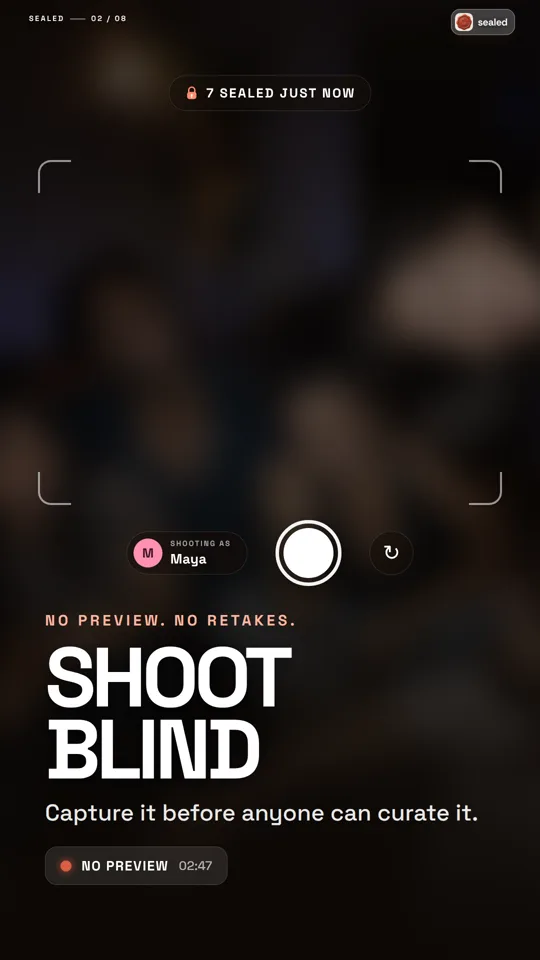
The core trade-off is giving up control in the moment. Without a preview you cannot fix a closed eye or a crooked horizon, and without retakes the weak frames stay in the set. Some groups choose that on purpose, hoping to spend less time curating and more time with each other. Nothing guarantees that outcome, though, and when one perfect shot matters, the same limits become frustration.
In Sealed, a photo lands in the capsule the instant it is taken. There is no review screen, no second attempt, no filter step and no way to pull in pictures already in your gallery. The organiser is bound by the same rule and cannot sneak a look before the opening.
- Good fit: casual gatherings, trips and birthdays where spontaneity matters more than polish
- Poor fit: formal portraits, documents, anything that must be right first time
- Mixed: weddings and milestones, where a hidden roll can run alongside an official photographer
Local or shared: know where the photos live
Storage is the biggest practical question. Sealed's guide comparing a local photo capsule with a cloud shared album sets out the general trade-off: keeping everything on one device limits who can shoot, while combining several people's photos requires an upload step so contributions can meet in one place.
A local capsule stays on a single phone: its photos are not uploaded or synced, which suits passing one device around a table. After the reveal they can be exported or saved, and the guide suggests moving accepted files into a backed-up library. Local mode offers no cross-device sync, remote recovery or screenshot alerts, so check storage, battery and camera permission on the creator phone, and agree who keeps custody of it.
A shared capsule lets people join from their own phones via an invitation or a code; each person needs the app, though an account is optional. Photos are uploaded for members and become visible only once the deadline passes and the capsule opens. Shared mode needs connectivity, and its storage is temporary rather than a permanent backup. It also does not imply screenshot detection or let anyone add older camera-roll images.
Consent before the shutter and after the reveal
Delayed reveal changes consent in a subtle way. With a normal camera, someone can see a photo and ask for it to be deleted on the spot. With a hidden roll, nobody, including the subject, sees the frame until the group views it together, so asking up front matters more. Announce the roll, explain who will see the result and when, and let anyone who prefers not to appear say so. Children and bystanders deserve extra care.
Sealed's methodology adds a second limit: the reveal is the first viewing, not permission to publish. Agree separately on saving, sharing or posting revealed photos, and respect any request not to distribute a sensitive image. Sealed also publishes privacy, terms and child-safety pages worth reading before any event involving minors.
Timing the reveal and saving what matters
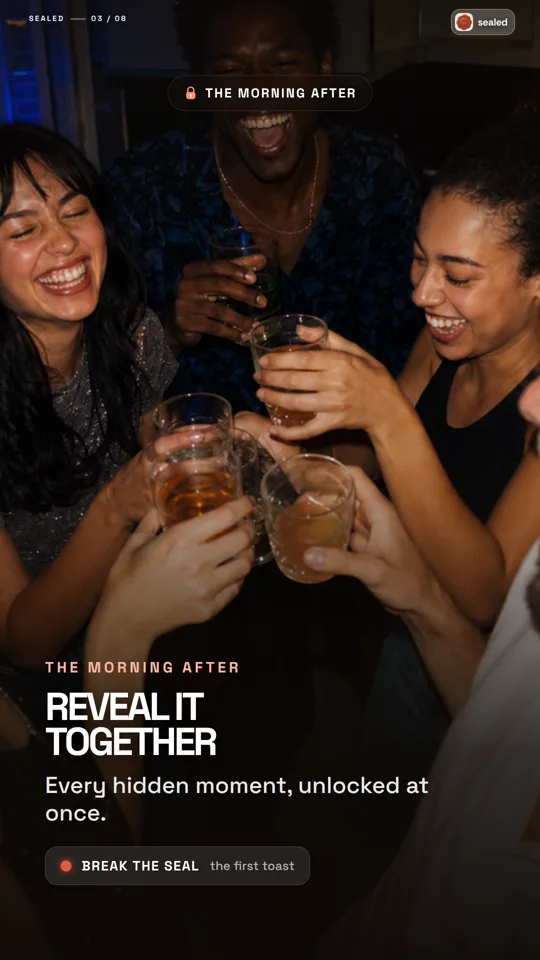
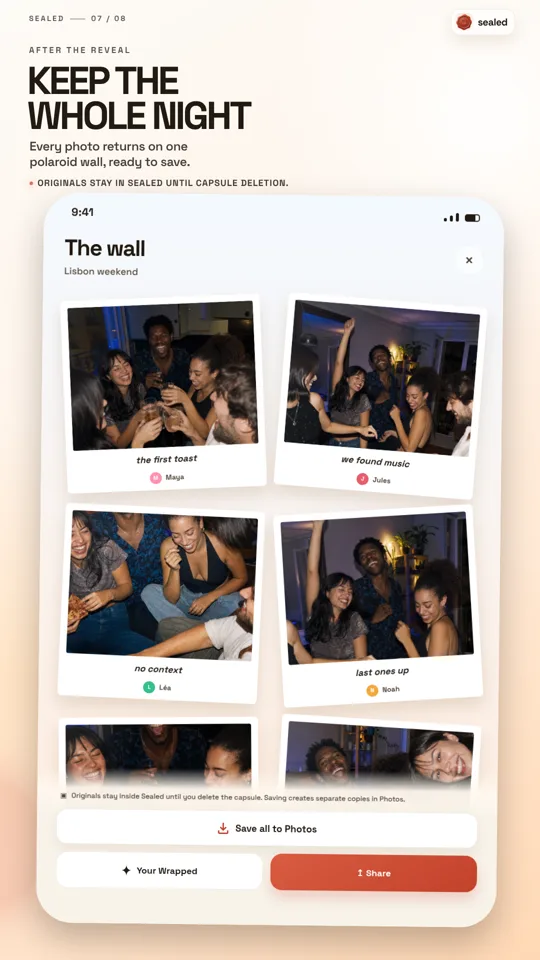
A roll without a planned opening tends to drift. In Sealed the creator sets the opening time, from roughly six hours ahead to about a week. Short windows suit a single evening; longer ones turn a trip's reveal into a reunion. At opening, the group watches a music-backed reveal, then browses every shot laid out as a polaroid-style wall.
Then comes the step people forget. For shared capsules, server copies are removed 30 days after opening, so anyone who wants particular photos should save them within that window. Treat the reveal as the start of a short archiving task rather than the end of the event.
Worked example: planning a weekend trip roll
Example only, not a real case. Five friends head to a cabin for two nights with a mix of iPhones and Android phones. Sealed is free on the App Store and Google Play, so the organiser asks everyone to install it before leaving and to check the current listing in their region. Because the cabin's signal is patchy, they note that a shared capsule needs connectivity.
The organiser creates a shared capsule, sends the code and sets the opening for the evening after everyone returns, so the reveal happens over a planned dinner rather than in the car. At the first meal they confirm everyone is comfortable being photographed, agree that other guests' children stay out of frame, and decide that nothing is posted publicly without the agreement of the people in it.
- Decide local (one phone) or shared (everyone's phone) before the event
- Confirm every participant has the app; accounts are optional
- For local mode, check storage, battery and camera permission on the creator phone
- Pick an opening time when the group can gather
- Ask for consent and agree on what can be shared after the reveal
- Keep an ordinary camera for must-have shots
- Save favourites well within 30 days of opening
Frequently asked questions
Can a disposable camera app on a phone show photos before they are revealed?
It depends on the app. Filter-style apps often show results immediately. Apps built around delay, such as Sealed, hide every shot until a set opening time, and in Sealed even the capsule's creator cannot preview or retake photos beforehand.
Does everyone need an account to join a shared Sealed capsule?
No. Each participant needs the Sealed app on their own phone and joins a shared capsule through an invitation or code, but creating an account is optional. Other apps may work differently, so check their current store listing.
How long does Sealed keep photos after a shared capsule opens?
Sealed deletes its server copies of shared capsule photos 30 days after the capsule opens, so members should save the photos they want before then. Photos in a local capsule are not uploaded; they remain on the creator's phone and can be exported or saved after the reveal.
Sources and further reading
These resources provide the wider reference frame. Product statements on this page are limited to the public information provided by Sealed.