
Direct answer
To use a disposable camera with a group: load it before the event, tell guests how it works, shoot without checking the result and use the flash indoors, then hold the reveal together after developing. An app like Sealed reproduces that ritual on phones with a delayed reveal.
Why disposable cameras still work for groups
Learning how to do disposable camera photography starts with accepting its core limitation as a feature rather than a flaw: you cannot see the shot until later. That constraint changes behavior. People stop chimping at screens, stop retaking the same pose ten times, and instead commit to a moment because there's no immediate feedback loop to second-guess it.
This works especially well for groups - weddings, trips, reunions - where the goal isn't a polished portfolio but a collective record of a day. The unpredictability of exposure, framing and timing becomes part of the charm rather than a problem to engineer around.
Setting up the shoot: practical basics
If you're using an actual disposable film camera, the mechanics are simple but unforgiving: fixed focus, fixed (or near-fixed) aperture, and a flash that only reaches a few meters. Shooting outdoors in daylight or close-up indoors with flash gives the most reliable results. Anything requiring precise focus or low-light nuance will disappoint.
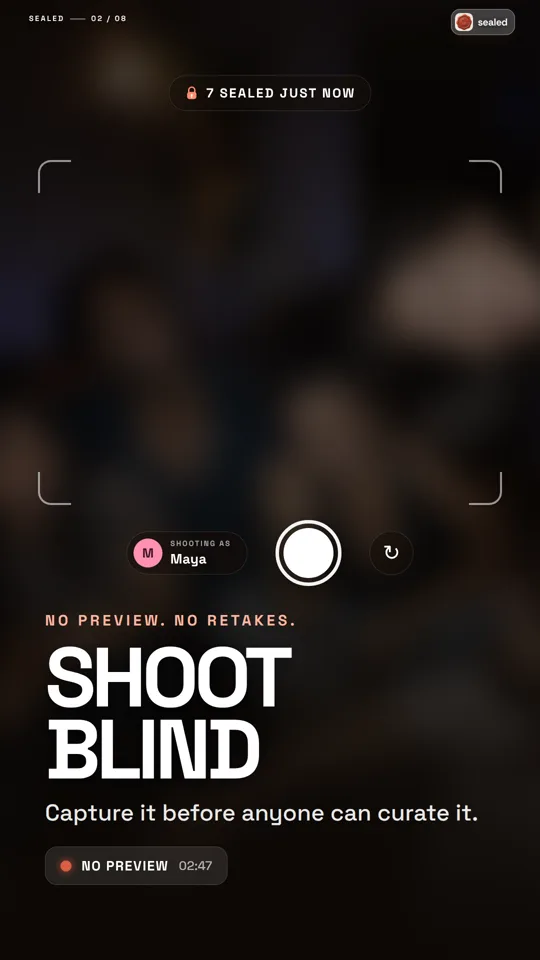
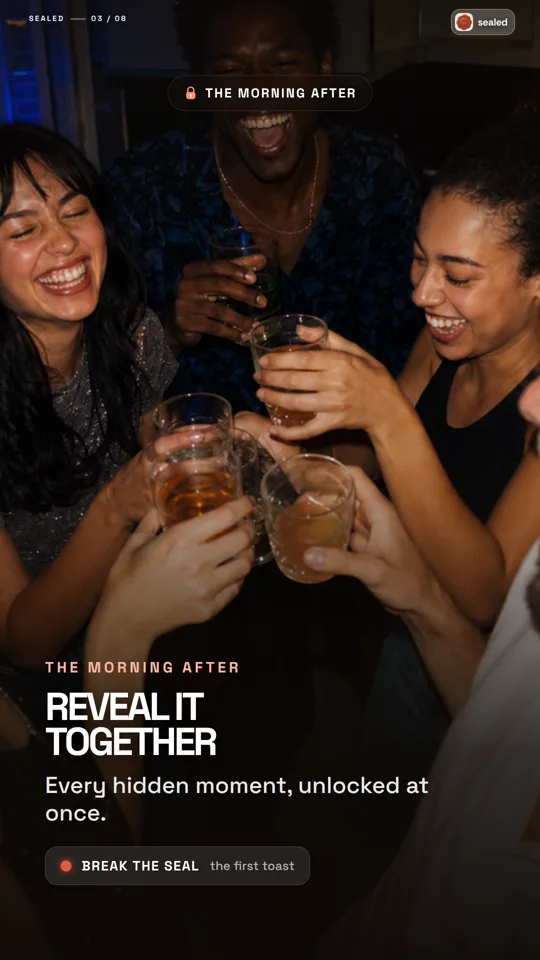
If you're recreating the disposable-camera experience digitally - for instance, through an app that hides shots until a later reveal - the physical constraints go away, but the intentional ones should stay. The value isn't the grain or the flash quirks; it's the delayed, shared discovery. Sealed is built around exactly this idea: everyone shoots, nobody peeks, and the group opens the results together later, which mimics the disposable-camera ritual without needing to mail off film.
Either way, brief your group before shooting: explain there's no live preview, so they should trust their instincts and move on rather than lingering to check a shot.
Consent and etiquette before you shoot
A disposable-camera-style shoot often produces candid, unposed images of people who may not be paying close attention to the camera. That makes consent more, not less, important. Before circulating a camera or app around a group, get a clear understanding from participants that photos of them may be taken and shared later - especially if the images will go beyond the immediate group.
This is particularly relevant when the reveal happens well after the moment was captured, since people may have forgotten they were photographed at all. A quick verbal check - 'we're taking candid shots today, everyone okay with that?' - at the start of an event covers most cases. For identifiable photos destined for wider sharing, it's worth checking in again before that wider share happens, since consent to be photographed isn't the same as consent to be posted.
- Ask up front whether candid, unposed shots are welcome
- Re-confirm before sharing identifiable images beyond the group
- Give people an easy way to opt out or ask for a photo to be excluded later
Minimizing interruption during the event
The whole appeal of the disposable-camera approach is that it doesn't turn the event into a photo shoot. Keeping interruption minimal means resisting the urge to stage moments, re-shoot for a 'better' angle, or gather people repeatedly for group shots. Let the camera pass around naturally and let people take a shot when it makes sense to them.
One practical habit: designate the camera (or app session) as something anyone can pick up for a few minutes, rather than assigning one person as the official photographer for the whole event. This spreads out the interruption and produces a more varied, honest record, since different people notice different moments.
Worked example: a weekend trip with six friends
Imagine six friends on a two-day trip who want a disposable-camera-style record without buying and mailing off actual film. At the start, one person explains the plan: everyone will take a few shots throughout the trip, nobody looks at them until everyone's home, and then the group reveals them together.
Day one: three people take a handful of photos each - at breakfast, on a hike, during a bonfire - using an app that locks the shots from view. No one checks their phone to see how the photo turned out; the habit of instant review simply doesn't apply here. Day two follows the same pattern, with a couple of people opting out of being photographed during one particular activity, which the others respect without pushback.
On Sunday evening, back home, the group opens everything together. Because nobody has seen any of it yet, the reveal has the same collective surprise a stack of drive-through film prints used to deliver - but with a built-in consent conversation baked in throughout, rather than an afterthought. This is a hypothetical illustration of how the principles fit together, not a documented case.
A short checklist before, during and after
To keep a disposable-camera-style project reliable - meaning it actually produces a good shared reveal rather than an awkward one - a short checklist helps at each stage.
- Before: agree on consent norms and who's comfortable being candidly photographed
- Before: decide when and how the reveal will happen, and who's included
- During: pass the camera or app around rather than assigning one fixed photographer
- During: resist checking or retaking shots even if the tool technically allows it
- After: reveal together in one sitting rather than trickling images out individually
- After: check again before sharing any identifiable photo outside the original group
Where digital tools like Sealed fit in
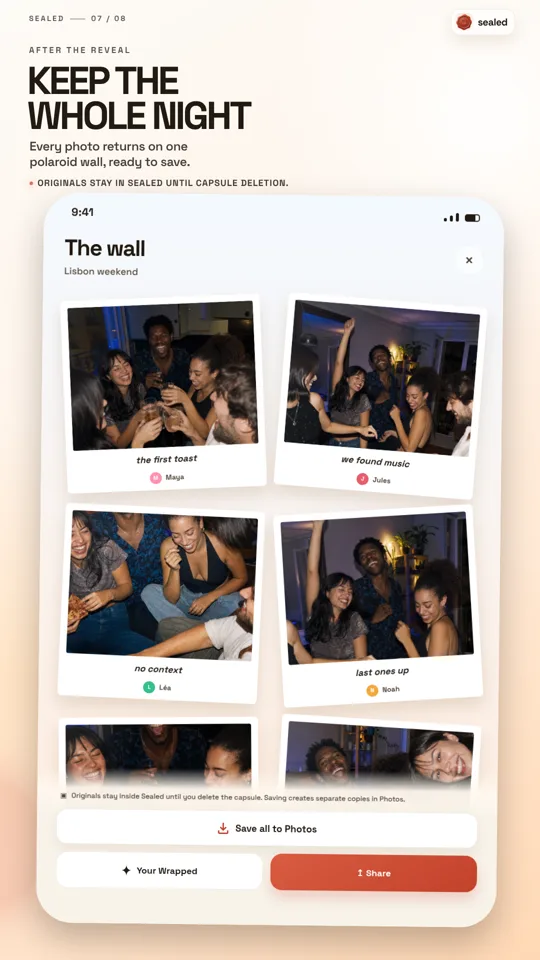
If you want the disposable-camera ritual without physical film - no drop-off, no scanning, no waiting weeks - a shared photo capsule app can recreate the delayed-reveal mechanic while adding basic account and access controls that film never had. Sealed frames this specifically as a group capsule: photos go in, stay hidden, and open together, which lines up closely with what people actually want from a disposable-camera experience.
That said, the product's public information is limited to what's stated in its own privacy, terms and child-safety pages, plus a comparison of local capsule storage versus cloud shared albums. Anyone evaluating a tool for this purpose should check the current store listing directly, since interface language, availability and specific features can change and aren't guaranteed by any editorial description, including this one.
Frequently asked questions
Do I need everyone's consent before taking candid group photos?
Yes - it's good practice to let people know candid photos are being taken and to check again before sharing identifiable images more widely, since being photographed and being publicly shared are different levels of consent.
What's the main advantage of a delayed reveal over checking photos instantly?
A delayed reveal removes the urge to retake or over-curate shots in the moment, which tends to produce a more natural and honest record, and it turns the eventual viewing into a shared moment rather than something each person experiences alone on their own screen.
Can a phone app really replace a physical disposable camera?
An app can replicate the delayed-reveal experience and add consent-friendly features like hidden shots until a group opening, but it won't reproduce film-specific traits like grain or flash falloff - it's a different tool built around the same underlying ritual rather than a literal substitute.
Sources and further reading
These resources provide the wider reference frame. Product statements on this page are limited to the public information provided by Sealed.