
What a disposable camera app on Android is for
People searching for a disposable camera app on Android usually want the feeling of a single-use film camera without buying one. You take a picture, you cannot inspect it straight away, and the results arrive later. On a phone, the app recreates that delay by holding shots back until a set moment instead of showing them instantly in a gallery.
The delay is meant to change the experience more than the image quality. The idea is that when nobody can check a shot, there is less reason to retake poses or pass phones around for approval, which leaves more attention for the moment itself. Whether that happens depends on the group. For groups, the intended payoff is a shared reveal, where everyone sees the results together rather than scrolling alone.
Before installing anything, separate two goals. One is a personal nostalgia effect for your own pictures. The other is a group ritual where several people contribute and the reveal is collective. The second goal raises more practical questions about storage, timing and consent, and those are the focus here.
Questions to settle before your group installs a disposable camera app on Android
Different apps make different choices, and features change over time, so check the current Play Store listing and the app's own privacy and terms pages rather than relying on a review written months ago. The questions below matter regardless of which app you consider.
Think especially about mixed groups. If some friends use iPhone and others use Android, confirm that the app runs on both and that people on different platforms can actually join the same shared group, since availability in two stores does not by itself prove that. Also ask whether everyone must create an account, because sign-up steps can slow people down before the event starts.
- Who decides when the photos are revealed, and how far ahead can that be set?
- Do contributors need the app installed, and is an account required or optional?
- Can the group join from separate phones, or does everything happen on one device?
- Are photos kept only on the phone or uploaded to a server, and for how long?
- Can people add existing camera-roll photos, or only shots taken inside the app?
- Does the app publish clear privacy, terms and child-safety information?
Storage, deletion and keeping copies
The delayed reveal is the fun part, but storage is where groups get caught out. Some apps offer more than one mode. Sealed, for instance, can run a capsule on a single phone, where the pictures stay on that device, or a shared capsule whose photos are uploaded for members, with those server copies removed 30 days after the opening. Knowing which mode you are using tells you where the photos live and whether there is a deadline for saving them.
A simple habit avoids loss: after the reveal, each person saves the photos they care about to their own device or long-term library. If your group already uses Google Photos, its help page on sharing photos and albums explains how shared content works there, which is useful for deciding where the final keepsakes should live once the reveal is over.
Be clear about what a delayed-reveal app does not do. Holding photos back is not the same as protecting them after they become visible. Once images can be seen, anyone in the group may be able to save or capture them, so trust within the group still matters.
Consent and minimal interruption at the event
A disposable-style app removes the instant check, which also removes a natural moment where someone might say they would rather not appear in a photo. That makes consent worth handling up front: people should agree before identifiable participants are photographed or shared. Before the event, tell everyone a shared capsule is running and that shots will be revealed to the whole group later.
Sealed's safety and consent methodology covers similar ground: explaining the capsule to participants, giving people a way to opt out, setting boundaries on what gets captured, and thinking about how photos are reused afterwards. Minimal interruption works best when those rules are short. One sentence at the start, inviting anyone to say if they would rather not be photographed, is often enough. Take particular care with children, bystanders and people outside the group, since they have not agreed to the ritual.
A thoughtful reveal also respects people afterwards. If an unflattering or sensitive picture appears, the group can agree not to repost it elsewhere without the person's permission. Treat the reveal as a shared moment, not as content for public feeds.
Worked example: planning a weekend away
Example, for illustration only: five friends are spending a weekend in a rented cabin. Three use Android phones and two use iPhones. They want everyone contributing photos, with one reveal on Sunday evening after dinner.
Working through the checklist, they look for an option available on both phone types and confirm, from the current store listings and support pages, that Android and iPhone users can join the same shared group before committing. They prefer one where accounts are optional so nobody delays joining. The organiser sets the reveal for Sunday at 8 pm and sends the invitation on Friday. Before leaving, the group agrees that anyone can ask not to be photographed and that nothing gets posted publicly without the subject's agreement.
On Sunday they open the capsule together. Afterwards, each person saves the photos they want within the storage window, rather than assuming the shared copy will always be there. The plan costs a few minutes of preparation and targets two avoidable regrets: missing photos and awkward surprises.
Where Sealed fits, and the limits of this guide
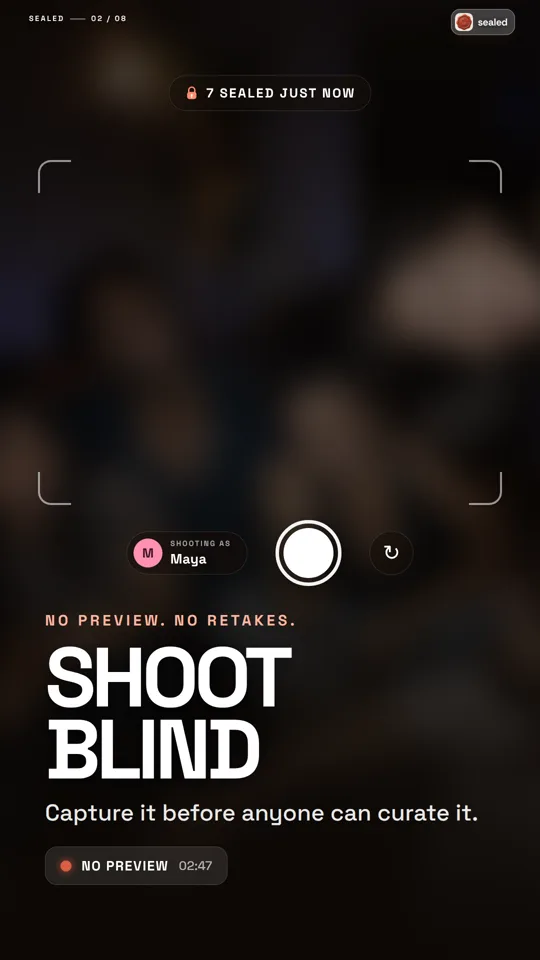
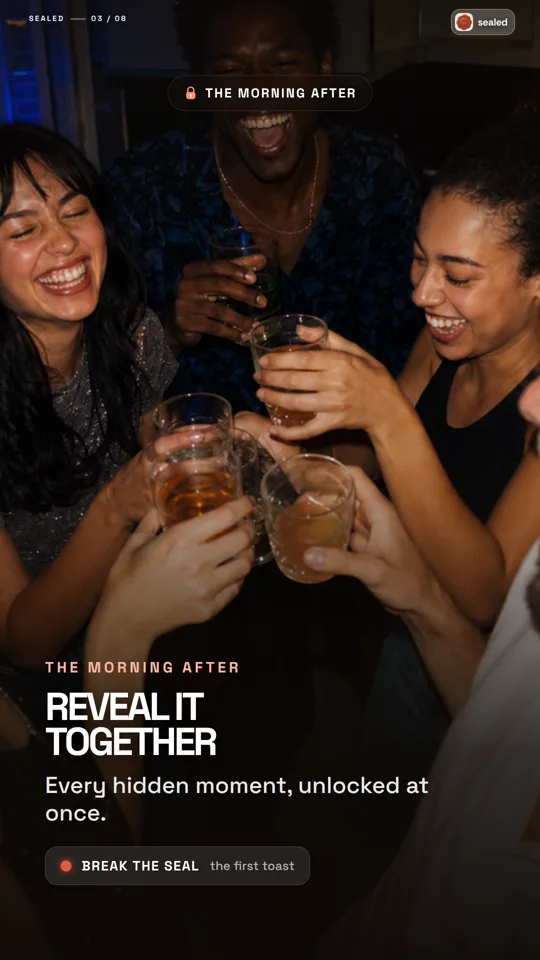
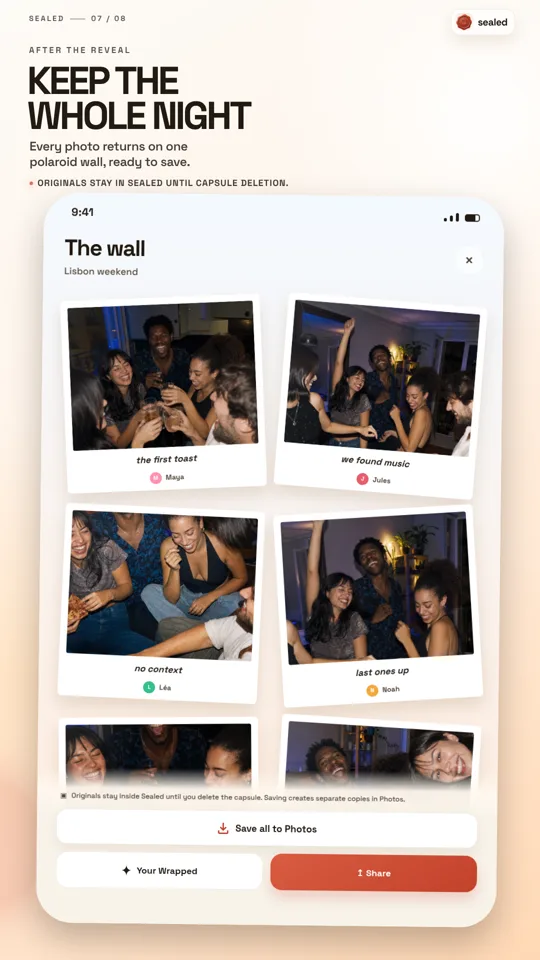
Sealed is one example built around this kind of group ritual. It is free to download on Google Play and the App Store, members join a shared capsule from their own phones through an invitation or code, and accounts are optional. As with a single-use camera, each shot drops straight into the capsule without preview, retakes, filters or gallery imports, and not even the organiser can peek before the opening the creator picks, roughly six hours to a week out; the group then watches a music-backed reveal and a polaroid-style wall of every shot. This guide does not confirm whether Android and iPhone users can share one capsule, so check Sealed's current store listing or support before relying on that.
This article draws only on Sealed's public product information and the two sources cited. No testing of other apps is claimed, and features or availability of any app, including Sealed, can change. Check current store listings and privacy information before your event.
Frequently asked questions
What is a disposable camera app on Android?
It is an Android app that imitates a single-use film camera by holding photos back after they are taken and revealing them later. Some are built for groups; if that is what you want, look for an app that lets several people contribute from their own phones and view the results together at a chosen time.
Will photos from a shared disposable camera app be kept forever?
Not necessarily. Some apps keep shared copies on a server only for a limited time after the reveal. Check the app's storage and privacy information, and save the photos you want to your own device or photo library soon after they become visible.
How should a group handle consent when using a disposable camera app?
Tell everyone before the event that photos will be taken and later revealed to the group, invite anyone to say if they prefer not to be photographed, take extra care with children and bystanders, and agree not to post revealed photos publicly without the subject's permission.
Sources and further reading
These resources provide the wider reference frame. Product statements on this page are limited to the public information provided by Sealed.