
Direct answer
A disposable camera app hides each photo at capture and reveals the whole set later, at a time the group has agreed on. Sealed works that way: everyone shoots, nobody peeks, and the reveal opens the capsule for everyone at once.
The basic mechanics of a disposable camera app
When people ask how does the disposable camera app work, they're usually picturing a real disposable film camera translated into software: a fixed number of shots, no live preview, and a wait before anyone sees the results. The digital version keeps that shape but adds a group layer. Instead of one owner developing a single roll, several people contribute frames to a shared capsule that everyone opens together, at the same time, once the group decides the moment is over.
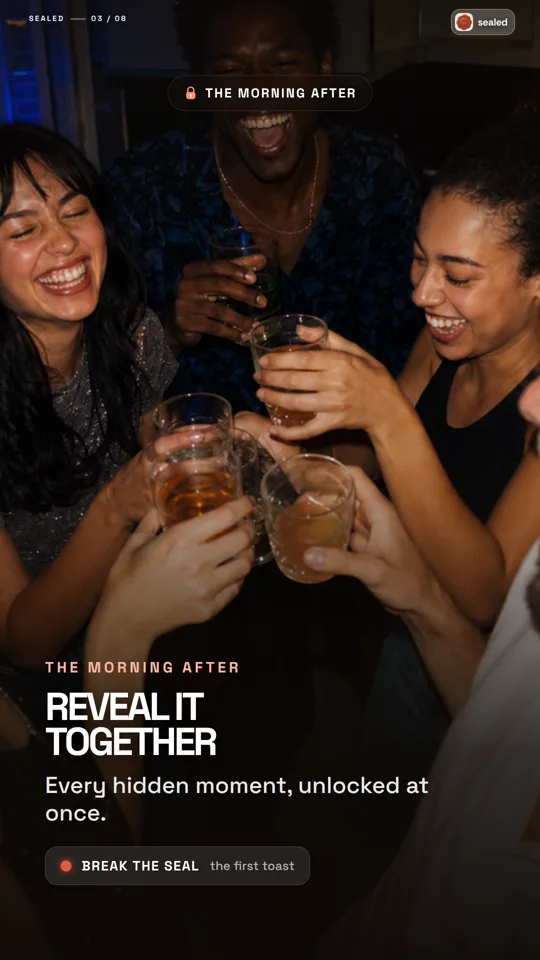
The underlying sequence is usually simple. Someone starts a shared session or capsule, participants add photos over the course of an event without being able to review or edit what's already been captured, and the capsule stays sealed until a trigger closes it - a time limit, a host action, or an agreed cutoff. Only after that trigger does everyone see the collected images at once, which is the mechanism that recreates the anticipation of picking up prints from a photo lab.
- A shared, time-bound container replaces a single roll of film
- Contributors add shots without previewing others' images
- A defined close event, not individual choice, ends the capture window
- Reveal happens simultaneously for the whole group
Why the no-peek rule is the core design choice
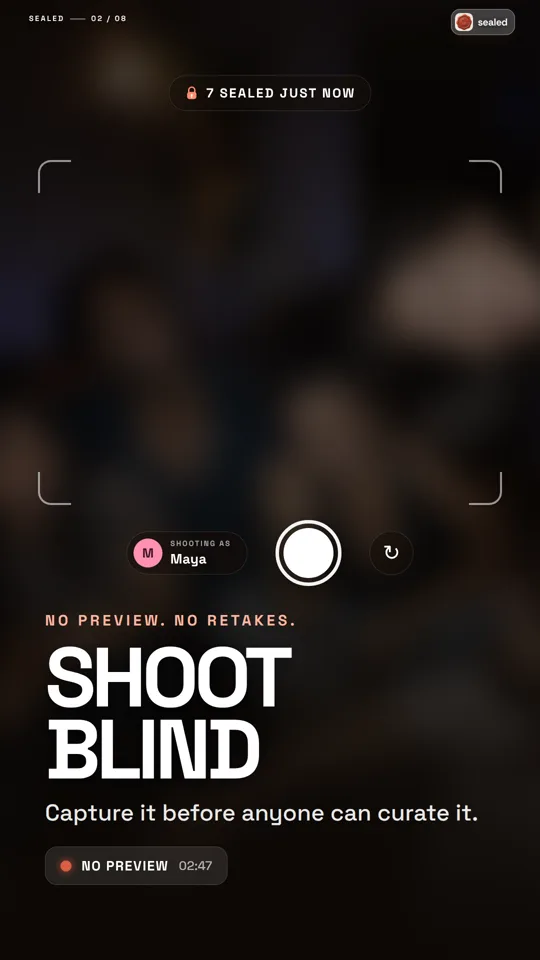
The feature that distinguishes this category from a normal shared album is the deliberate removal of live preview. In most camera and messaging apps, you see your shot immediately and can retake it, filter it, or delete it before anyone else sees it. A disposable camera app blocks that step on purpose. The idea, summarised plainly, is that everyone shoots, nobody peeks, and the group opens it together - which shifts the psychology of the event from performance toward participation.
This matters for how does the disposable camera app work in practice, because the no-peek rule isn't just a UI restriction; it changes what people photograph. Without the ability to check and delete a bad shot, people tend to take more candid, less staged pictures, since there's no incentive to curate in the moment. The tradeoff is that some genuinely unflattering or blurry shots will survive into the reveal, which is part of the intended texture of the format rather than a flaw to engineer away.
Where the photos actually live before the reveal
A separate technical question sits underneath the experience one: where do the images go while the capsule is sealed? Broadly, group photo tools split into two models - a locally stored capsule that lives on-device or in a private, time-limited store, versus a continuously synced cloud album where every upload is visible to collaborators as it happens. These aren't just implementation details; they affect who can see what and when, and they affect how the delayed-reveal promise is actually enforced.
A cloud album that simply hides a 'view' button until a set time isn't structurally different from one that shows photos immediately - someone with backend access, or a bug, could break the illusion. A design built around genuinely withholding images until the trigger fires is a stronger match for the shared-reveal idea, though evaluating that tradeoff in detail depends on the specific implementation choices any given app makes, which is outside the scope of general product claims.
This is one of the areas where checking a current source is more useful than trusting a generic explanation, since storage and sync architecture is exactly the kind of detail that changes between app versions and providers.
- Local, time-bound storage vs. continuous cloud sync are different guarantees
- A hidden 'view' button is not the same as photos being withheld structurally
- Architecture affects who could technically see photos early, not just who is meant to
Consent and the group ritual, not just the software
A disposable camera app is as much a social protocol as a technical one. Because contributors can't review or remove their own shots before the group sees them, consent has to be established before the shooting starts, not negotiated frame by frame afterward. That means the person setting up the session has some responsibility for making sure everyone understands what they're opting into: that any photo they're in may appear in the shared reveal, and that no one gets to quietly delete it beforehand.
Participant consent, thoughtful reveal, and minimal interruption work together as a set. Minimal interruption is what makes the no-peek rule tolerable - people aren't stopping to check screens - but it only feels good if everyone agreed to be photographed in the first place. A useful habit for hosts is a thirty-second verbal check at the start of an event: naming the app, naming the reveal moment, and giving anyone who wants out an easy way to say so before the first photo is taken.
A worked example: planning a reveal for a small gathering
To make this concrete, here is a hypothetical walkthrough, not a report of an actual event. Imagine six friends at a weekend trip who want to use a disposable camera app instead of a normal group chat for photos. The host creates a capsule at the start of the trip and sets the close point for the evening of the last day, so contributions span the whole weekend rather than a single moment.
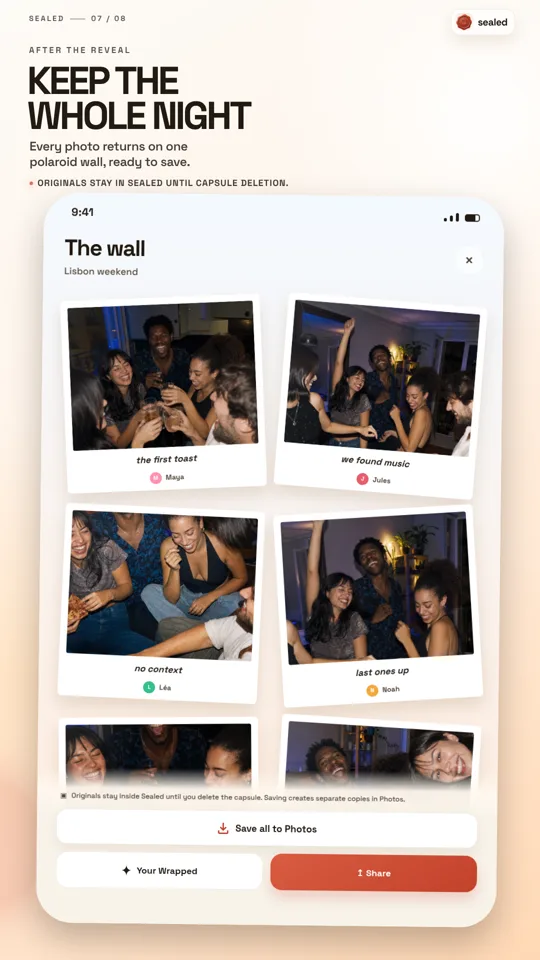
Before anyone shoots, the host briefly explains the rule: photos go in, nobody can preview or pull theirs back out once added, and everyone sees the full set together on the last night. Over the weekend, each person adds a handful of shots when they feel like it, with no pressure to curate since there's no audience yet. On the final evening, the group gathers, the capsule unlocks, and they scroll through the collected photos together - including a few blurry or unflattering ones nobody would have chosen to share individually, which becomes part of the shared story rather than something to prune.
This example illustrates the mechanics discussed above - sealed contribution window, group-timed trigger, simultaneous reveal - without claiming any measured outcome or typical result, since no first-party study of actual usage is being cited here.
A simple checklist before you start a capsule
Because the format depends on setup happening correctly before the first photo, a short pre-event checklist is more useful than a long feature list. This is offered as general practice guidance, not a product guarantee.
- Confirm everyone in the group knows photos can't be previewed or deleted individually before reveal
- Agree on the trigger that closes the capsule (time limit, host action, or event end)
- Get a clear yes from anyone who might be photographed, before shooting starts
- Check current privacy, terms and child-safety information on the app's public site if minors may appear
- Decide who can see the reveal - just contributors, or a wider group - before, not after, opening it
How Sealed fits into this picture
Sealed is one implementation of this idea: a group photo capsule built around delayed, shared reveal, where the app's own stated approach favors withholding images until the group opens them together rather than exposing them as they're added. That framing is useful context for answering how does the disposable camera app work in general, but it describes Sealed's public product position rather than a claim about how every app in this category behaves, and specifics like interface language, store availability or exact feature behavior should be checked against the current listing rather than assumed from an article like this one.
Frequently asked questions
Does a disposable camera app let you delete a bad photo before others see it?
Typically no - the defining feature of this app category is that contributors can't preview or remove their own shots before the group reveal, which is what preserves the delayed, shared-opening experience. If editing before reveal matters to you, check the specific app's current settings, since this can vary by implementation.
Who can see the photos while a capsule is still sealed?
That depends on the app's storage design. A locally stored, time-bound capsule and a continuously syncing cloud album offer different guarantees about who could technically access images before the official reveal, so it's worth checking an app's current documentation rather than assuming all disposable camera apps handle this identically.
Do I need consent from everyone before using a group photo capsule?
Yes, in the general sense that anyone photographing or sharing identifiable people should get their agreement first, and this matters even more with a no-peek format since individuals can't quietly remove photos of themselves before the group reveal. Establishing this up front, before shooting starts, is good practice regardless of which app you use.
Sources and further reading
These resources provide the wider reference frame. Product statements on this page are limited to the public information provided by Sealed.