
What a delayed camera app actually does
A delayed camera app separates taking a photo from seeing it. Instead of showing each shot on screen the moment you press the shutter, it holds the images back until a later point, often a time chosen in advance. The idea borrows from film photography, where nobody knew how a picture turned out until the roll was developed.
Before acting on one, it helps to know that the delay is the whole point rather than a side feature. If you expect to check framing, retake a blurry shot or quickly share a picture with someone who missed the moment, a delayed camera app will feel restrictive by design. If your group wants to stay present at an event and look back together afterwards, the same restriction is what makes it useful.
Why a delay changes how a group takes photos
When nobody can review shots on the spot, the rhythm of an evening changes. People raise the phone, take the picture and put it away, instead of huddling over a screen to judge each frame. That minimal interruption is the main practical benefit, and it matters most at gatherings where constant reviewing would pull attention away from the people in the room.
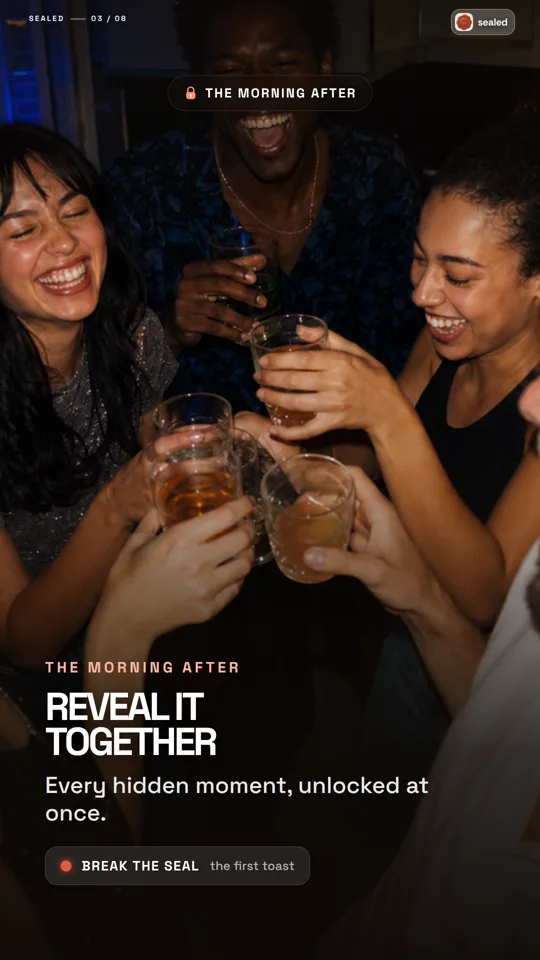
The delay also creates shared anticipation. Everyone contributes without knowing what the others captured, so the eventual reveal becomes a moment the group experiences at the same time rather than a feed people scroll alone. That only works if the opening is treated as an event in itself: a dinner, a call or a quiet evening when everyone can actually look together.
The trade-off is honest imperfection. Some shots will be out of focus, badly lit or accidental. Groups that enjoy that texture tend to value delayed photos; groups that want a polished album may prefer an ordinary camera for the moments that matter most to them.
Consent comes before the shutter
A delay does not remove responsibility for what gets photographed. Because people cannot review or delete shots before they are revealed to the group, it is worth agreeing on boundaries at the start rather than after an unwelcome picture appears. A quick conversation is usually enough: who is happy to be photographed, whether anyone prefers to stay out of frame, and who will see the results.
This is especially important when identifiable people outside the core group, or children, may appear in shots. Ask before photographing people and before sharing images of them, and check the privacy, terms and safety information published by whichever app you use. This article is general guidance, not legal advice; rules about photographing and sharing images vary by place and situation.
- Tell everyone a delayed camera is in use before the event starts.
- Agree who will receive the photos once they open.
- Respect anyone who asks not to be photographed, without needing a reason.
- Take extra care around children and people who did not join the group.
Where the photos live and when they disappear
Storage is the least visible decision and often the most important one. Some delayed setups keep images on a single phone, which limits who can access them but means one device holds everything. Others upload photos so several people on different phones can contribute and later see the same collection. A separate Sealed guide comparing local photo capsules with cloud shared albums covers that trade-off in more depth.
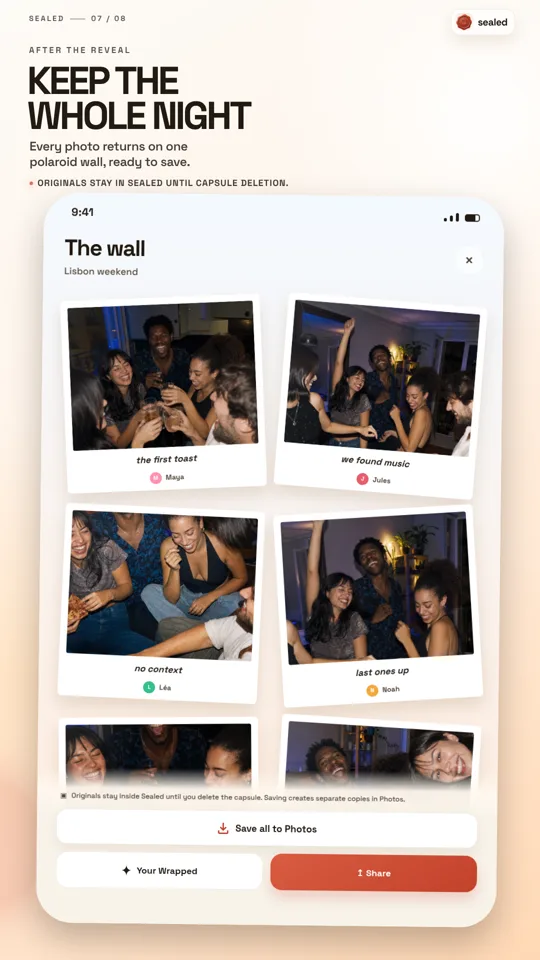
Sealed, a group photo capsule app, is the context for this article and it illustrates both models: a capsule can stay entirely on one phone, or members can join a shared one from their own phones, in which case photos are uploaded and stay hidden until the opening. For shared capsules, Sealed removes its server copies 30 days after the reveal, so anyone who wants to keep pictures needs to save them before then. Other apps handle retention differently, so check each one's current policy rather than assuming.
A decision checklist for choosing a delayed camera app
The questions below are a way to test whether a delayed camera app fits your plans. They are framed around your group's needs rather than any particular product, and the answers will depend on each app's current features, which can change over time.
Example (hypothetical): four friends plan a weekend cabin trip and want photos without phones dominating the evenings. They agree beforehand that everyone is fine being photographed, that the photos stay within the four of them, and that the opening will happen over dinner the following Sunday. Because they each want to contribute from their own phone, they choose a shared setup, and one person sets a reminder to save favourites well before any deletion window. The checklist below is what they worked through.
- Will one phone take all the photos, or does everyone need to contribute from their own device?
- Does every participant need to install the app, and is an account required?
- Who chooses when the photos open, and how far ahead can that be set?
- Can anyone, including the organiser, look early?
- Where are photos stored, and when are any server copies deleted?
- Has everyone in the group agreed to be photographed and to the planned sharing?
Limits to accept before you start
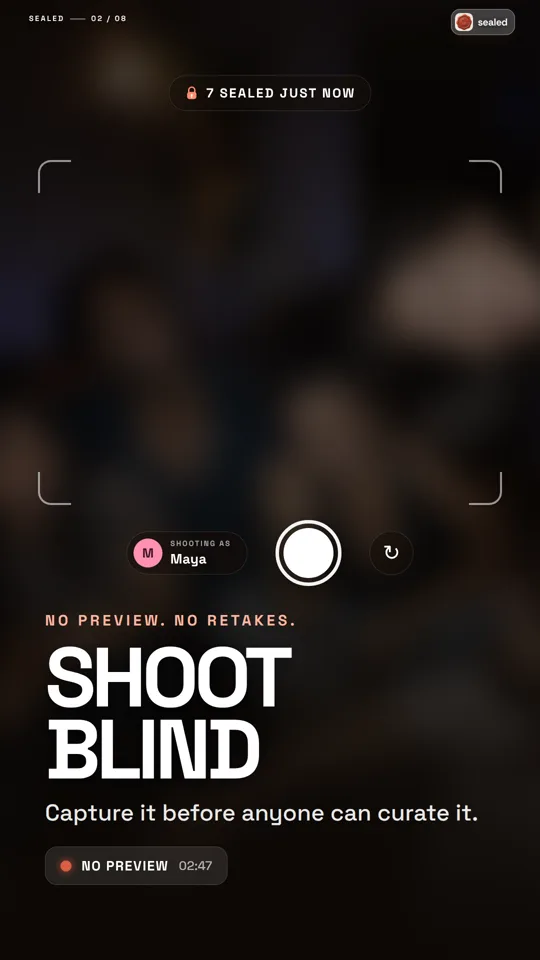
A delayed camera app is not a replacement for a full camera. Expect no preview and no retakes, and do not assume you can add existing photos from your camera roll or apply filters. If those are requirements, an ordinary camera or a regular shared album will serve better, perhaps alongside a delayed capsule rather than instead of it.
It is also wise not to read more protection into the format than an app actually promises. Hiding photos until a set time does not mean an app detects or blocks screenshots once images are visible, and sharing within a group does not guarantee those images stay within it. A thoughtful reveal depends as much on the group's agreement as on the software, so treat the opening as a shared moment and decide together what happens to the photos afterwards.
Frequently asked questions
What is a delayed camera app?
A delayed camera app is a phone camera that hides photos after they are taken and only reveals them later, often at a time set in advance. It recreates the wait of film photography so people can stay present during an event and look at the results together afterwards.
Can I retake or preview photos in a delayed camera app?
Usually not, because skipping preview and retakes is the point of the format. Each shot is kept as taken until the reveal. If you need to check framing or edit pictures, use your regular camera for those moments and check each app's current features before relying on it.
What should a group agree on before using a delayed camera app?
Agree on who is comfortable being photographed, who will see the photos, when they will open and how long they will be stored. Ask before photographing or sharing identifiable people, and if the app deletes server copies after a set period, save the photos you want to keep before then.
Sources and further reading
These resources provide the wider reference frame. Product statements on this page are limited to the public information provided by Sealed.