


What free online photo album sharing is really for
Free online photo album sharing can mean several different things: a place to collect pictures after an event, a link for family members to browse, or a collaborative space where everyone adds their own images. Before choosing one, decide whether your priority is immediate access, simple collection, privacy expectations, or the feeling you want the group to have while taking photos.
The practical limit of any free option is that it may not serve every goal equally well. A group that needs an archive for ongoing access may value a familiar cloud-style shared album. A group planning one intentional occasion may care more about preserving anticipation and preventing constant checking of the screen. The useful question is not simply whether an album costs nothing; it is what kind of participation it encourages.
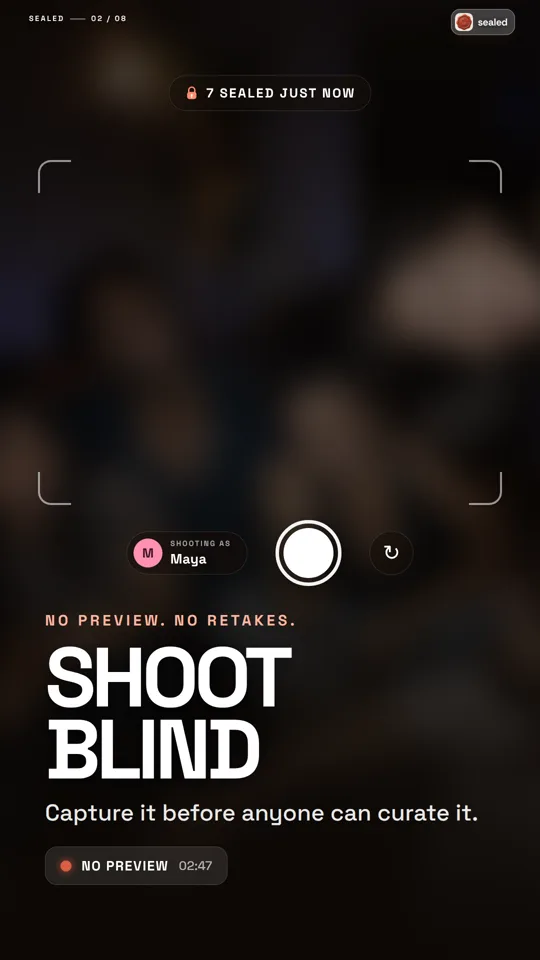
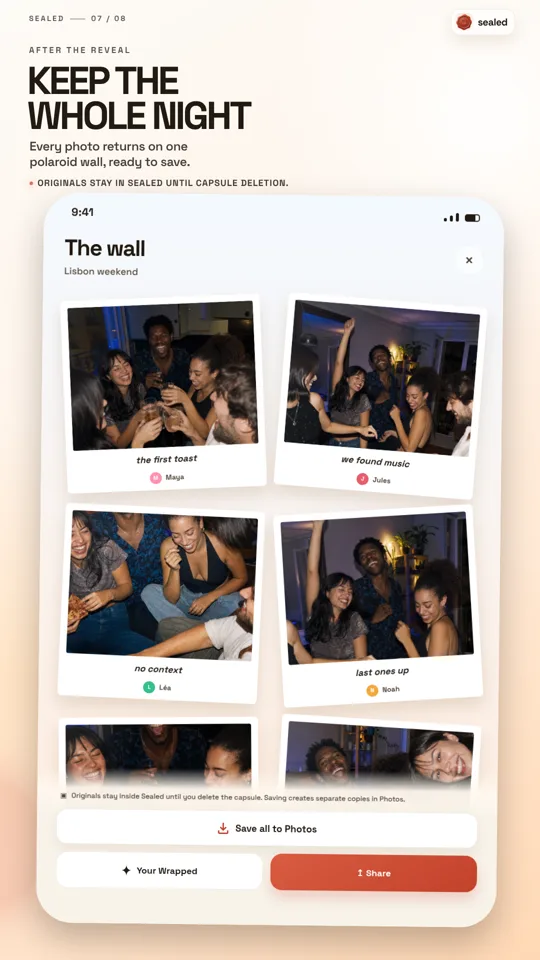
Sealed is relevant in the narrower case of a group photo ritual designed around a later shared opening. Its public framing is intentional group photography: participants contribute images without treating the moment as a live preview feed, then open the collection together. This article does not claim that this approach is right for every group or event.
- Decide whether you need a long-term archive, an event collection point, or a shared reveal moment.
- Ask who will upload, who will view, and when images should become visible.
- Treat “free” as one consideration alongside privacy, consent, access, and the group experience.
Free online photo album sharing: questions to answer before you choose
Start with the audience. A small group of close friends can often agree informally on who belongs in the album and what should be shared. A larger gathering, workplace event, school-related occasion, or mixed-age group may need clearer expectations. The more varied the group, the less safe it is to assume that every attendee wants photographs taken or circulated in the same way.
Next, separate capture from sharing. Some groups want pictures visible as soon as they are added because they are coordinating travel, documenting an activity, or helping absent friends follow along. Others find instant visibility distracting: people may retake shots, judge images in the moment, or shift attention from the occasion to the feed. Neither preference is universally better, but it should shape the format you select.
Finally, confirm the practical route into the album. A free service is only useful if the intended participants can reasonably join, understand the sharing rules, and access the material later. Check the current local store listing or service page for language, device, account, and access details rather than assuming that an editorial translation means the interface, support, or listing is offered in that language.
- Who is invited to take part?
- Will photos be visible immediately or only at a planned time?
- Can every participant understand how to join and view the collection?
- What happens if someone wants a photo removed or not shared?
Consent is part of the album design
A shared album is not only a storage choice. It is also a decision to photograph and circulate identifiable people. Obtain meaningful consent before taking or sharing images of participants, especially where the setting makes participation feel expected. A quick, clear explanation before the activity is often more respectful than trying to solve objections after photos have spread through a group.
Consent works best when it is specific enough to be useful. Tell people whether the images are for a private group, whether they may be downloaded or forwarded, when the collection will open, and who will have access. Give people a straightforward way to opt out of being photographed, to ask that a particular image not be shared, or to leave the album process entirely.
This is particularly important for children and mixed-age groups. Sealed’s public site includes privacy, terms, and child-safety information; those materials are worth reviewing when they are relevant to your situation. They do not replace the organizer’s responsibility to set appropriate expectations and follow the rules that apply to the people and place involved.
- State the intended audience before photos are taken.
- Make opting out easy and non-confrontational.
- Avoid assuming that attendance equals permission to share.
- Review the relevant privacy, terms, and child-safety information before using a service with minors.
Cloud-style access versus a local photo capsule
A cloud shared album and a local photo capsule solve related but distinct problems. A cloud-style album generally emphasizes ongoing access: people can return to it, contribute later, and see a growing collection. That can suit trips, family documentation, and practical collaboration where the album is meant to stay open.
A capsule-style approach puts more weight on the event itself. Instead of asking everyone to check images as they appear, the group can agree to collect them quietly and make the opening a later moment. Sealed’s public methodology and its comparison of local capsules with cloud shared albums frame this difference around deliberate participation, lower interruption during capture, and a group reveal rather than a continuously refreshed gallery.
The limit is straightforward: delayed reveal is not the right tool when people genuinely need real-time photographs or an enduring shared archive. It can be a better fit when the value lies in shared anticipation, fewer interruptions, and a thoughtful reveal after everyone has had time to be present. Choose the format that matches the occasion rather than forcing an event into a trend or a default app behavior.
- Choose ongoing shared access for a collection that needs to remain active.
- Choose a delayed capsule when the group wants the photos to stay secondary during the occasion.
- Use separate arrangements if you need both immediate coordination images and a later ceremonial reveal.
Example decision aid: choosing for a birthday weekend
Example only: imagine eight friends spending a weekend together. They want everyone to take pictures, but they do not want the meal, walk, and conversations to turn into repeated image reviews. They also know that one person prefers not to appear in posts or broad group sharing.
Their decision can begin with three choices. First, they agree that the album is for the eight attendees only. Second, they ask for consent before the weekend and repeat that anyone can request a photo be excluded. Third, they decide whether they want a live collection or a later opening. Because their aim is to enjoy the weekend first and revisit it together afterward, a delayed group capsule may fit their stated preference.
If the same group instead needed to share travel updates with friends who were not present, a continuously visible shared album could be more practical. The point is not to declare one model superior. It is to make the trade-off explicit: live access supports immediate distribution, while a planned opening can protect the rhythm of the occasion.
- Goal: preserve the occasion rather than create a live feed.
- Consent rule: ask before photographing or sharing identifiable friends.
- Access rule: define exactly who can see the images.
- Reveal rule: choose a shared opening time, or keep the album live if immediate access is genuinely needed.
A simple checklist before acting
Before creating a free shared album, write a one-sentence purpose: “We are collecting photos for a private group reveal on Sunday,” or “We are keeping a shared trip archive available throughout the week.” That sentence makes later decisions easier because it gives the group a common reference point.
Then make the boundaries visible before anyone uploads. Clarify participants, access, timing, consent, and what to do if someone changes their mind. This small amount of preparation supports a calmer experience than relying on assumptions, especially when the group includes people with different comfort levels around photos.
After the event, follow through on the agreement. Open the collection when promised, keep it within the agreed audience, and respond respectfully to removal requests. A thoughtful reveal is not only about delaying the images; it is about honoring the conditions under which people agreed to participate.
- Define the purpose and intended audience.
- Get consent before photographing or sharing identifiable people.
- Set the visibility timing: live, scheduled, or limited.
- Check current local listing and access details if language or compatibility matters.
- Provide a clear route for exclusion or removal requests.
Frequently asked questions
What should I check before using a free online photo album?
Check who can access the album, whether photos are visible immediately, how identifiable participants have consented, and whether the current local service listing meets your language and device needs. Also decide whether you need an ongoing archive or a one-time group reveal.
Do I need consent to share photos in a group album?
You should obtain consent before photographing or sharing identifiable participants. Explain the intended audience, timing, and sharing expectations, and give people a practical way to decline or request that an image not be included.
When is a delayed photo reveal more suitable than a live shared album?
A delayed reveal can suit a group that wants to stay present during an occasion and experience the photos together afterward. A live shared album is more suitable when immediate viewing, coordination, or ongoing access is the main need.
Sources and further reading
These resources provide the wider reference frame. Product statements on this page are limited to the public information provided by Sealed.