

What google photo partner sharing is for
Google photo partner sharing is a feature that lets one person automatically send some or all of their photos to another person's library, based on rules like date or the people recognized in the picture. It is designed for ongoing, low-friction sharing between two people who already trust each other, such as a couple or close family members, rather than for coordinating a group event in real time.
Because it works continuously in the background once set up, it answers a different question than 'how do we share this one album from tonight.' It is closer to a standing agreement about what gets shared going forward, which is useful for some relationships and poorly suited to others.
- Best for: two people with an existing, ongoing sharing relationship
- Not built for: one-off group events with people who don't already share libraries
The consent question before you turn it on
The most important thing to understand before acting on partner sharing is that it can include photos of people who never agreed to have their images sent to someone else's library. If you turn on sharing filtered by date, everything you shoot in that window goes, including bystanders, other people's children, or friends who assumed the photo stayed with you.
A reasonable practice is to treat partner sharing the same way you would treat handing someone your physical photo album: only do it with photos you have the right and the standing to share, and check with people in the frame if the audience for the photo is expanding beyond what they expected. This is especially relevant for anyone in a friend group or extended family where not everyone has met the partner on the receiving end.
This is one of the areas where a deliberate, consent-first approach differs from convenience-first sharing. It is not that automatic sharing is wrong, but that it removes the pause where someone might otherwise ask 'is it okay if I send this along.'
Where automatic sharing conflicts with a group reveal
If your group's goal is to build anticipation around a shared set of photos, opened together at one moment, partner sharing works against that goal by design. It is built to move photos out as soon as they meet the filter, not to hold them until everyone can look at once.
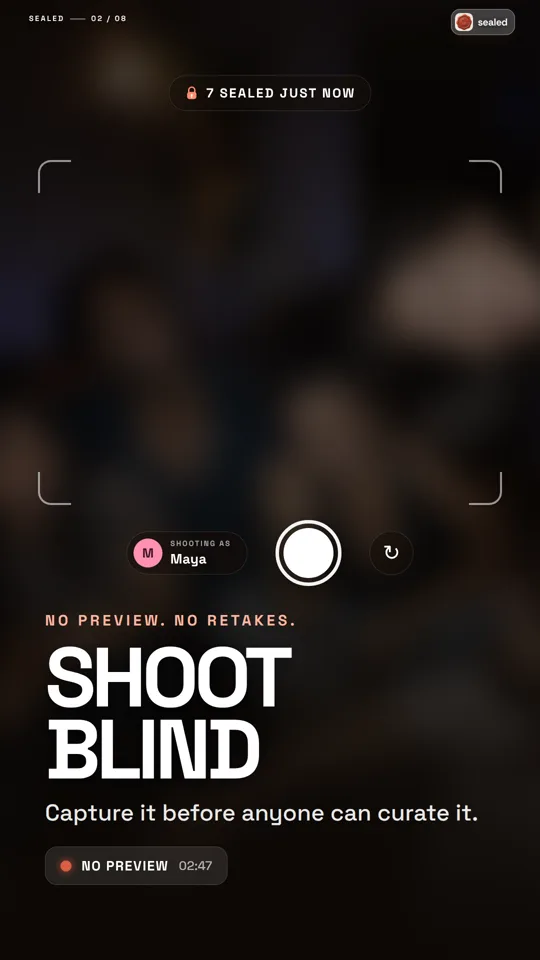
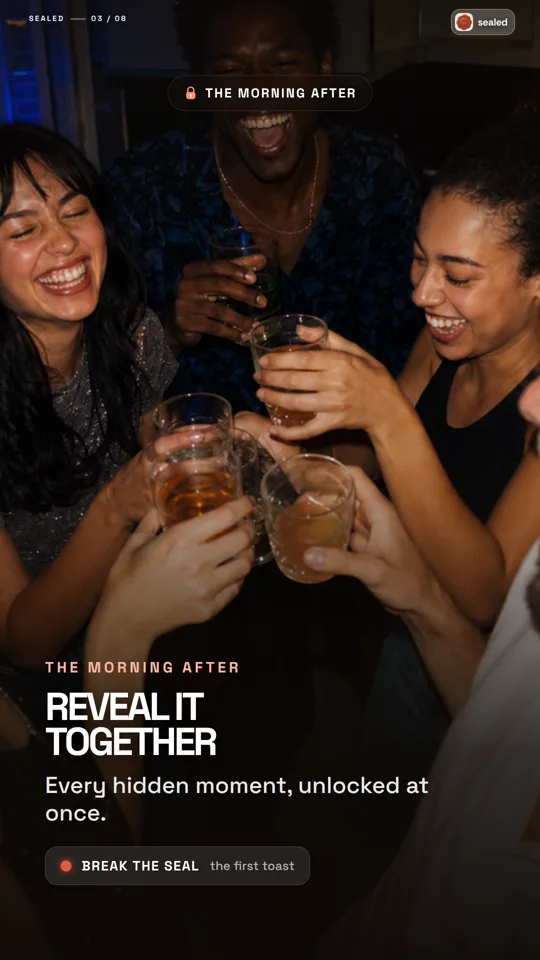
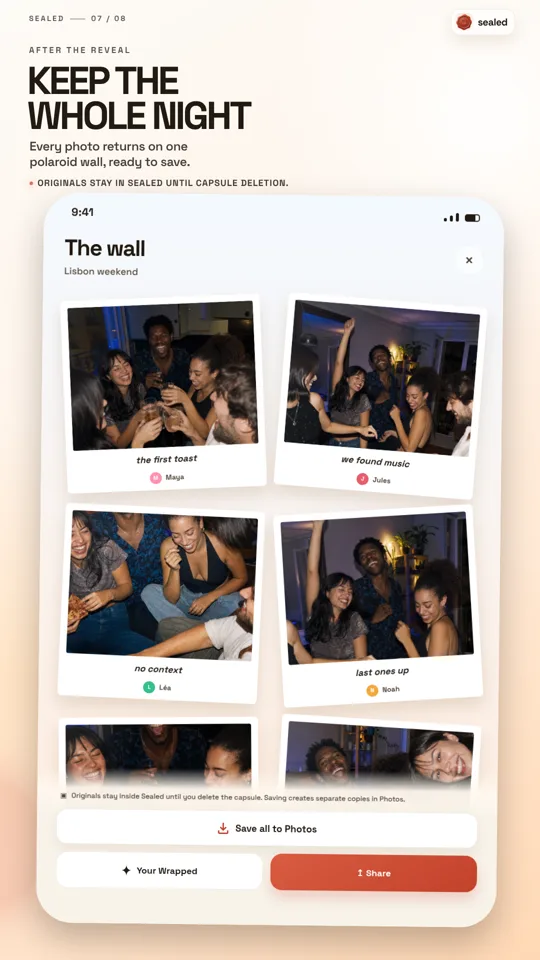
This is where a tool like Sealed is answering a different problem. Sealed is built around a group photo capsule where everyone shoots into a shared, delayed pool, nobody previews it, and the group opens it together at a chosen moment. The core idea is straightforward: everyone shoots, nobody peeks, and the group opens it together. That only works if photos are withheld from view until the reveal, which is the opposite behavior of an always-on partner feed.
If you want both an ongoing personal archive with a partner and an occasional shared-reveal ritual with a wider group, it is reasonable to keep the two separate rather than trying to make one feature do both jobs. Automatic partner sharing can keep handling the steady stream between two people, while a dedicated capsule handles the specific event where timing and mutual first-look matter.
A worked example: deciding how to share a weekend trip
Consider a hypothetical group of five friends returning from a weekend trip. Two of them are a couple who already use Google photo partner sharing between themselves. The other three are not connected to either partner's library.
If the couple simply relies on their existing partner sharing setup, only the two of them end up with a shared archive, and the rest of the group is left texting individual photos or waiting for someone to build an album manually. None of the five gets the experience of opening everyone's shots together, and any photos containing the other three friends now sit in the couple's shared library without those friends having agreed to that.
A cleaner path for this specific scenario: the couple keeps their partner sharing as-is for their own day-to-day photos, and the group separately agrees on one place to pool trip photos for everyone, with a plan for when it opens. Anyone appearing in a photo who is not part of that agreement gets asked before their picture moves further. This is an illustrative example, not a documented outcome, but it shows how the two mechanisms answer different needs and shouldn't be assumed to substitute for each other.
- Ask before extending partner sharing to include a photo of someone outside the two-person relationship
- Set a shared expectation with the group about when and where trip photos will be pooled
- Keep personal partner archives and group reveal pools as separate decisions
Practical limits to check before you rely on it
Because interfaces and default settings change, treat any specific menu location, filter option, or availability detail as something to verify directly in your own account rather than something fixed. What is stable is the underlying behavior: it moves photos from one person's library to another's, based on rules the sender sets, and it is not designed as a multi-person group tool.
It is also worth checking who can see what once sharing is on: whether the recipient gets full originals, whether they can re-share further, and whether turning sharing off retroactively removes photos already sent. These specifics matter more for consent than the headline feature name does, and they are the kind of detail best confirmed in the current settings rather than assumed from memory or from an older screenshot circulating online.
- Confirm what happens to already-shared photos if sharing is later turned off
- Confirm whether shared photos can be re-shared again by the recipient
- Re-check settings periodically since defaults and options can change
How this fits an intentional approach to group photography
None of this is an argument against Google photo partner sharing; it is a well-suited tool for its actual purpose, which is steady sharing between two people. The friction point only appears when it gets asked to do the job of a group ritual, or when it moves photos of people who had no say in the arrangement.
The broader principle worth carrying into any sharing decision is the same one that shapes Sealed's editorial position on group photography: shared anticipation, participant consent, minimal interruption, and a thoughtful reveal are worth designing for, not assuming will happen by default. A feature built for two-person convenience will not automatically produce those things for a group, and that's fine as long as you notice the mismatch before, not after, sensitive photos move somewhere unexpected.
Frequently asked questions
Does Google photo partner sharing let more than two people share one library?
It is designed around a one-to-one relationship where one person's photos flow into another person's library, not a shared multi-person pool; for a group, you would need a separate shared album or a dedicated group tool.
Do I need consent from people in a photo before using partner sharing?
Yes in practice: partner sharing can send photos of other people to someone outside the original context, so it's reasonable to check with anyone identifiable in the frame before their photo moves to a new audience, especially if that audience wasn't the one they expected.
Can partner sharing be used for a group reveal, like opening trip photos together?
Not well, because it shares photos automatically and continuously rather than holding them back until a chosen moment; a group reveal ritual generally needs a tool built around delayed, shared opening rather than an always-on feed between two people.
Sources and further reading
These resources provide the wider reference frame. Product statements on this page are limited to the public information provided by Sealed.