

Why photo sharing for photographers needs more than an upload button
When people search for photo sharing for photographers, they usually already have a working method - a shared album, a messaging thread, an export folder - and what they actually want to know is whether that method respects the people in the frame and the moment the photos were taken. Sharing mechanics are easy; the harder questions are about timing, consent and who gets to see what first.
A photographer working with a group, whether at a wedding, a trip or a casual gathering, is making choices that go beyond file transfer. Every share decision either preserves or disrupts the experience of the people being photographed. That's the lens worth applying before picking a tool.
Consent comes before convenience
The most overlooked step in photo sharing for photographers is confirming that people are comfortable being photographed and having those photos shared, especially when faces are identifiable. This isn't a legal opinion, and rules vary by context and jurisdiction, but as a working practice it's worth treating consent as something to establish before a shutter is pressed, not something to negotiate after images are already circulating.
In group settings this can be as simple as a verbal check before shooting, or a shared understanding about where images will end up - a private group, a public feed, or nowhere beyond the people present. Photographers who build this into their routine avoid the more common failure mode, which is realizing after the fact that someone didn't want a particular photo shared.
Timing changes how photos feel
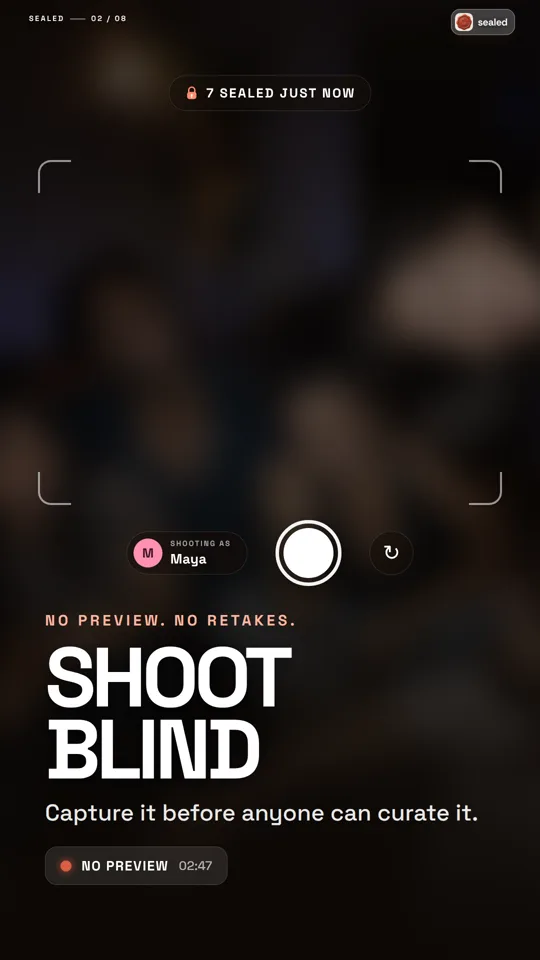
A second consideration, less discussed than consent but closely related, is when photos become visible. Live preview - seeing shots appear on a screen or feed as they're taken - changes group behavior in real time; people start posing for the preview rather than the moment. Delayed sharing, where images stay unseen until a later point, tends to preserve more natural behavior because nobody is performing for an immediate audience.
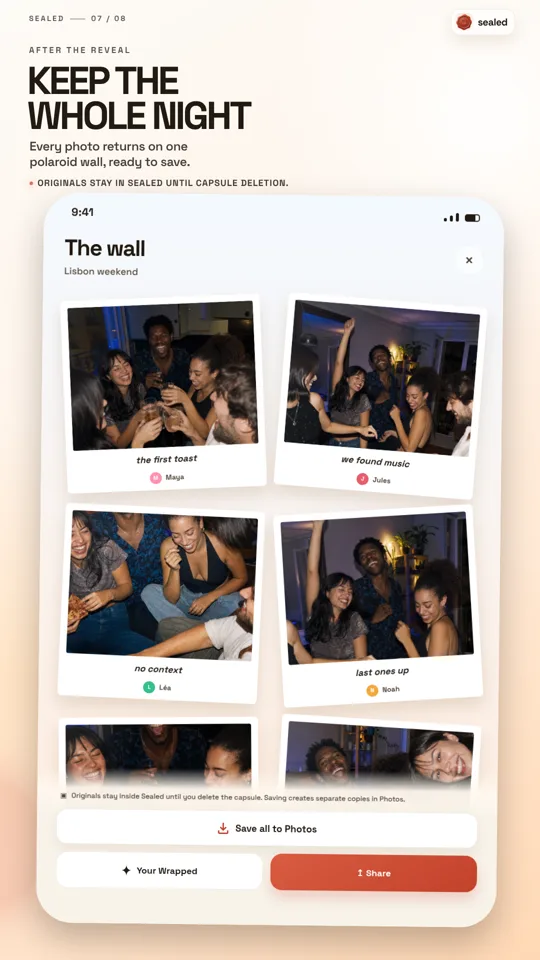
This is the core idea behind Sealed, a group photo capsule built around a delayed, shared reveal: everyone in the group shoots into it, nobody peeks as photos come in, and the group opens the results together at a chosen time. It's a narrow answer to a specific problem - reducing the interruption that live previews cause - rather than a general-purpose sharing or storage tool, and it's worth naming here only because timing is central to the reader's question.
For most everyday photo sharing for photographers, delayed reveal isn't necessary. It matters most for group events where the anticipation and the eventual reveal are part of the point - birthdays, trips, reunions - rather than for routine client delivery or solo shooting.
Local capsule versus cloud shared album: a practical distinction
Photographers choosing a sharing method are often implicitly choosing between two different models: a local or bounded capsule that a defined group contributes to and opens together, versus an open-ended cloud album that accumulates photos and stays accessible indefinitely. These aren't better or worse in the abstract; they suit different goals.
A cloud shared album is well suited to ongoing documentation - a family archive, a long-running project - where new photos are added over time and everyone can browse whenever they like. A capsule model suits a single bounded event where the goal is a shared moment of discovery rather than continuous access. Mixing up these goals is a common source of friction: using an always-open album for something meant to be revealed together undercuts the reveal, and using a closed capsule for something meant to be an evolving archive makes it hard to keep contributing.
A worked example: planning photo sharing for a group trip
Example only, not a recommendation for a specific product or workflow: imagine five friends on a weekend trip, each taking photos on their own phone. If the goal is to build a shared, ongoing photo library they can all add to and revisit for years, a cloud shared album with clear participant consent is a reasonable fit - everyone agrees upfront on who can see and add photos, and the album stays open after the trip.
If instead the goal is a single collective reveal - everyone shooting throughout the weekend but agreeing not to look at each other's shots until they're all back together - a delayed capsule model fits better, because it structurally removes the temptation to peek early. In this second scenario, the group would also need to agree on what happens to the photos after the reveal: whether they get exported to a shared album, kept private, or deleted.
Neither path requires elaborate planning, but naming the goal before choosing the method avoids the common mistake of picking a tool for its features rather than for what the group actually wants from the experience.
A short checklist before you share
Before sharing group photos, whether through a capsule, an album or a simple export, a few practical checks help avoid predictable problems.
- Confirm consent from identifiable participants before sharing, and again before any wider posting
- Decide whether the group wants live visibility or a delayed, shared reveal, and pick a method that matches
- Agree on where photos live afterward - ongoing shared album, private export, or deletion
- Check the current store listing or app language and availability directly, since these details change and shouldn't be assumed from an article
- Keep any consent or storage rules simple enough that everyone in the group actually remembers them
Where the advice stops
This article draws on Sealed's own published methodology and its comparison of local capsule versus cloud album approaches, not on independent testing of any tool, competitor benchmarking, or customer outcomes. Anyone evaluating a specific app should verify its current features, pricing and language availability directly with the provider, since these details change over time and translated or editorial descriptions don't guarantee that an interface or store listing matches.
None of this constitutes legal advice about consent or image rights, which vary by location and situation; readers with specific concerns should consult a relevant local authority or legal professional rather than relying on general guidance.
Frequently asked questions
Do I need everyone's consent before sharing group photos?
As a general practice, yes - anyone identifiable in a photo should be comfortable with it being taken and with how it will be shared, and it's better to confirm this before shooting than after. Specific legal requirements vary by location, so for situations with real stakes it's worth checking local rules rather than relying on general guidance.
What's the difference between a delayed reveal and a normal shared album?
A delayed reveal keeps photos hidden from the group until a chosen moment when everyone views them together, which preserves more natural behavior since nobody is posing for an immediate audience. A normal shared album is typically visible as photos are added, which suits ongoing archives but changes group behavior during live events.
How do I choose between a photo capsule and a cloud album for a group event?
Start with the goal: if you want an evolving archive people can keep adding to and browsing over time, a cloud shared album fits better; if you want a single collective moment of discovery, a bounded capsule with a delayed reveal fits better. Naming the goal first, before picking a tool, avoids most of the friction that comes from mismatched expectations.
Sources and further reading
These resources provide the wider reference frame. Product statements on this page are limited to the public information provided by Sealed.