


What a party photo booth rental actually involves
A party photo booth rental usually means hiring a physical booth or kiosk that someone delivers and sets up at your venue for a set window of time. Guests step in, pose and receive pictures as prints, digital files or both. Packages differ between vendors and change over time, so treat any feature you have heard about as a question to confirm.
Before you request quotes, decide what job the photos should do. A booth is good at posed, well-lit portraits in one spot. It is not designed to record the speeches, the kitchen conversations or the late dancing. Knowing whether you want a station guests visit or a record of the whole night prevents you from paying for the wrong thing.
- Hours of operation, plus setup and teardown time
- Whether an attendant stays with the equipment
- Backdrop, props and print layout options
- How digital copies are delivered, and for how long
- Travel, overtime or extra-hour charges
Practical limits to check before booking a photo booth
Start with the venue, not the vendor. Ask about floor space, the nearest power outlet, whether outside suppliers are allowed and whether they require insurance documents or set arrival times. An outdoor party adds questions about weather, cables and lighting after dark.
Next, read the contract closely: deposit terms, cancellation and date-change rules, overtime rates and what happens if equipment fails on the night. This article is not legal advice; if the amount at stake matters to you, ask someone qualified to review the terms.
Finally, line the booth hours up against your timeline. A booth that opens before guests arrive or closes before the party peaks spends paid time idle, and one placed far from the action may sit unused.
Consent and what happens to the photos
Every booth photo shows identifiable people, so consent matters before pictures are taken and again before they are shared. A print a guest takes home carries little risk. An online gallery, a branded overlay or posts on a vendor's social accounts are different, and guests deserve to know about them in advance and to be able to opt out.
Ask the vendor direct questions about storage and reuse. If children will attend, get permission from their parents or guardians first, and consider whether their images should appear in any shared gallery at all.
- Where are digital copies stored, and who can open the gallery?
- How long are files kept, and can they be deleted on request?
- Will any images be used in the vendor's own marketing?
- Can individual guests have their photos removed?
Interruption, queues and how the reveal feels
A booth concentrates photography in one corner. That can be a pleasant activity, but it can also create a queue that pulls people out of conversations, and instant prints mean photos are seen the moment they exist. For some groups that immediacy is exactly the fun.
Other groups care more about minimal interruption and shared anticipation. If that describes your party, treat the reveal as a deliberate choice: instant prints, a gallery sent days later, or a moment when everyone looks together. Each creates a different memory of the night, and none is automatically better.
Worked example: deciding for a 30-person birthday
Example only, not a real case: a host is planning a birthday dinner for about 30 friends in a rented room with one free wall and a single outlet. They want a few good portraits but mainly want people talking rather than queueing.
Applying the checks above, the host confirms the venue allows outside equipment, asks two vendors about attendant presence, gallery access and deletion, and adds a line to the invitation explaining that photos will be taken and anyone can skip them. They then weigh a short booth window during dessert against no booth at all.
Their decision rule: if portraits matter more than a record of the evening, book a shorter window; if the evening as a whole matters more, skip the booth and look for a lower-interruption way for guests to contribute photos.
- Venue permits outside supplier: yes or no
- Space and power confirmed
- Contract terms read, including cancellation
- Consent notice sent to guests
- Photo storage and deletion answers in writing
Where a phone-based capsule fits, and where it does not
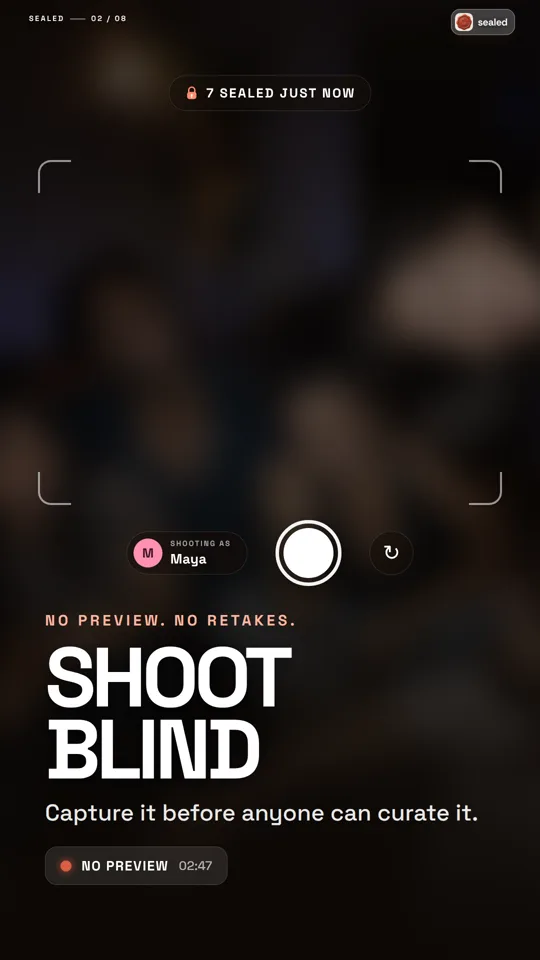
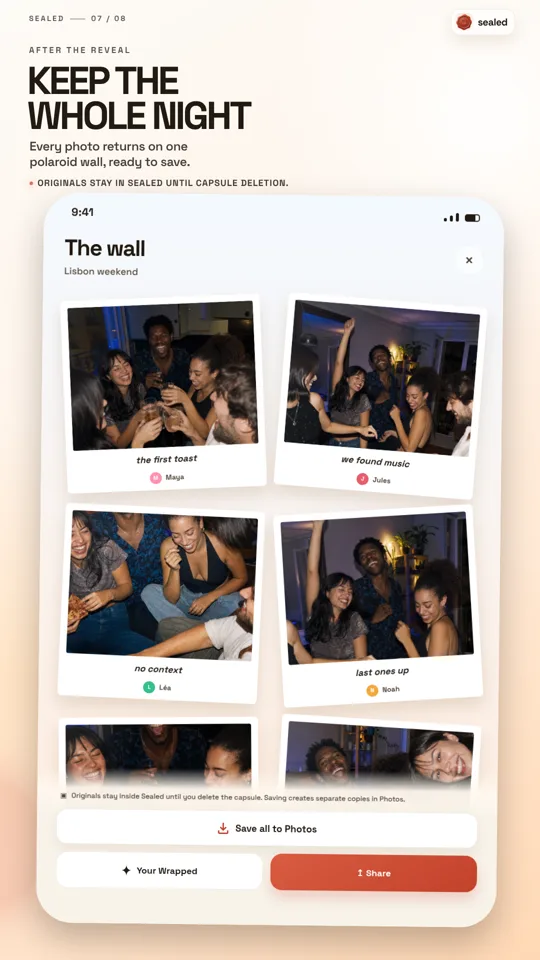
Sealed, which publishes this article, is a group photo capsule app rather than a booth service, free to download on the App Store and Google Play, so it does not replace prints, backdrops or on-site hardware. In a shared capsule, guests shoot on their own phones: each participant installs the Sealed app and joins through an invitation or code, and accounts are optional. In local mode, one phone is passed around and the photos stay on that device. Either way there is no preview or retake, nobody, the organiser included, sees anything early, and the group views every shot together at an opening time the creator picks, roughly six hours to a week later.
That approach has limits a booth does not. Sealed cannot bring in photos already on someone's camera roll, it has no screenshot detection, and a shared capsule needs connectivity to upload shots, so check signal at the venue. Shared-capsule copies are removed from Sealed's servers 30 days after opening, so people should save what they want. The Sealed guide to a disposable camera app for parties covers this in more detail.
Sealed has not tested or compared booth vendors; its methodology page explains how its editorial guidance is written. Use this article as a checklist, then verify current pricing, availability and terms directly with any vendor.
Frequently asked questions
What should I ask before booking a party photo booth rental?
Ask about hours, setup and teardown time, space and power needs, whether an attendant stays on site, how digital copies are delivered and stored, whether the vendor reuses guest photos in marketing, and the deposit, cancellation and overtime terms. Confirm with your venue that outside equipment is allowed.
Do guests need to consent to photo booth pictures being shared?
Guests should know photos will be taken and shared, and be able to opt out, before identifiable images go into online galleries or onto social media. Get permission from parents or guardians for any children. This is general guidance, not legal advice.
Is a photo booth the only way to collect group photos at a party?
No. A booth produces posed portraits at one station, while phone-based options such as shared photo capsule apps let guests contribute shots during the event and view them together later. These do not suit every party: with Sealed, for example, each guest must install the app and join the capsule, and the creator sets the opening time from about six hours to a week after. Choose based on whether you want prints and portraits or a lower-interruption record, and whether guests are willing to install an app.
Sources and further reading
These resources provide the wider reference frame. Product statements on this page are limited to the public information provided by Sealed.