


Why the search for a photo app for pc gets complicated fast
Someone searching for a photo app for pc is usually solving one of two different problems, even if the query sounds identical. One person wants a tool to sort and edit personal photo libraries on a desktop machine. Another wants something for a group activity: pooling pictures from a shared event, then looking through them together. The right answer changes depending on which problem you actually have.
This matters because the features that make an app good at one job can make it worse at the other. A desktop editor built for cropping and color correction usually has no concept of a group timeline or a shared reveal moment. A tool built around a group ritual, by contrast, may deliberately not offer heavy editing at all, because the point is collective viewing rather than individual polish.
Local storage versus cloud-shared albums
One of the first practical decisions is where the photos actually live. A local photo capsule keeps images on a device or a closed, time-boxed space until a defined moment, while a cloud shared album typically syncs continuously and is viewable as soon as anyone uploads. Sealed's own comparison of these two models lays out the tradeoff plainly: continuous sync favors convenience and speed, while a delayed local capsule favors anticipation and a shared first look.
For a pc-based workflow, this distinction affects what you should look for in an app. If you want a shared reveal experience, look for something that intentionally withholds previews until a trigger point, rather than an app that simply syncs faster. If you want a working photo library, sync speed and search tools matter more than any reveal mechanic.
Neither approach is objectively correct. The right choice depends on whether your goal is organizing images or building a moment around opening them together.
- Ask whether photos are visible to others as soon as they're taken, or held until a set point
- Check whether storage is local, cloud-synced, or a hybrid before assuming either
- Consider how long images stay accessible after the initial reveal or upload
Consent and identifiable people in shared photo sets
Any tool that pools photos from multiple people on a pc, whether for editing or shared viewing, involves other people's images of each other. It's worth pausing on consent before treating this as a purely technical choice. If a photo clearly identifies someone, they generally deserve a say in whether it's taken or shared, independent of which app is used.
This is a practical point, not a legal one: check what a group has agreed to before uploading or opening a shared set, especially if the group includes people who weren't part of the original conversation about photographing or sharing. A photo app for pc doesn't resolve this on its own; the people using it do.
A worked example: choosing between two approaches
Imagine a small reunion where twelve people take photos throughout an afternoon. One option is a shared cloud album where each photo appears the moment it's uploaded, so everyone can watch the collection grow in real time throughout the day. Another option is a capsule that stays sealed until the group has all left, then opens once, together, that evening.
In the live-upload scenario, people may self-edit what they contribute as they watch others' reactions, and some may check the album mid-event, which changes the group's shared experience. In the delayed-reveal scenario, nobody sees anything until the agreed moment, so the opening becomes a distinct shared event rather than something absorbed gradually over the day.
This is illustrative, not a recommendation that one is universally better. A group that wants documentation as things happen will prefer the first; a group that wants a deliberate shared moment will prefer the second. Naming this tradeoff explicitly, before choosing an app, tends to avoid disappointment either way.
Where Sealed fits, and where it doesn't
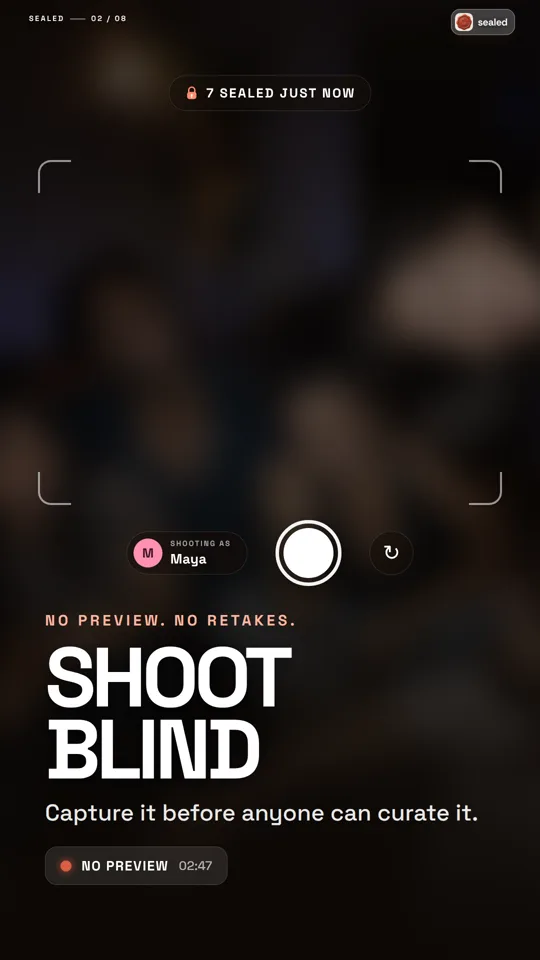
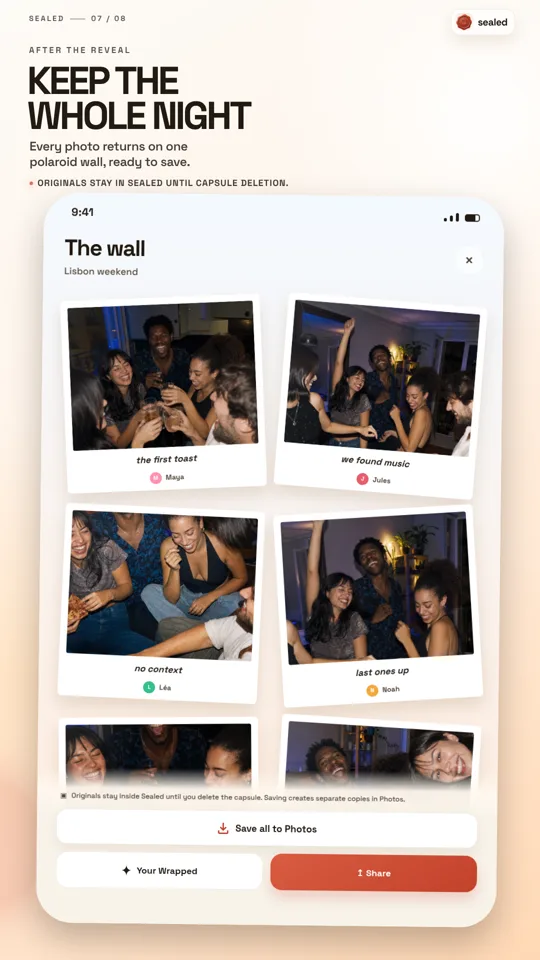
Sealed is built around the idea that everyone in a group shoots photos, nobody peeks at them individually, and the group opens the results together at a chosen moment. It's a group photo capsule designed for that specific ritual of delayed, shared reveal, not a general-purpose photo editor or a substitute for standard desktop photo management.
If someone's core need is a photo app for pc in the sense of organizing, editing, or archiving a personal photo library, Sealed's model of delayed group reveal isn't the right fit for that job, and it isn't presented as one. It's more relevant when the goal is a shared moment among a group rather than solo photo management.
It's also worth noting that editorial descriptions of a product, including this article, don't confirm that any given interface, store listing, or support channel is available in a particular language or region. Anyone evaluating an app for their own use should check the current listing directly rather than relying on general write-ups.
A short checklist before you commit to an app
Before settling on any photo app for pc, whether for individual editing or group sharing, it helps to answer a few questions concretely rather than relying on impressions from marketing pages.
- Is my main need organizing/editing a personal library, or coordinating a group activity?
- Do I want photos visible as they're taken, or held until a shared reveal?
- Have the people being photographed agreed to how the images will be shared afterward?
- Where will the photos actually be stored, and for how long will they remain accessible?
- Does the interface, store listing and support match the language and region I actually need, confirmed on the current listing rather than assumed?
Frequently asked questions
Is a photo app for pc the same thing as a group photo-sharing tool?
Not necessarily. Many pc photo apps are built for organizing and editing a personal library, while group photo-sharing tools focus on pooling and viewing images from multiple people. Some overlap exists, but the core purpose often differs, so it's worth clarifying which need you actually have before choosing one.
What's the practical difference between a local photo capsule and a cloud shared album?
A local photo capsule typically holds images until a defined moment before anyone can view them, supporting a delayed, shared reveal. A cloud shared album generally syncs and displays photos as soon as they're uploaded, prioritizing immediacy and convenience. Neither is inherently better; the right choice depends on whether you want anticipation or real-time visibility.
Do I need consent from everyone in a group photo before sharing it?
As a general practice, yes: if a photo clearly identifies someone, it's reasonable to get their agreement before taking or sharing it, regardless of which app or platform is used. This isn't a legal ruling for every situation, but it's a sound baseline for group photo activities of any kind.
Sources and further reading
These resources provide the wider reference frame. Product statements on this page are limited to the public information provided by Sealed.