
What people actually mean by 'photo app for android'
When someone searches for a photo app for android, they're rarely looking for a single feature. They're usually trying to solve one of a few different problems: backing up photos so a lost phone doesn't mean lost memories, sharing a batch of pictures with a group after an event, or finding a way to take pictures together that feels less like a stream of live notifications and more like a shared moment. Those are three different jobs, and the right app depends on which one you're actually trying to do.
It helps to separate storage and backup apps, which are about keeping photos safe over time, from sharing apps, which are about moving photos between people, from capture apps, which change how the picture-taking itself feels. Many general-purpose apps blend all three, which is convenient but can also mean the experience is optimized for none of them in particular.
Backup and general sharing: the baseline case
For straightforward backup and sharing, Google's own documentation on sharing photos and videos in Google Photos describes the core mechanics available to most Android users: shared albums, direct links, and collaborative albums where multiple people can add photos to one place. This is a reasonable starting point for anyone who mainly wants photos to sync automatically and to be easy to hand off to family or friends after the fact.
The tradeoff with this kind of always-on sharing is pacing. Photos typically appear as soon as they're taken or added, which is great for keeping everyone in the loop in real time, but it also means there's no built-in pause between capturing a moment and seeing how everyone else captured it. If your group wants to compare notes or reactions before anyone's photos are visible, a standard shared album won't create that on its own - you'd need to agree on manual timing as a group.
When the goal is a shared reveal, not just shared storage
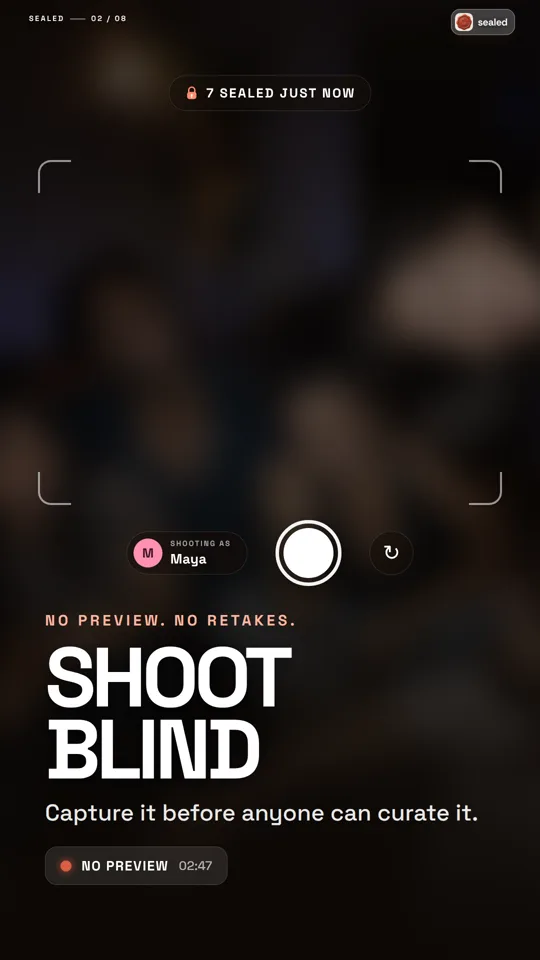
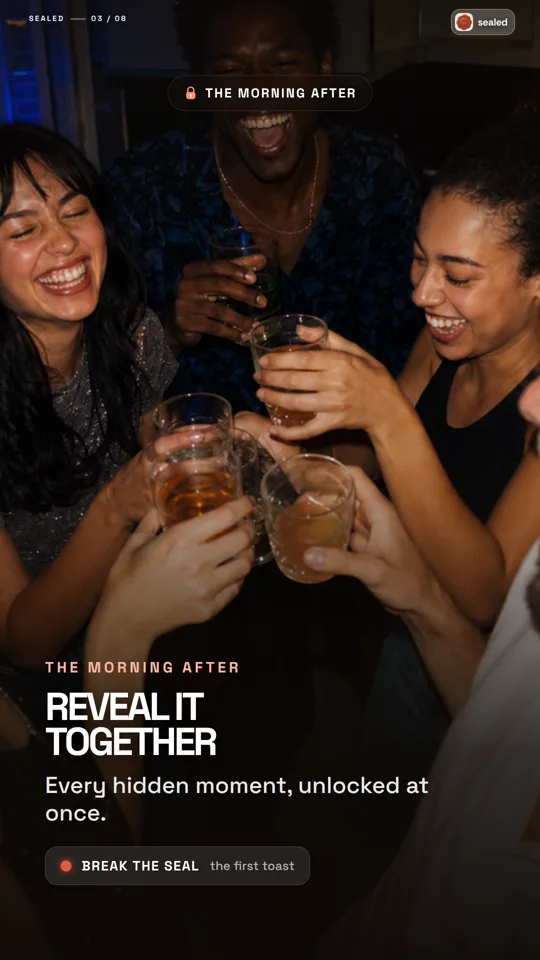
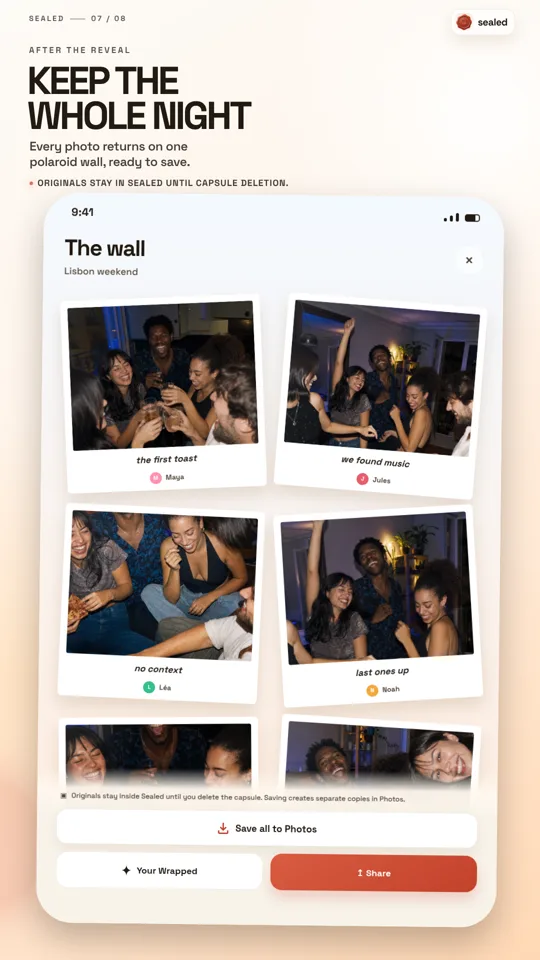
Some groups want something more specific: a way to take photos together during an event - a trip, a wedding, a party - without anyone seeing what others captured until later. This is a different design goal than backup, and it's the specific niche Sealed sits in. Sealed is built around a delayed, shared reveal: everyone in the group takes their photos during the event, nobody can peek at anyone else's shots in the meantime, and the whole group opens the capsule together once it's ready.
The idea behind this approach is that it changes the emotional texture of group photography. Instead of a photo appearing and immediately getting reactions, likes, or edits from you, everyone's contributions build up privately and get experienced together later, more like opening a shared present than watching a live feed. Sealed's own methodology page describes this reasoning in more detail, and it's worth reading if the concept is unfamiliar, since it explains the thinking behind the delay rather than just the mechanics of it.
It's worth being clear about scope here: this reveal-based approach isn't a replacement for backup or long-term storage, and Sealed doesn't claim to be the only way to achieve a delayed reveal - a group could approximate something similar manually, for instance by agreeing not to look at a shared album until a set time. What a purpose-built tool changes is convenience and consistency in enforcing that pause, not the underlying possibility of doing it yourself.
Consent and interruption: the parts people forget to plan for
Whichever app a group uses, two practical issues come up regardless of the technology: consent and interruption. Consent matters because a photo of someone else, especially one that's identifiable, isn't only yours to share. Getting agreement before photographing or distributing images of other people is a basic courtesy that doesn't change no matter which app handles the mechanics - it's a decision made among people, not a setting in an app.
Interruption is the other recurring friction point. Apps that surface notifications, comments, or reaction prompts every time someone adds a photo can pull people out of the moment they're supposed to be enjoying. If minimizing interruption during an event matters to your group, it's worth checking, before the event, whether the app you're using pushes real-time alerts or holds everything until later. This is a genuinely practical thing to test with a small group chat before relying on it for something larger, like a wedding or reunion.
A worked example: choosing between two approaches
Here's a hypothetical to make the tradeoff concrete. Imagine a group of eight friends going on a weekend trip. Option A: they use a standard shared album, so photos appear as they're taken, and by the end of the weekend everyone has already seen and commented on most of the pictures in real time. Option B: they agree everyone captures photos throughout the weekend but doesn't share them, then open everything together on the last night as a group.
In Option A, there's no real reveal moment - the album is more like a running photo diary. In Option B, the group experiences a distinct moment of surprise and shared reaction, but it requires more coordination (someone has to hold everyone to the 'don't share yet' agreement) or a tool designed to enforce it, since Sealed's public description of its concept is essentially that: a mechanism that formalizes the 'nobody peeks until we open it together' rule for the group.
Neither option is objectively better; they serve different goals. Option A suits ongoing documentation and easy backup. Option B suits a single memorable reveal experience. Deciding which one to plan for before the event, rather than mid-event, avoids the awkwardness of half the group already having seen photos the other half was hoping to be surprised by.
A short checklist before you commit to an app
Before settling on a photo app for android for a specific event or ongoing use, it can help to run through a short set of questions as a group rather than assuming everyone wants the same thing.
- Is the goal ongoing backup, one-time sharing, or a coordinated reveal moment?
- Does everyone in the group agree on when photos of them can be taken and shared?
- Will the app send real-time notifications, and is that acceptable during the event?
- If a delayed reveal is the goal, is there a shared understanding of when the reveal happens?
- Has anyone checked the app's current store listing for the features and language support relevant to your region, since these can change over time?
Frequently asked questions
What's the difference between a regular shared photo album and a delayed-reveal app like Sealed?
A regular shared album, like the shared and collaborative albums described in Google's own Photos support documentation, typically shows photos as soon as they're added, so the group sees everything build up in real time. A delayed-reveal approach, which is the concept behind Sealed, deliberately withholds everyone's photos from each other until a set moment when the whole group opens them together, creating a single shared reveal rather than a running feed.
Do I need consent from other people before sharing photos of them in a group app?
Yes, as a general practice - anyone identifiable in a photo should have given consent before that photo is taken or shared further, regardless of which app is used. This isn't something an app can fully manage on its own; it's a group agreement that should be established before photos start being taken, especially for events with people who might not expect to be photographed or shared publicly.
Is a shared-reveal photo app right for every group or occasion?
No - it depends on what the group wants. A delayed, shared reveal suits occasions where the surprise and collective reaction matter, like a trip or celebration, but it isn't necessary for ongoing documentation or simple backup, where a standard real-time shared album is usually simpler and sufficient.
Sources and further reading
These resources provide the wider reference frame. Product statements on this page are limited to the public information provided by Sealed.