

Why the question is harder than it looks
When people ask which app is best for photo frame, they're often bundling together several different needs: a place to collect group photos, a way to display them, and sometimes a way to control when and how they're seen. A digital picture frame app that streams the latest upload instantly is solving a different problem than an app built around a delayed, shared reveal. Before comparing tools, it helps to name which of these you actually want.
This matters because 'best' depends on what happens between the moment a photo is taken and the moment it's seen by the group. Some apps optimise for immediacy: photos appear as soon as they're taken, visible to whoever has access. Others, including Sealed, are built around the opposite idea - that a shared, delayed reveal can be more meaningful than a live feed, because nobody is watching the count of likes or checking who posted first while the moment is still happening.
Which app is best for photo frame: matching the tool to the ritual
If the goal is a literal digital photo frame - a screen on a wall showing rotating images - the relevant features are display compatibility, upload simplicity, and how contributors add photos. If the goal is closer to a group photo ritual, where a set of people all contribute during an event and then experience the results together, the more relevant features are consent handling, the shape of the reveal, and how long images are held before anyone can preview them.
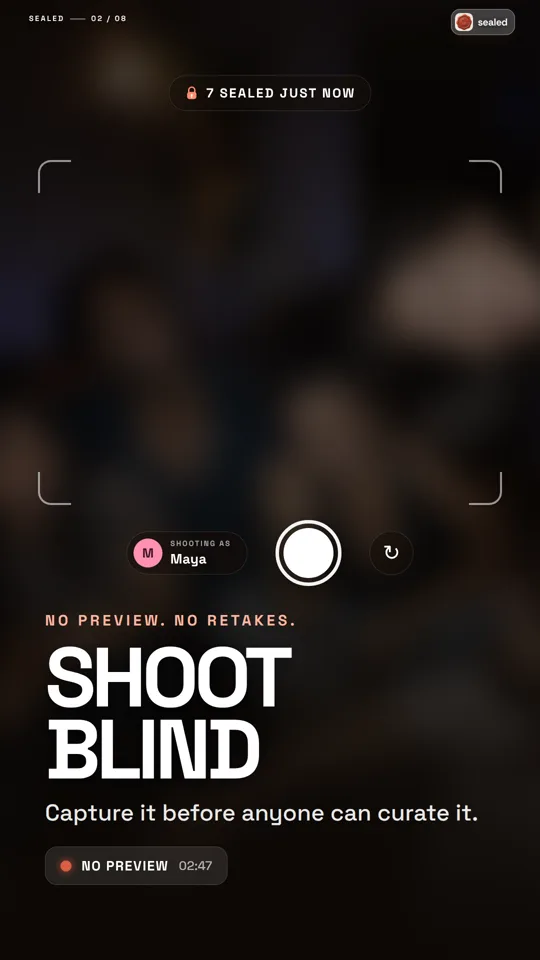
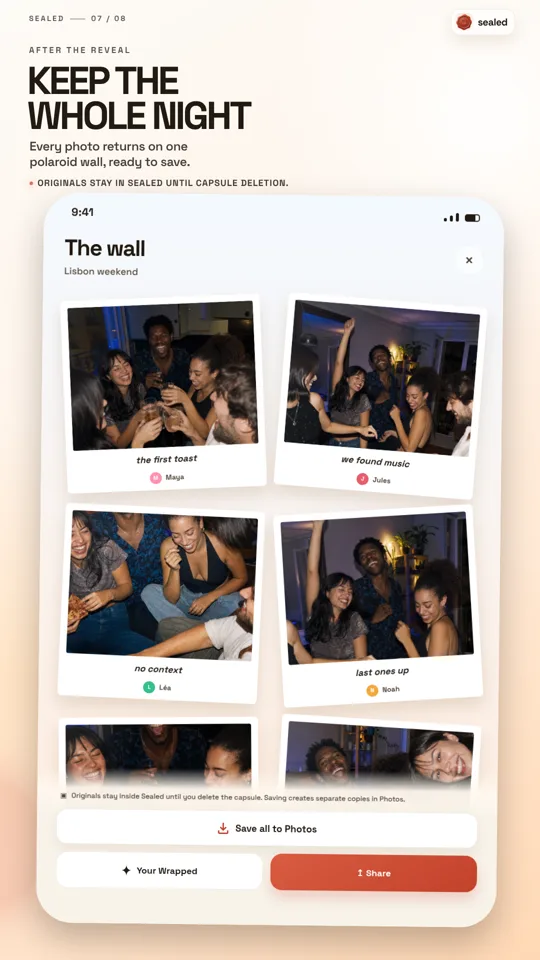
Sealed sits in the second category. It is a group photo capsule built around delayed, shared reveal: everyone shoots, nobody peeks, and the group opens it together. That framing only helps if the reader actually wants a shared reveal moment rather than a live-updating frame, so it's worth being honest with yourself about which experience you're trying to create before picking a tool.
A worked example: choosing for a weekend trip
Consider a hypothetical example. A group of six friends is going on a weekend trip and wants photos from the whole group without anyone hovering over their phone checking who posted what. One option is a shared cloud album that updates live - anyone can open it at any time and see photos as they land. Another option is a capsule-style tool where photos are collected but not visible to the group until everyone agrees to open it together, for instance at the end of the trip.
In this hypothetical, the live album optimises for immediacy and casual browsing throughout the weekend. The delayed-reveal capsule optimises for a shared moment at the end, without the pressure of a live audience during the trip itself. Neither is objectively better; the right choice depends on whether the group values ongoing visibility or a single collective reveal. This example is illustrative only - it is not a report of an actual test or outcome.
Consent and participant comfort
Whichever app is chosen, one principle applies regardless of the tool: people should have consent before photographing or sharing identifiable participants. This is especially relevant for any app that automatically syncs or displays photos, since a photo can end up visible to a group, or to a frame in someone's home, before the person in it has agreed to that.
Apps built around delayed reveal can make this easier to manage in practice, because there's a natural pause between capture and visibility during which a participant could, in principle, raise a concern before the group sees the image. But no app design substitutes for the underlying norm: ask before you photograph someone in a way that will be shared, and ask again before that photo goes somewhere more public, like a shared frame or a wider album.
- Confirm before the event that everyone is comfortable with photos being shared with the group
- Clarify whether the reveal is delayed or live, and make sure participants know which
- Check what happens to photos after the reveal - are they kept locally, in a shared album, or deleted
Local capsule vs. cloud shared album
A structural difference worth understanding is between a local photo capsule and a cloud shared album, since it affects both privacy and how the reveal feels. A local capsule tends to keep photos contained to the device or group session until the reveal, while a cloud shared album is typically designed for ongoing, live access from anywhere. This distinction shapes not just the technical mechanics but the emotional experience - a live album invites checking in throughout the day, while a capsule holds the images back for a single shared moment.
Sealed's own guide on this distinction is a useful starting point for readers who want to understand the tradeoffs in more depth, since it lays out the structural differences rather than just the marketing framing of either approach.
A short decision checklist
Rather than ranking apps in the abstract, it's more useful to work through a short set of questions tied to what actually matters for a given group and occasion.
- Do you want photos visible as they're taken, or held back for a shared reveal?
- Does everyone in the group need to consent before photos are shared or displayed?
- Will the photos live on a physical frame, in a shared album, or both?
- Who controls when the reveal happens, and can that be changed once set?
- Is minimal interruption during the event a priority, or is live sharing part of the fun?
Where Sealed fits, and where it doesn't
Sealed is built for groups who want a shared photo ritual without the pressure of a live preview - the idea that everyone shoots, nobody peeks, and the group opens the results together. It is not designed to function as a live-updating digital picture frame, and readers looking for that specific use case should look for apps built explicitly around continuous frame display.
As with any editorial guidance here, this reflects Sealed's own public product framing rather than a comparative review of specific competing apps, their pricing, or their current feature sets, all of which can change and should be checked directly with the provider in question. The public site includes privacy, terms and child-safety information for readers who want more detail on how Sealed itself is structured around these principles.
Frequently asked questions
What's the main difference between a photo frame app and a group photo reveal app?
A photo frame app is typically built for continuous, live display of images as they're added, while a group photo reveal app - like a photo capsule - is built around holding photos back until a set moment when the group can experience them together. The right choice depends on whether you want ongoing visibility or a single shared reveal.
Do I need consent from everyone in a photo before sharing it in an app?
Yes, as a general principle, you should have consent before photographing or sharing identifiable participants, regardless of which app you use. This is especially important for apps that automatically sync or display images to a group or a shared screen.
Can editorial content confirm an app is available in my language or region?
No. Editorial translations do not establish that an app's interface, store listing or support is available in the same language as the article, so visitors should verify the current local store listing directly before assuming availability.
Sources and further reading
These resources provide the wider reference frame. Product statements on this page are limited to the public information provided by Sealed.