

What a photo app for weddings should solve
A photo app for weddings can do more than collect extra images. The useful question is whether it gives guests a simple role in the day without turning every moment into a screen-management task. Before choosing one, decide what you want guests to contribute: candid perspectives, a private group archive, a scheduled moment of discovery, or a mixture of these.
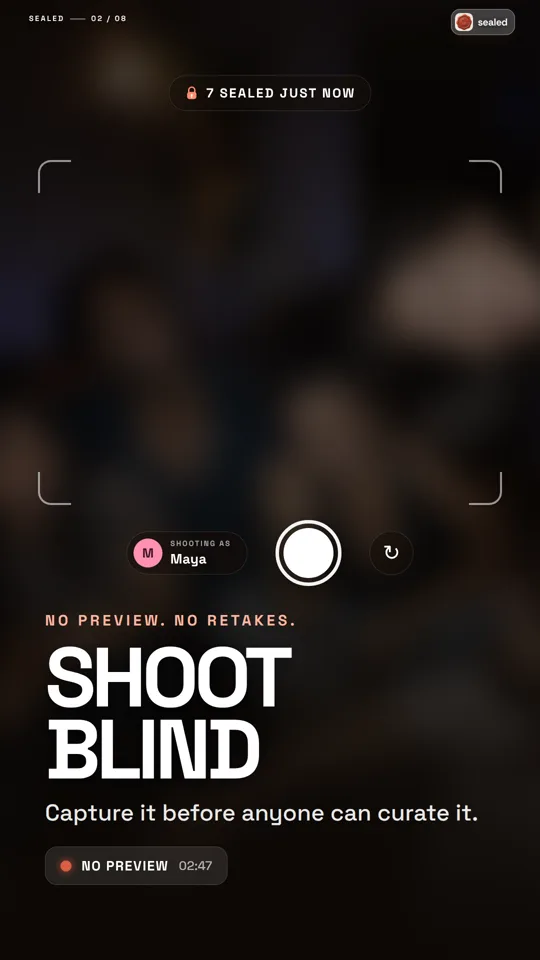
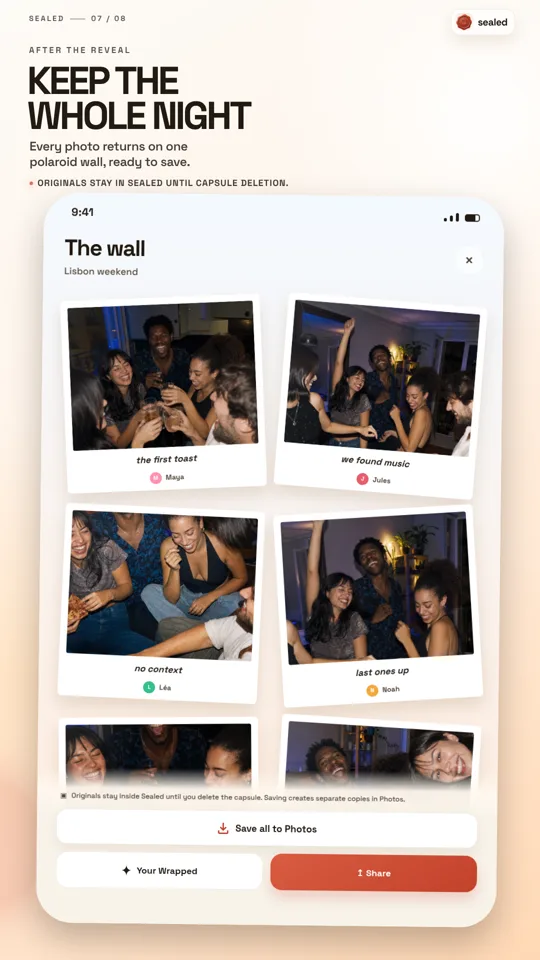
For groups that dislike constant checking and instant posting, the structure matters as much as the camera. Sealed is presented as a shared group photo capsule in which images are kept from view until the group opens them together. Its public guidance and methodology frame that idea around intentional participation, consent and a considered reveal, so this article focuses on those limits rather than treating any app as a universal wedding solution.
- Define the purpose in one sentence before comparing options.
- Choose whether guests should see images immediately, later, or only at a planned group opening.
- Decide who is invited to contribute and who will explain the process.
Photo app for weddings: begin with consent and expectations
Weddings include many different comfort levels around being photographed. Some guests enjoy candid pictures; others may prefer not to appear in identifiable images or not to have those images shared. A good plan makes room for that difference before anyone starts taking photos.
Consent is not a single checkbox at the start of the day. It is clearer when couples tell guests what will happen to contributed images, who may access them, whether anyone may share them outside the group, and how a concern can be raised. This is especially important where children, vendors, or guests with personal privacy reasons may appear.
Keep the request warm and specific. A note in the invitation, ceremony program, welcome sign, or group message can explain the photo ritual while making it plain that participation is optional. The aim is not to police cameras; it is to prevent the assumption that every identifiable person is comfortable being photographed or redistributed.
- Ask before photographing or sharing a recognisable guest when consent is uncertain.
- Provide a simple opt-out route, such as speaking to a named organiser.
- Tell contributors whether images are intended to remain inside the wedding group.
- Avoid treating a wedding hashtag as permission to post other people.
Design for shared anticipation, not constant interruption
The strongest wedding photo rituals have a rhythm. Guests should understand when to capture a moment, when to put devices away, and when the group will return to the images. Without that rhythm, a collection tool can create more live-preview pressure than connection.
A delayed reveal can suit couples who want the feeling of discovery to be collective rather than individual. It changes the prompt from “show me what I just took” to “add your perspective for later.” That can support shared anticipation, but only if guests know the delay is intentional and know roughly when the reveal will occur.
Minimal interruption also means limiting instructions. A short host announcement and one accessible written reminder are often easier to follow than repeated prompts throughout the event. Build the ritual around natural pauses: after the ceremony, during the reception, or at a later gathering.
- Use one clear invitation to contribute rather than frequent reminders.
- Protect ceremony and speeches from phone-focused participation if that fits the couple's wishes.
- Set a reveal moment that feels realistic for the group, not merely dramatic.
Check the practical limits before inviting guests
Before acting on any wedding photo approach, verify its current local store listing, interface language, support options and privacy details. An editorial translation or article in a language does not prove that the corresponding app experience, listing or support is available in that language. The current local store page is the appropriate place to confirm it.
Also review how access is controlled in practice. Ask who can join, whether a link can be forwarded, what happens if a guest changes phones, and how the organiser will handle accidental uploads or a request to remove an image. These are planning questions, not claims about a particular provider's current features.
For Sealed specifically, the public site provides privacy, terms and child-safety information. Read those materials directly before relying on the service for a wedding, particularly when minors may be photographed or when your group has specific privacy expectations. Public product information can explain the concept, but it cannot replace checking the current terms and settings that apply to your event.
- Verify the local app listing rather than assuming language availability.
- Read privacy, terms and child-safety information before inviting a group.
- Plan an organiser contact for removals, access questions and guest concerns.
- Avoid promising guests a level of permanence, secrecy or moderation that you have not confirmed.
Example decision aid: choose the lightest ritual that fits
Example: Maya and Jordan want guests to contribute candid images, but they do not want people scrolling through photos during dinner. They expect a mix of close friends, relatives and children, and they want a simple way to state that participation is voluntary. Their best starting point is a delayed group collection with a clearly communicated reveal, paired with a separate plan for guests who do not wish to be photographed.
They first decide the social rule: guests can contribute if they want to, but should not share identifiable people outside the group without consent. Next, they choose one person to answer questions and place the instructions in two places: a welcome message and a reception sign. Finally, they select a reveal time after the event, so dinner and speeches do not become a live gallery review.
This example is a planning illustration, not evidence that a particular approach will produce better images or guest satisfaction. Its value is that each choice has an owner, a boundary and a fallback.
- If your priority is candid variety, invite broad participation but keep instructions brief.
- If your priority is privacy, narrow access and explain sharing boundaries plainly.
- If your priority is a collective moment, name the reveal timing before the event.
- If your priority is minimal disruption, avoid making participation a central activity during key moments.
A final pre-event checklist for a thoughtful reveal
A wedding photo plan works best when the couple can explain it in under a minute. Guests do not need a technical briefing; they need to know the purpose, the participation choice, the privacy boundary and the next step. If any of those answers are unclear, simplify the plan before sending invitations.
The decision is also allowed to be modest. You may use a group photo ritual only for the reception, only for a small circle, or not at all. The right choice is the one that respects the event's atmosphere and the people in it, rather than the one that creates the largest possible archive.
- State the purpose: shared memories, not compulsory content.
- Name the organiser or contact route for questions.
- Explain that recognisable participants deserve consent before photography or sharing.
- Confirm the reveal plan and whether guests may share afterward.
- Check current local availability, terms and privacy information before committing.
Frequently asked questions
What should I check before choosing a photo app for weddings?
Check the intended guest experience, consent approach, access controls, sharing expectations, reveal timing, current local store listing, and the provider's privacy and terms information. Keep participation optional and make removal or concern-reporting routes clear.
How can a wedding photo app respect guest privacy?
Explain who can view contributed images, ask for consent before photographing or sharing identifiable people when needed, provide an opt-out path, and avoid assuming that attendance or a hashtag permits public posting. Review the service's current privacy and child-safety information before use.
Is a delayed photo reveal suitable for a wedding?
A delayed reveal can suit a wedding when the couple wants guests to focus on the event rather than inspect images immediately. It works best with a simple explanation, voluntary participation, realistic reveal timing and clear boundaries around later sharing.
Sources and further reading
These resources provide the wider reference frame. Product statements on this page are limited to the public information provided by Sealed.