


Why the search for a photo app for Mac gets complicated fast
Someone searching for a photo app for Mac is rarely asking a single question. They might mean the built-in Photos app, a third-party editor, a backup tool, or something for sharing pictures with a group after an event. Each of these solves a different problem, and conflating them leads to disappointment: an app built for editing won't necessarily help you coordinate a shared album, and a cloud gallery won't necessarily give you control over when people see the pictures.
Before comparing apps, it helps to name the actual task. Are you trying to store and organize your own photo library? Trying to edit and export images? Or trying to get a group of people to contribute and view photos together, ideally without the usual scramble of texts and screenshots? The answer changes which category of app is even relevant, and searching by device (Mac) rather than by task is often why people end up with a tool that's technically fine but doesn't fit their actual habit.
Local storage versus cloud-based sharing on a Mac
A meaningful split among Mac photo tools is whether photos live primarily on your device or in a shared cloud space. Local-first approaches keep files under your own control and don't depend on a service staying available or a subscription continuing, but they make it harder for a group to view or add to the same set of photos without manual transfers.
Cloud-based shared albums solve the group-access problem at the cost of trusting a third party's infrastructure and terms. This tradeoff is discussed in more general terms in Sealed's comparison of local photo capsules versus cloud shared albums, which is worth reading if you're deciding between the two models rather than just picking whichever app appears first in a search.
Neither model is universally better. If your goal is personal archiving, local-first tools reduce dependency risk. If your goal is a group experience - several people contributing photos from an event and viewing them together - some shared or cloud component is usually unavoidable, even if only for the moment of exchange.
If the goal is a shared reveal, not just storage
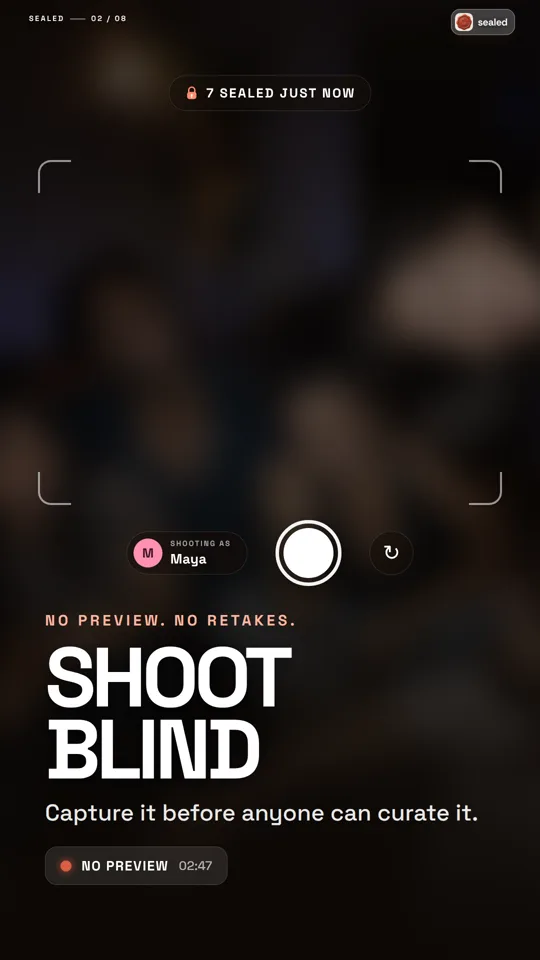
Some people search for a photo app for Mac because they actually want a group ritual: everyone at a gathering takes photos, and the group looks at them together afterward, rather than each person previewing and curating their own shots in real time. That's a narrower and more specific need than general photo management.
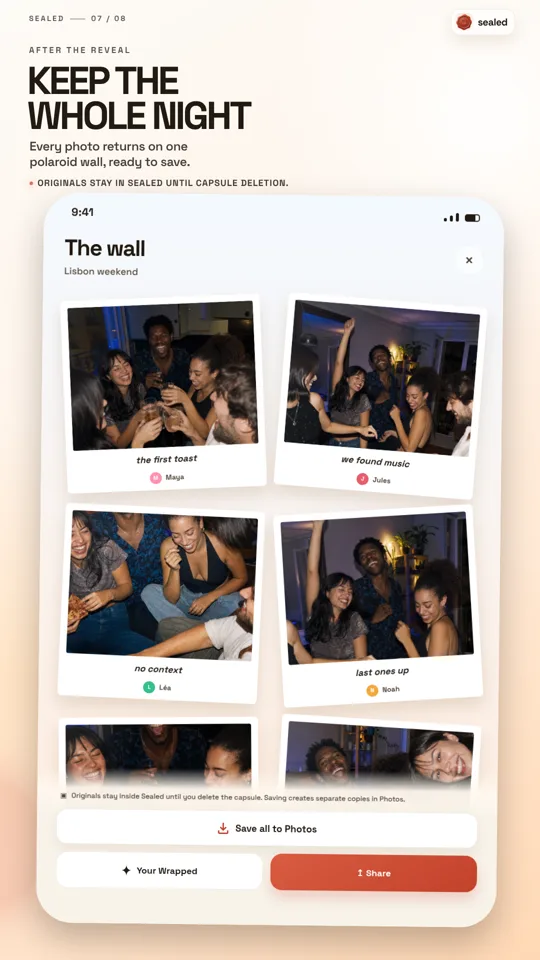
This is the space Sealed operates in. It's built around a group photo capsule where the idea is straightforward: everyone shoots, nobody peeks, and the group opens the results together later. The relevant bound here is that this describes the product idea and its editorial position, not a claim that it replaces a general-purpose Mac photo library or editing app - it's aimed specifically at the shared, delayed-reveal moment, and whether its interface or listing is available in your language or region on any given day is something worth checking directly rather than assuming.
If a delayed group reveal isn't what you're after, a tool like this won't be the right fit, and that's fine - it's a reason to keep looking at general Mac photo apps instead.
Consent and etiquette matter more than the app itself
Whatever app a group settles on, the app doesn't resolve questions of consent. Photographing people and then sharing those photos - whether instantly or after a delay - works better when participants have agreed to be photographed and have some sense of where the images will end up. This matters more in group settings than solo photography, because one person's comfort with sharing doesn't extend automatically to everyone in frame.
A simple practice is to ask before you shoot in situations where someone might not expect a camera pointed at them, and to ask again before wider sharing, even within a friend group. This is a low-effort habit, but it's the kind of thing that's easy to skip when an app makes sharing frictionless. The ease of sharing is a reason to be more deliberate about consent, not less.
Minimal interruption is a related idea: the best group photo tools let people participate without constantly checking a screen or worrying about who's seen what yet. A thoughtful reveal - waiting until everyone can look at the results together - tends to produce a calmer experience than instant previews, which can create a subtle competitive or self-conscious dynamic during the event itself.
A worked example: choosing for a weekend trip with friends
Example only, not a recommendation: imagine five friends going on a weekend trip, all with Macs and iPhones, wanting one shared set of pictures without anyone previewing shots on the spot. Working through the decision might look like this.
First, they'd rule out pure editing apps, since editing isn't the bottleneck - coordination is. Second, they'd decide whether they're comfortable with a cloud component, since some sharing mechanism is necessary for five people to end up with the same photos. Third, they'd decide whether they want the group to see photos as they're taken or all together at a set moment - the former favors a standard shared album, the latter favors a delayed-reveal format like Sealed's capsule concept. Fourth, before the trip, they'd have a quick conversation about who's comfortable being photographed and where the results might be shared afterward, since that's not something any app decides for them.
This sequence - task, storage model, reveal timing, consent - is a reasonable starting checklist for anyone facing a similar decision, adaptable well beyond this specific hypothetical.
- Identify whether you need storage, editing, or group sharing before comparing apps
- Decide if you're comfortable with cloud storage or prefer local-first control
- Decide if instant or delayed group viewing fits your event better
- Agree on consent and sharing expectations with the group beforehand
- Check current app store listings for your language and region rather than assuming
What to check before committing to any option
App features, pricing and regional availability change over time, so treat any specific claim about a Mac photo app - including store listing language, price tier or feature list - as something to verify at the time you're actually deciding, rather than as a fixed fact. This applies to Sealed as much as to any other app.
It's also worth checking that a product's public information covers the basics you'd want from anything handling personal photos: how privacy works, what the terms of use say, and whether there's clear information about child safety if the group includes minors. A public site that addresses these areas plainly is a reasonable baseline expectation, whatever app you're evaluating.
Frequently asked questions
Is the built-in Photos app on Mac enough for group photo sharing?
It can work for basic shared albums, but it's designed around personal libraries first. If your priority is a coordinated group ritual, such as a delayed reveal after an event, a purpose-built tool may fit that specific need better, while the built-in app remains fine for everyday personal photo storage and browsing.
Should I choose a local or cloud-based photo app for my Mac?
It depends on your priority: local-first storage gives you more control and less dependency on a service staying available, while cloud-based sharing makes it easier for multiple people to access the same photos. Many people end up using a mix, depending on whether the task is personal archiving or group coordination.
Do I need consent before sharing photos of friends from my Mac?
Good practice is to get agreement from identifiable participants before photographing them and again before sharing more widely, since comfort with being photographed doesn't automatically extend to comfort with wider distribution. This is a matter of etiquette and, in some contexts, privacy expectations, not something any specific app enforces for you.
Sources and further reading
These resources provide the wider reference frame. Product statements on this page are limited to the public information provided by Sealed.