


What a wedding guest photo upload site is for
A wedding guest photo upload site is usually a shared page or app, reached through a link or QR code, where guests send their pictures so the couple ends up with one collection instead of dozens of scattered phone galleries. The appeal is real: guests catch what a hired photographer misses, from table conversations to the late-night dance floor.
Before acting, separate two jobs these tools can do. Some gather photos guests already have in their camera rolls, after the fact. Others shape how photos are taken during the event itself. The two lead to different trade-offs around effort, privacy and timing, and many disappointments come from picking a tool built for the other job.
This guide comes from Sealed, which makes a group photo app built around a delayed, shared reveal. We can describe our own product's public behaviour, but we have not tested other services, so treat any tool's features, pricing and limits as things to check on its current page.
Questions to ask before sending guests a link
Start with your guests rather than a feature list. Picture the least technical person you expect to contribute, and the guest with poor signal at a rural venue. If uploading needs an account, a download or a strong connection, some people will quietly give up, and that is fine as long as you expect it.
Then look at what happens once photos leave guests' phones. A service that answers the questions below clearly on a public page is easier to trust than one that leaves you guessing.
- How do guests join: link, QR code, invitation code, app download or account?
- Can guests send existing camera-roll photos, or only shots taken inside the tool?
- Who sees uploads immediately, and can anyone browse before the couple?
- How long are files stored, and what happens at the end of that period?
- Can a photo be removed on request, and by whom?
- How many contributors is the tool designed for?
- Are privacy terms and any child-safety information publicly available?
Consent and guest comfort come first
A shared wedding album collects images of people who never chose the tool: elderly relatives, guests' children, venue staff, someone who simply prefers not to be photographed. Before encouraging everyone to shoot and share, ask for consent to photograph people and to share identifiable images with the group. A short line on a welcome sign or invitation, plus a clear way to request removal, goes a long way.
Children deserve particular care, since many families are wary of images of kids circulating across a large guest list. Read any child-safety information a service publishes, and agree with parents in advance which moments are fine to capture.
Comfort also means protecting the ceremony. Constant prompts to upload pull attention toward screens, so aim for minimal interruption: ask guests to put phones away during the vows and save the tool for the looser parts of the day.
Storage, timing and the copy you keep
Upload services are rarely permanent archives. Files may be kept for a limited period, plans may change, and couples are often expected to download everything themselves. Read the retention terms and set a reminder to export the full collection soon after the wedding, ideally to two separate places.
Timing of visibility matters too. Instant galleries are lively, but guests may scroll through them over dinner, and an unflattering shot can spread before anyone has a say. A delayed reveal flips that: photos pile up unseen and the group discovers them together at a chosen moment. Which suits you depends on whether you value live sharing or shared anticipation.
Where Sealed fits, and where it does not
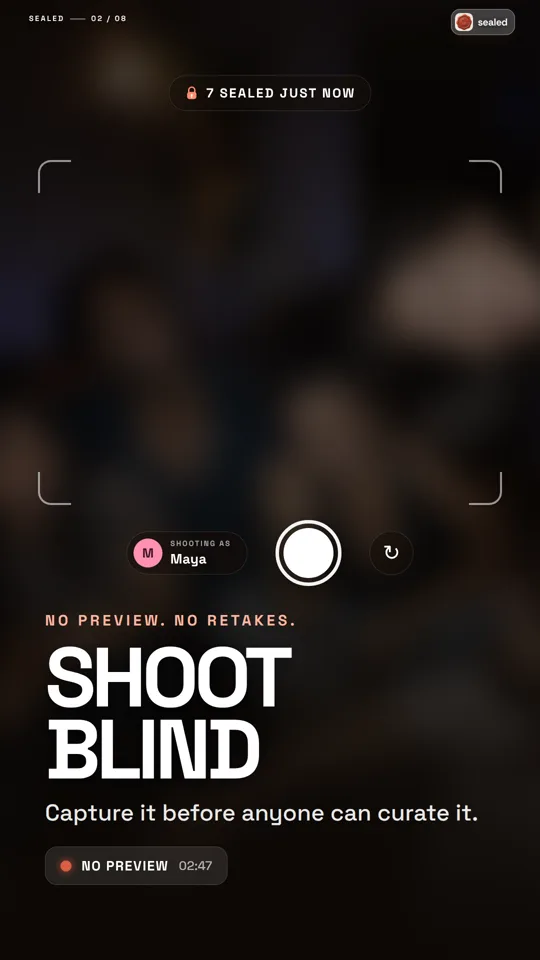
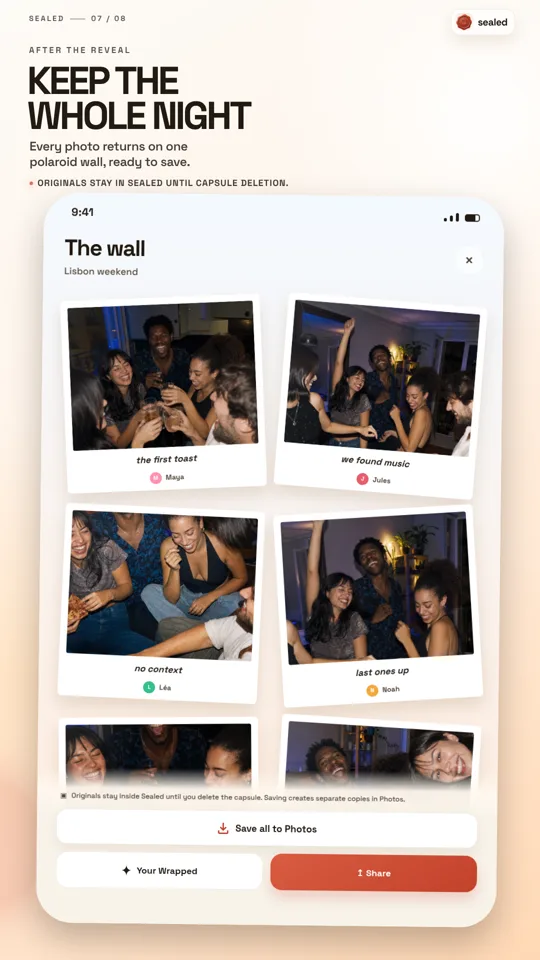
Sealed behaves more like handing a group disposable cameras than like a classic upload site. Guests install the free app on iPhone or Android and join a shared capsule with an invitation or code, with no account required. Each shot goes straight in without preview, retake or filters, and nobody, including the organiser, can look until the opening time chosen, anywhere from about six hours to a week later. The group then watches a reveal set to music, followed by a wall of every photo.
The limits matter for weddings. Sealed's wedding guide positions a capsule for a group of up to 30 guests, so it suits the wedding party or close friends rather than a full guest list. There is no live gallery before the opening, which answers the checklist question about early browsing: nobody can. The guide also notes there is no remote host moderation, so a couple who needs to remove photos on request from afar should plan for that, or use a different tool for that group.
Sealed cannot bring in pictures guests already took with their usual camera, so it does not replace a camera-roll upload link, and sharing a capsule does not include screenshot detection. Server copies of shared capsule photos are deleted 30 days after opening, so everyone should save what they want before then.
Example: deciding for a mid-size reception
Hypothetical example, not a real customer: a couple expects about 80 guests, a mix of tech-comfortable friends and older relatives, at a venue with weak signal. They want candid evening photos and a group moment at the next-morning brunch with their closest friends.
Working through the checklist, they keep the delayed-reveal capsule to the wedding party and close friends, about 25 people, well within a group of up to 30, and set it to open at brunch. For the remaining guests, including relatives with photos already on their phones, they share a separate upload option. They add a consent line to table cards, agree photo rules for children with parents, and schedule a download from both tools within the first week.
- Want photos guests already have? Choose a tool that accepts camera-roll files.
- Want a shared moment of discovery for a smaller circle? Consider a delayed-reveal capsule.
- Want both? Combine them and tell each group which is for what.
Frequently asked questions
Do wedding guests need an account to upload photos?
It depends on the service: some work from a link alone, while others require an app download or sign-up, so check before printing invitations or QR codes. With Sealed, guests need the app to join a shared capsule, but creating an account is optional.
How long do wedding photo sharing services keep guests' pictures?
Retention varies between services and can change, so read the current terms and export the full collection soon after the wedding. Sealed deletes server copies of shared capsule photos 30 days after the capsule opens, so photos should be saved before then.
Can wedding guests add photos they already took to a Sealed capsule?
No. Sealed only holds photos taken inside the app, which go directly into the capsule; it does not import existing camera-roll pictures. Couples who also want to collect those can use a separate upload tool alongside a capsule.
Sources and further reading
These resources provide the wider reference frame. Product statements on this page are limited to the public information provided by Sealed.