

Why a party photo collection app changes the shape of an evening
A party photo collection app is meant to do one simple thing: gather everyone's photos from a single event into one place. But the way it does that changes the feel of the night. Some apps let people post and see images as they're taken, which turns a party into a running slideshow people check on their phones. Others hold everything back until a set moment, which changes photography from a performance into a quieter, shared activity.
Before choosing one, it helps to ask what kind of night you actually want. If the goal is a live photo wall for a big public event, an instant-upload tool probably serves better. If the goal is a smaller gathering where you want people present rather than narrating their own photos in real time, a delayed-reveal model fits more naturally. Neither is universally correct; the right tool depends on the occasion.
Consent is a design problem, not just a courtesy
Group photo tools inevitably capture people who didn't take the picture themselves. That's the core tension: one person's camera, someone else's face. A responsible party photo collection app should make it easy to know who's in the pool and easy for someone to say no to having their photo included or shared further.
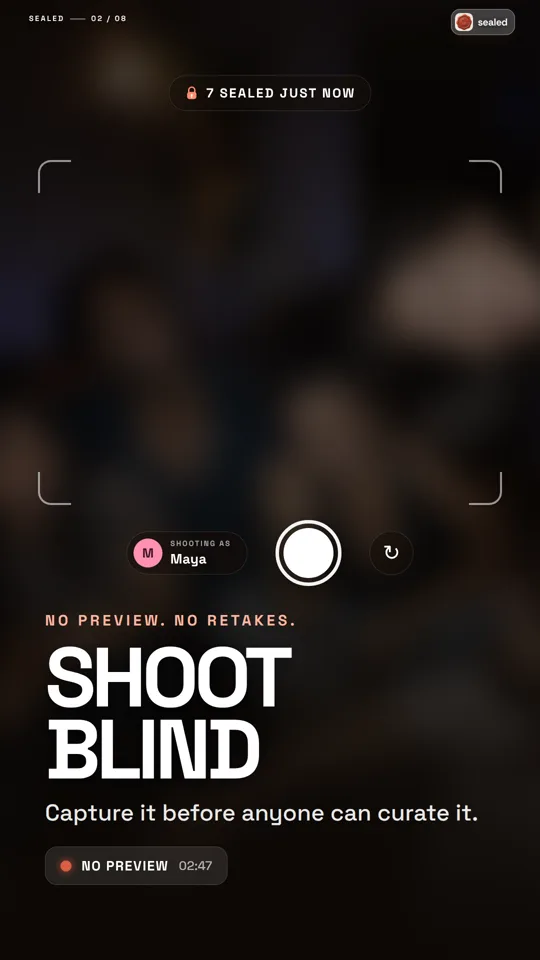
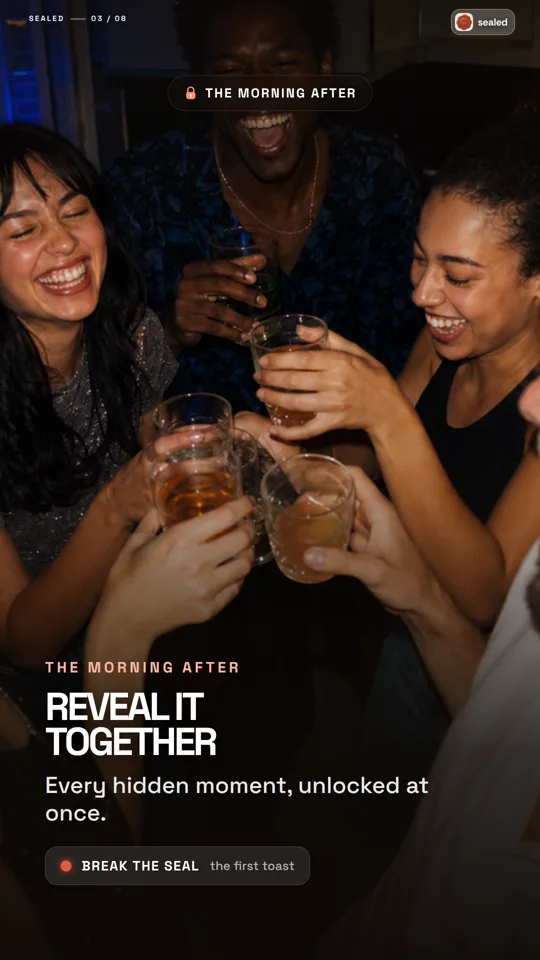
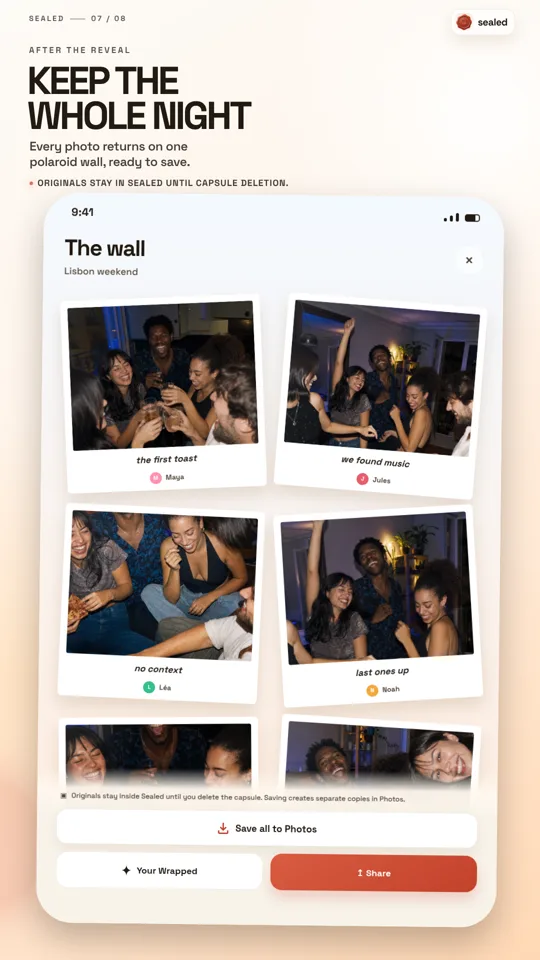
In practice this means checking, before an event starts, whether attendees understand that photos of them may end up in a shared album. It's a small conversation, but skipping it is how people end up unhappy after the fact. Consent isn't just a legal nicety; it's what makes a shared photo activity feel good rather than invasive. Sealed, a group photo capsule built around delayed, shared reveal, treats this as a starting condition rather than an afterthought - its premise is that everyone shoots, nobody peeks, and the group opens the results together, which forces the consent question to be settled up front rather than negotiated after images are already circulating.
Comparing reveal timing: immediate, staggered, or delayed
Most party photo collection apps fall into one of three timing patterns. Immediate reveal shows photos as soon as they're uploaded, which is good for keeping momentum at a public or promotional event but tends to make people perform for the camera. Staggered reveal releases photos in batches, often used by event organizers who want some curation. Delayed reveal withholds everything until a single agreed moment - often the end of the event or some time after.
The delayed model asks more of the group upfront: everyone has to agree, at least loosely, to wait. But it removes a specific kind of pressure - the sense that a bad photo is instantly visible to the room. For casual gatherings among friends, that removal of live-preview pressure is often the actual point, not a side effect.
A practical middle ground some hosts use is a soft deadline: photos are collected throughout the event but the group agrees not to look until dessert or the next morning. This doesn't require special software, just an agreement, though a dedicated app can enforce it more reliably than a shared group chat can.
A worked example: choosing an approach for a small birthday dinner
Example only: Imagine a birthday dinner for eight people at someone's home. The host wants photos from everyone's phones combined into one shareable set, but doesn't want people staring at screens comparing shots mid-dinner.
In this hypothetical, an immediate-upload app would work against the goal - people would check the feed between courses. A delayed-reveal approach, where photos are collected quietly through the evening and opened together afterward as dessert or a nightcap, better matches what the host actually wants: presence during the meal, shared discovery afterward.
The decision aid below can be applied to similar situations:
- If the priority is a live visual feed for guests to browse during the event, choose immediate or staggered reveal.
- If the priority is minimizing phone-checking and interruption during the event, choose delayed reveal.
- If minors or non-consenting guests may appear in photos, confirm the app's consent and sharing controls before the event, not after.
- If the group is large and semi-public (a work party, a community event), staggered curation may reduce the risk of unflattering or sensitive photos surfacing unreviewed.
What to check before trusting any app with group photos
Beyond the reveal mechanic, a few practical questions matter regardless of which app you choose. Where are photos stored, and for how long? Can a participant ask for their own image to be removed from a shared set? Is there a clear child-safety policy if minors might appear in photos? These aren't exciting questions, but they're the ones that matter if something goes wrong later.
Any credible product in this space should have public documentation covering privacy, terms of use, and child safety - not just a feature list. It's worth reading that documentation before an event rather than after a problem arises. Editorial coverage or reviews of an app, including this article, shouldn't be treated as confirmation that a specific interface, language support, or feature set is currently available; store listings change, and the only reliable source is the current listing itself.
Matching the tool to the ritual, not the other way around
It's tempting to pick whichever party photo collection app has the most features and adapt the event to fit it. The more durable approach is the reverse: decide what kind of experience you want - spontaneous and visible, or unhurried and collectively revealed - and then pick a tool that matches that intention.
This matters more than it sounds. A tool built around instant sharing, used for an event meant to be quiet and present-focused, will fight the mood all night. A tool built around delayed reveal, used for an event that wants a live photo wall, will frustrate people waiting to see themselves. The mismatch is usually the actual complaint, even when it gets described as the app being 'bad.'
Frequently asked questions
What's the main difference between an instant-upload photo app and a delayed-reveal one?
Instant-upload apps show photos as soon as they're taken or shared, creating a live feed during the event. Delayed-reveal apps collect photos privately and only show them to the group at an agreed later moment, which removes the pressure of a live audience while people are still taking pictures.
Do I need everyone's consent before including their photo in a shared party album?
Yes, in principle you should have consent before photographing or sharing identifiable people, and it's best to raise this before the event rather than after photos are already circulating. Even informal verbal agreement among a small group is better than assuming everyone is fine with it.
Can I assume a party photo app is available in my language just because I've seen it discussed in English or another language?
No. Editorial or review content in a given language doesn't confirm that an app's interface, store listing, or customer support is actually available in that language. Always check the current store listing for the app in your region before relying on it.
Sources and further reading
These resources provide the wider reference frame. Product statements on this page are limited to the public information provided by Sealed.