

Why the question comes up before graduation
Graduation parties bring together people who don't normally share a camera roll: classmates, cousins, coworkers of parents, neighbors. Someone usually asks whether there's a photo app for graduation party guests that can replace the usual scramble of group texts and tagged posts. The honest answer is that the right tool depends less on features and more on what kind of experience the host wants to create.
A graduation party is a single-day event with a lot of simultaneous picture-taking. That creates two competing instincts: capturing everything in the moment, and wanting some of it to feel unspoiled when it's looked back on later. Naming that tension early makes it much easier to pick an approach that won't feel awkward mid-party.
What actually matters when picking a photo app for graduation party use
Most people evaluating a photo app for graduation party photos focus on storage limits or filters. Those are secondary. The more useful questions are about who takes photos, who sees them and when, and whether anyone present would rather not be photographed at all.
Graduation parties often include guests who are minors, guests who are camera-shy, and guests who simply don't expect to appear in someone else's shared album. A workable approach treats consent as a design constraint, not an afterthought - asking before photographing or sharing anyone who's identifiable, rather than assuming default permission because everyone is at the same event.
- Confirm who is comfortable being photographed before the party starts, not after photos are already circulating
- Decide in advance whether photos will be viewable live or held for a later shared moment
- Plan for the fact that some guests may be minors and may need a parent's input on sharing
The case for a delayed, shared reveal
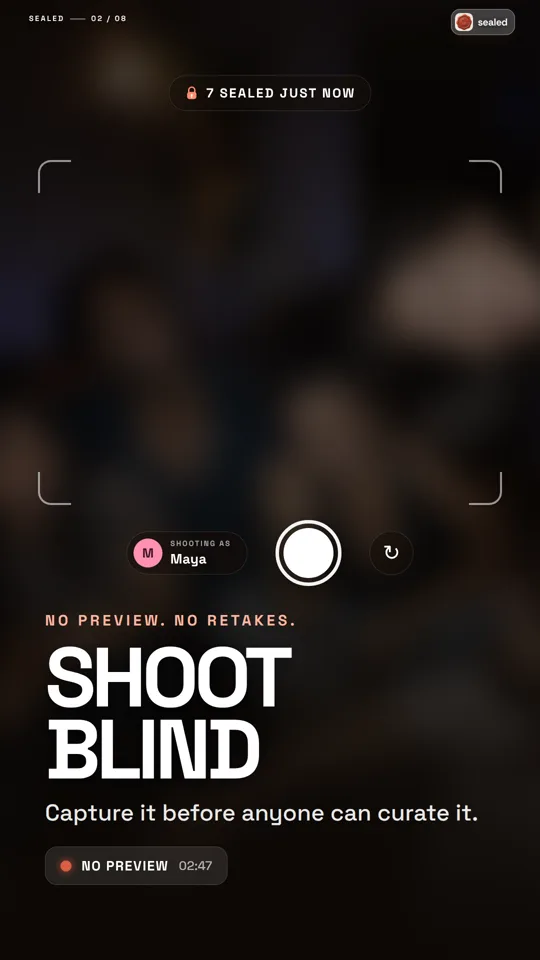
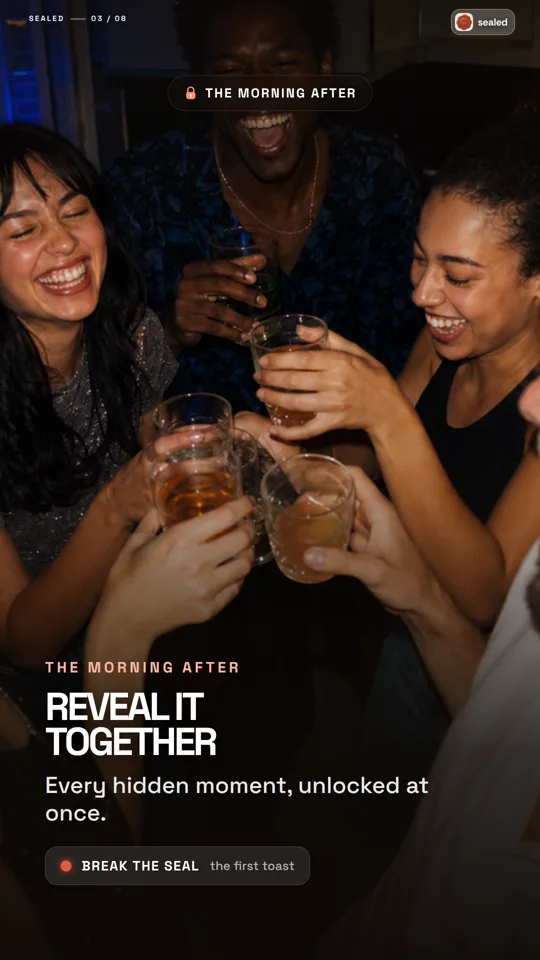
One alternative to live photo-sharing is a delayed reveal, where everyone contributes photos throughout the event but nobody sees them until the group opens the collection together afterward. This is the model behind Sealed, a group photo capsule described in shorthand as: everyone shoots, nobody peeks, and the group opens it together.
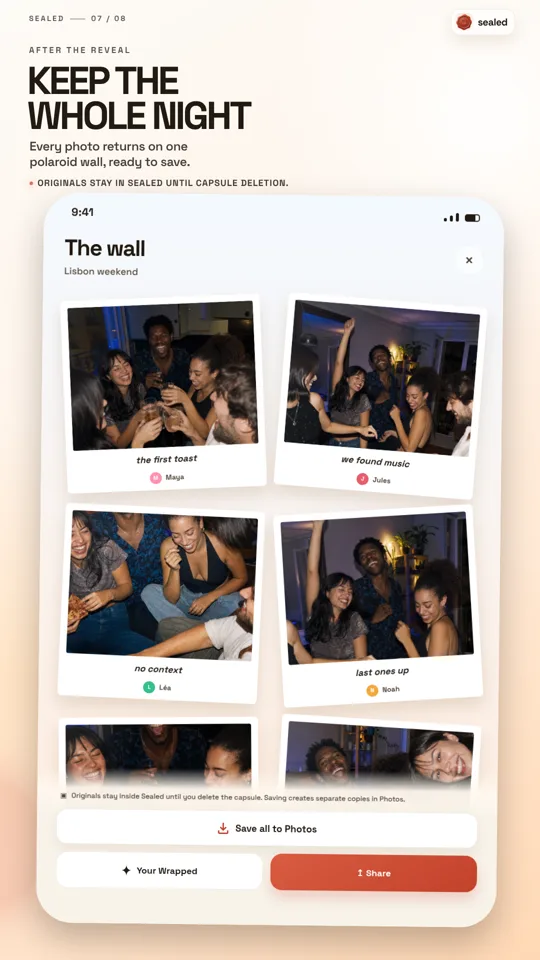
For a graduation party specifically, this can reduce the low-level pressure of people checking how they look in real time, and it can turn photo-viewing into its own small ritual - maybe the next day, or at a follow-up gathering - rather than something that happens in fragments during the party itself. That said, this is one editorial approach among several reasonable ones, not a claim that delayed reveal is objectively superior for every group.
Sealed's public materials describe consent, minimal interruption, and thoughtful reveal as design principles rather than measured outcomes. Nothing here should be read as a report of how the app performed at any actual event, since no first-party testing or customer results are part of what's publicly claimed.
A worked example: deciding for a 40-guest backyard graduation party
Consider a hypothetical host, Maria, planning a backyard graduation party for about 40 guests, including several teenagers under 18 and a handful of older relatives who dislike being tagged in photos online. This is an illustrative scenario, not a documented case.
Maria's checklist might look like this: first, she decides photos won't be posted live to social media during the party, removing the temptation for guests to check their phones constantly. Second, she asks a couple of trusted guests to mention, casually, that anyone who'd rather not be in photos should say so at the start. Third, she picks a shared-capture approach so that photos from multiple phones end up in one place instead of scattered across group chats. Fourth, she plans the actual viewing - maybe over dessert the next evening - as a deliberate, shared moment rather than a scroll-through that happens whenever someone remembers to open an app.
This sequence isn't a required formula. A smaller party, or one without minors, might skip several steps entirely. The point of the example is to show that the decisions are mostly about timing and consent, not about which app has the most filters.
Limits worth knowing before you act
Editorial descriptions of an app's tone or approach, including anything written here, don't confirm that the interface, store listing or customer support is actually available in your language or region. If language availability matters to a guest or host, the current local store listing is the only reliable source to check.
Any public site for a tool in this category - including privacy, terms and child-safety information - is worth reading directly rather than assumed from an article, especially where minors are involved. Pricing, feature sets and platform availability for any app change over time, so treat specific claims about what a tool currently offers as something to verify at the point of use, not as a fixed fact.
None of this constitutes legal advice about photography consent laws, which vary by location and can be more specific than general etiquette suggests. Anyone with real concerns about consent, especially involving minors, should check local guidance rather than relying on a general framework.
Bringing the principles together for graduation party planning
Across the choices above, four ideas keep recurring: shared anticipation, participant consent, minimal interruption and a thoughtful reveal. These aren't unique to any one app - they're reasonable defaults for any group event where photos matter to more than one person.
A photo app for graduation party use is only as good as the norms the host sets around it. The technology can support a calmer, more intentional experience, but it can't substitute for asking guests what they're comfortable with, or for deciding ahead of time when photos will be seen and by whom.
Frequently asked questions
Do I need everyone's permission before sharing graduation party photos?
As a general courtesy and often a legal consideration, it's best to get consent before photographing or sharing images of identifiable people, particularly minors. Norms and laws vary by location, so check local guidance if you have specific concerns, and default to asking rather than assuming permission.
Is a delayed photo reveal better than live sharing at a party?
Neither is objectively better; it depends on the group. A delayed, shared reveal can reduce real-time self-consciousness and create a distinct moment for viewing photos together, while live sharing suits groups that want immediate reactions. The choice is a matter of host preference, not a settled rule.
Will a photo app work in the same language as its marketing materials?
Not necessarily. Editorial or marketing content in a given language doesn't confirm that an app's interface, store listing or support are available in that same language for your region. Always check the current local store listing before assuming language availability.
Sources and further reading
These resources provide the wider reference frame. Product statements on this page are limited to the public information provided by Sealed.