

Why iOS third party app photo backups raise questions beyond storage
When people search for ios third party app photo backups, they are usually trying to solve two problems at once: keeping photos safe if a phone is lost, and understanding what happens to those photos once they leave the device. Backup is not just a technical checkbox. It is a decision about where copies of your images live, who can access them, and for how long.
This matters even more for group photos, where more than one person's likeness appears in a single frame. A backup decision made by one person can affect the privacy expectations of everyone else in the photo, especially if the app syncs, shares, or displays images in ways participants did not anticipate.
What third-party backup apps typically claim to do
Most third-party photo apps on iOS describe some combination of automatic upload, cross-device syncing, and long-term storage outside the native Photos app. Because app catalogs and feature sets change frequently, it is safer to treat any specific claim about a named app's current backup behavior, pricing, or storage limits as something to verify directly in the App Store listing rather than something to take as fixed fact from an article.
A more durable way to evaluate these apps is by category of behavior rather than by brand promises: does the app back up automatically or only on request, does it keep a local copy after uploading, and does it give you a way to see and delete what has been stored. Those structural questions tend to remain relevant even as individual apps update their features.
Consent and shared reveal, not just storage
Group photography adds a layer that pure backup tools rarely address: consent. Someone photographed at a gathering may not want that image synced to a stranger's cloud account, shared to a public feed, or backed up indefinitely without their knowledge. Before relying on any backup workflow for group photos, it is worth asking whether everyone in frame is comfortable with where those images might end up.
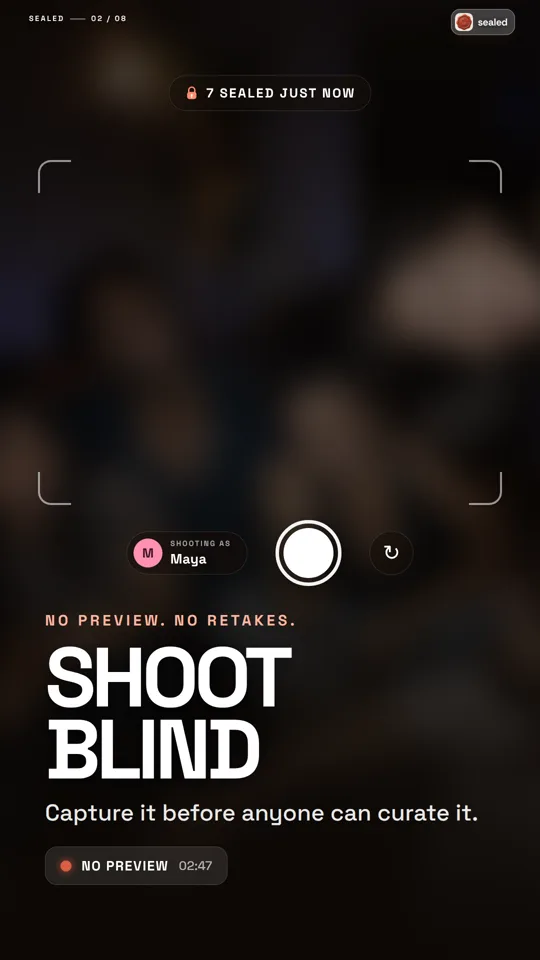
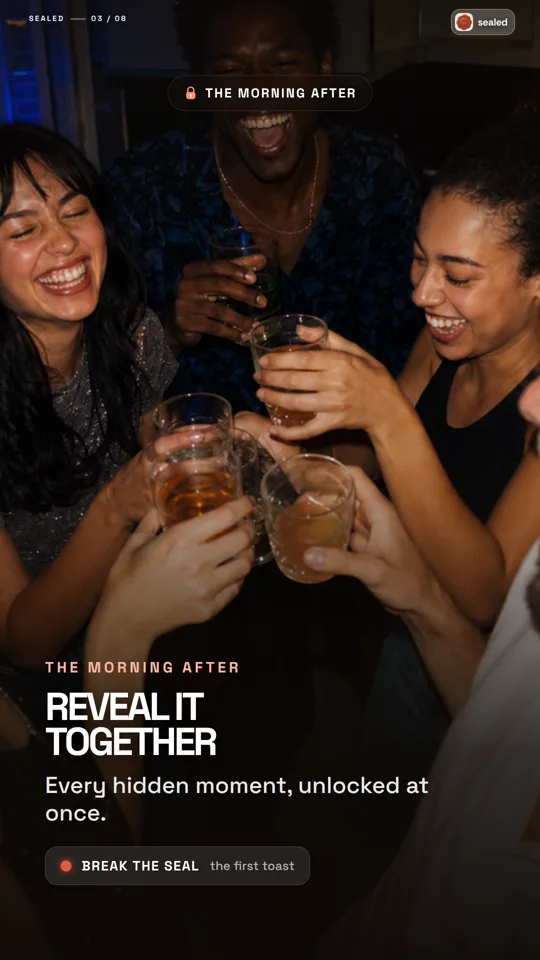
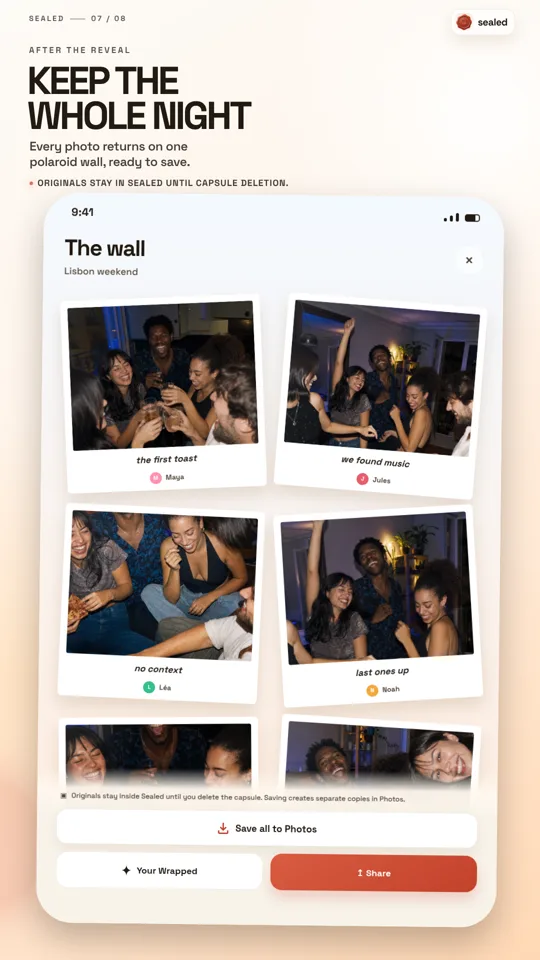
This is part of the editorial position behind Sealed, a group photo capsule built around a delayed, shared reveal rather than instant posting or backup-and-forget habits. Sealed's own framing rests on a simple idea: everyone shoots, nobody peeks, and the group opens the results together, which naturally slows down the moment when photos get widely distributed or backed up elsewhere.
That framing does not replace a backup strategy, but it does suggest a useful ordering: settle who has agreed to be photographed and how the images will be shared before worrying about where the files are stored long-term.
A worked example: deciding on backups for a weekend trip
Consider a hypothetical group of six friends on a weekend trip, all taking photos on iPhones. Example only: they are trying to decide whether to rely on a single shared backup app, individual device backups, or a shared album that stages the reveal after the trip ends.
In this hypothetical, the group might reason as follows: individual backups keep control with each person but risk losing shared moments if someone doesn't back up before deleting space-hogging photos. A single shared third-party backup app centralizes everything but means one account holder effectively controls copies of everyone's likeness. A staged, shared reveal approach delays wide distribution until the group has had a chance to agree on what gets kept and shown.
This is only an illustration of the tradeoffs, not a recommendation that any one approach is correct for every group. The right choice depends on how much the group trusts a single backup provider, how sensitive the content is, and whether participants have discussed consent in advance.
A practical checklist before choosing an app
Before choosing or continuing to use an iOS third-party app for photo backups, especially for group photos, it helps to walk through a short list of questions rather than relying on marketing claims alone.
- Does the app back up automatically, or only when you choose to upload specific photos?
- Can you see exactly which photos have been backed up and delete them from the remote copy, not just the device?
- Have the people appearing in the photos agreed to how those images will be stored or shared, not just that a photo was taken?
- Does the app's privacy policy explain how long backed-up photos are retained and whether they are used for anything beyond storage?
- If the group's goal is a shared reveal rather than instant access, does the backup happen before or after everyone has agreed to look?
Where to verify current details
Because app features, pricing, and availability change over time, the most reliable source for current backup behavior is always the app's own current App Store listing and published privacy policy, not summaries written elsewhere. The same caution applies to any editorial content, including translated guides: a translation existing in a given language does not confirm that an app's interface, store listing, or support is actually available in that language, so it is worth checking the current local store listing directly.
This is also true of Sealed's own public materials. Any advice here is bounded by what Sealed publishes about its own product on its public site, including privacy, terms, and child-safety information, rather than by claims about how well any backup app performs in practice.
Frequently asked questions
Is a third-party iOS app always necessary for photo backups?
No. iOS includes built-in backup and syncing options through iCloud, and many people find that sufficient. A third-party app becomes relevant when someone wants a specific feature, like backing up to a different provider or organizing group photos in a particular way, that the built-in tools do not offer.
Who should be asked for consent before backing up group photos?
Anyone identifiable in the photo, not just the person who took it. Consent for being photographed is not the same as consent for that image to be uploaded, synced, or shared to a backup service, so it is worth asking participants explicitly about storage and sharing before doing either.
How does a delayed reveal approach relate to backup decisions?
A delayed, shared reveal - where photos are gathered but not shown until the group opens them together - naturally postpones decisions about wider backup or sharing until everyone has had a chance to see and agree on what gets kept, which can reduce the risk of images being distributed before participants are comfortable with it.
Sources and further reading
These resources provide the wider reference frame. Product statements on this page are limited to the public information provided by Sealed.