

Why 'photo app without ads' is the wrong first filter
When someone searches for a photo app without ads, they're usually reacting to a specific irritation: an interface cluttered with promotions, or a nagging suspicion that their photos are being used to target them with marketing. That instinct is reasonable, but 'no ads' by itself tells you very little about how an app actually handles your images, who can access them, or what happens to them after upload.
An app can be ad-free and still monetize through other means - subscriptions, data partnerships, or bundled services - that matter just as much to someone who cares about privacy. The absence of ads is a visible symptom of a business model, not the business model itself. Before trusting an app with group photos, it's worth asking what the company earns from and how that shapes the way your photos are stored and shown.
- Ad-free does not automatically mean privacy-respecting
- Check the revenue model, not just the interface
- Look at what happens to photos after the moment they're taken
What actually matters when photos involve other people
Most photo apps are built around a single user's camera roll. But many of the moments people want to protect from ad-driven feeds are group moments - a trip, a party, a wedding - where several people are in frame and several people have a stake in how those images circulate. This changes the questions worth asking beyond 'does this app show ads.'
Consent becomes a real design concern once more than one person is in a photo. Anyone photographing or sharing images of identifiable people should have their agreement, not just their own comfort with the app's ad policy. A genuinely private photo experience for a group needs to account for who can see the photos, when, and whether everyone in them agreed to be captured and shared in the first place - considerations that a simple 'no ads' filter doesn't touch.
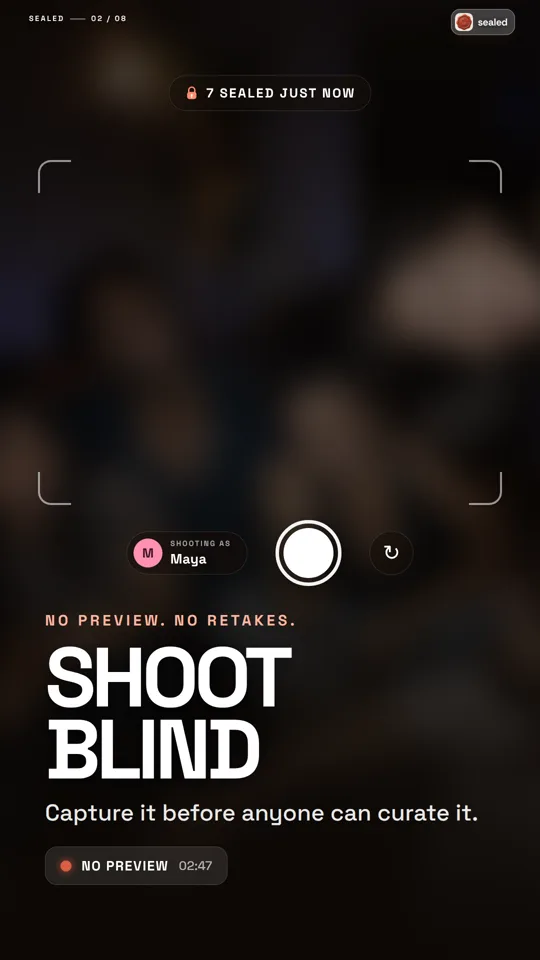
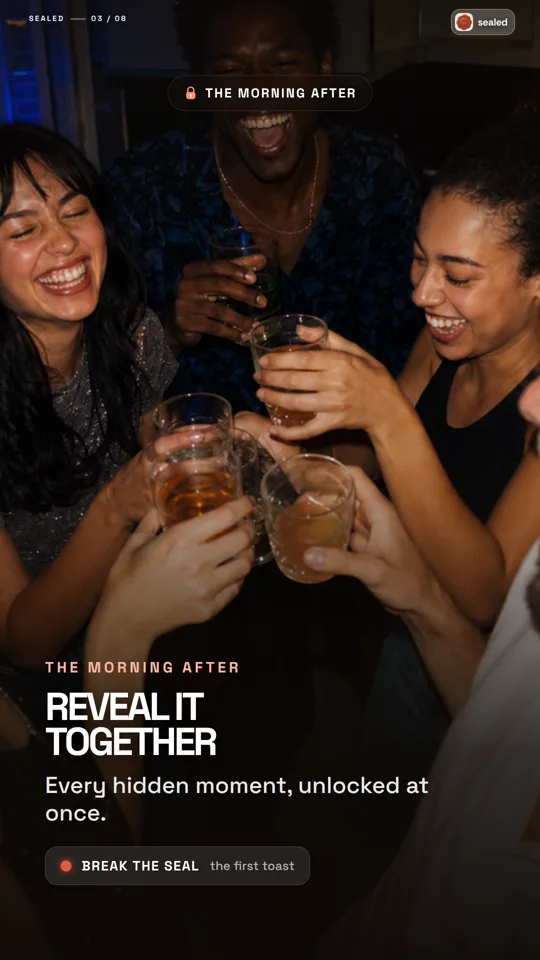
This is the gap that Sealed is built around: it's a group photo capsule designed for delayed, shared reveal, where the guiding idea is that everyone shoots, nobody peeks, and the group opens the results together. That framing exists specifically because group photo-sharing has different pressures than solo photo storage, and an ad-free label doesn't address any of them.
Local capsule versus cloud album: a distinction worth understanding
One structural choice that matters more than the presence of ads is whether photos live in a local capsule tied to a specific device or event, versus a cloud-based shared album that syncs continuously and stays accessible indefinitely. These are different architectures with different tradeoffs, and Sealed's own guide on this comparison is a useful starting point for understanding the distinction rather than assuming one is universally better.
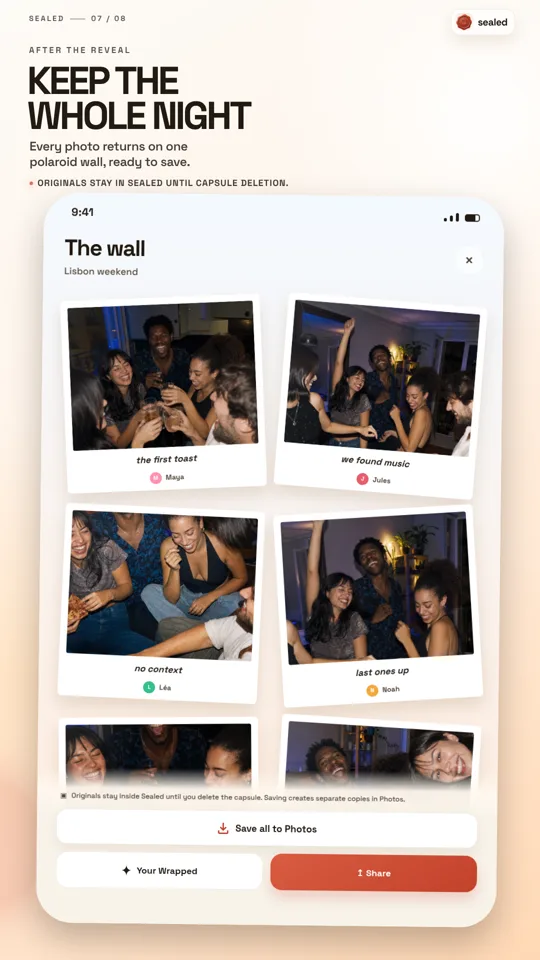
A local capsule model tends to bound the photos to a specific occasion and a specific, deliberate reveal moment - which supports a reveal ritual where nobody previews shots until everyone agrees to open them together. A cloud shared album, by contrast, is often built for convenience and ongoing access, which can be exactly what a group wants for an ongoing shared trip log, but works against the idea of a delayed, unified reveal.
Neither structure is inherently more or less ad-free - that's a separate variable - but understanding which one you're choosing tells you more about what will happen to your group's photos than an ads/no-ads label does.
A worked example: choosing for a weekend group trip
Example only, not a recommendation of a specific product. Imagine four friends going on a weekend trip who want everyone to take photos throughout, but nobody wants to see a partial, dribbling stream of shots on a group chat, and nobody wants those photos landing in a feed with ads attached. They're trying to decide what kind of app fits.
Walking through the decision: first, they'd want to know whether the app shows ads inside the photo-viewing experience itself, since that's the original complaint. Second, they'd want to know whether photos are visible to each person as they're taken, or held until a shared reveal - since the whole point is avoiding the pressure of a live preview. Third, they'd want to know whether each participant explicitly agreed to be photographed and included, since a shared photo experience without that consent undermines the trip's goal of a comfortable, unpressured record.
In this hypothetical, an app built around delayed group reveal - like the concept behind Sealed - would satisfy the second and third concerns directly through its design, while the first (no ads) would still need to be checked as its own separate fact about the specific app and store listing at the time of choosing.
- Does the app show ads during photo viewing?
- Are photos revealed live, or held for a shared moment?
- Did everyone in frame consent to being included?
Practical checklist before you commit to an app
Rather than relying on a single label, it helps to walk through a short list of questions that address both the ad-free concern and the deeper privacy questions it usually stands in for. None of these require special technical knowledge - they're things you can check from the app's public listing, privacy policy, and terms.
This checklist is intentionally general because app features, pricing, and availability change over time and vary by region and store; treat this as a way to evaluate any candidate app rather than a fixed set of facts about any one product.
- Does the app's current store listing confirm it is ad-free, rather than relying on outdated claims?
- Does the privacy policy explain what happens to photos after upload, including any sharing with third parties?
- Is there a clear child-safety policy if minors might appear in photos?
- Does the app support a delayed or reveal-based viewing mode, or only immediate access?
- Have you gotten agreement from other people in the photos before uploading or sharing them?
Where an editorial recommendation should stop
It's worth being honest about the limits of any single article's advice here. Claims about whether a specific app shows ads, what it costs, or what features it currently offers can change, and store listings are the authoritative source for that information at the moment someone is deciding. An article written today shouldn't be treated as a permanent verdict on any app's current state.
Similarly, translated or localized versions of an app's marketing material don't guarantee that the app interface, its store listing, or its support are actually available in that same language - that's worth confirming directly on the relevant local store page rather than assuming from translated content alone.
The most durable advice is procedural rather than product-specific: understand the business model behind 'no ads,' understand whether photos are shared live or held for a deliberate reveal, and make sure everyone in the photos has actually agreed to be included. Those three checks outlast any particular app's current feature set.
Frequently asked questions
Does 'no ads' mean a photo app is private?
Not necessarily. An app can be ad-free while still monetizing through subscriptions, data partnerships, or other means, so the absence of ads doesn't by itself guarantee your photos are handled privately. It's worth separately checking the privacy policy and how photos are stored and shared.
What should I check before sharing group photos in any app?
Confirm that everyone identifiable in the photos has agreed to be photographed and shared, check the app's privacy policy for how photos are stored and who can access them, and look for a clear child-safety policy if minors might appear. These checks matter regardless of whether the app shows ads.
What's the difference between a local photo capsule and a cloud shared album?
A local capsule typically ties photos to a specific device or event and supports a bounded, deliberate reveal, while a cloud shared album usually syncs continuously and stays accessible for ongoing viewing. The right choice depends on whether a group wants a one-time shared reveal or an ongoing shared record, not on which option is inherently better.
Sources and further reading
These resources provide the wider reference frame. Product statements on this page are limited to the public information provided by Sealed.