

What people usually mean by a once wedding photo app
When someone searches for a once wedding photo app, they are usually picturing a tool that lets every guest at a wedding snap photos on their own phone, but keeps those photos hidden until some later moment when the couple or the whole group can look through them together. The appeal is straightforward: instead of everyone hovering over a screen mid-reception checking how their shot came out, the photos stay tucked away, and the 'reveal' becomes its own small event.
This is a useful thing to want, but it helps to separate the idea from any particular app. The underlying concept - collect photos from many phones, delay access, then open everything together - is not unique to one brand or one wedding platform, and different tools implement it with different rules around who can see what, when uploads close, and how long the capsule stays available.
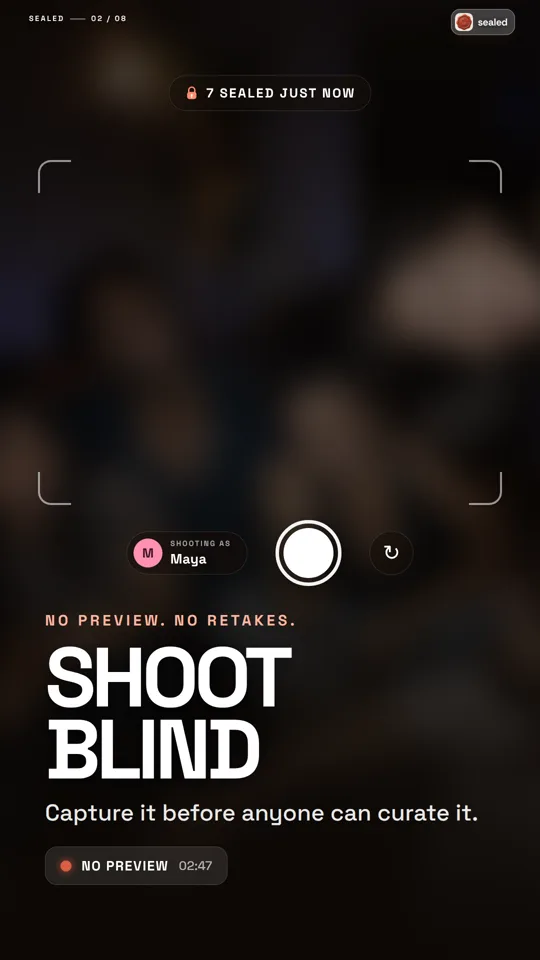
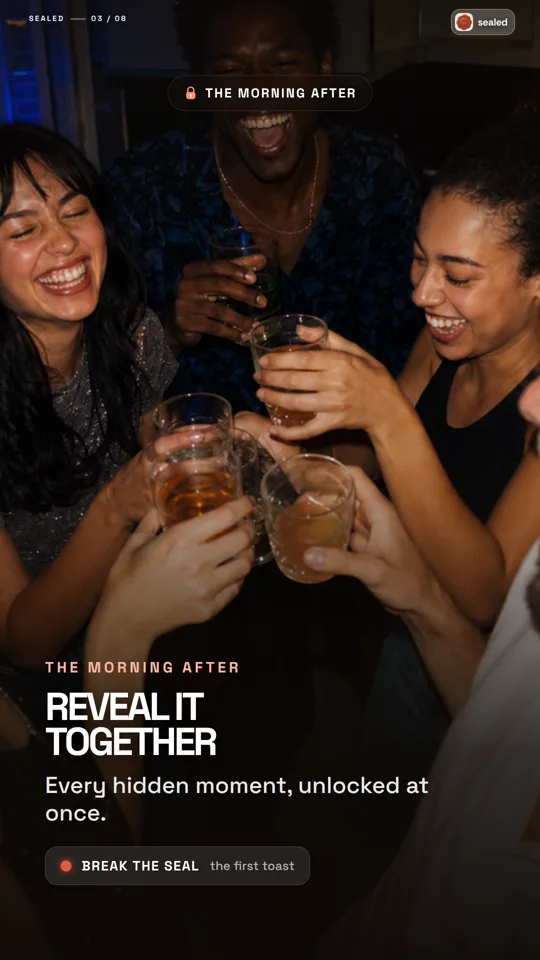
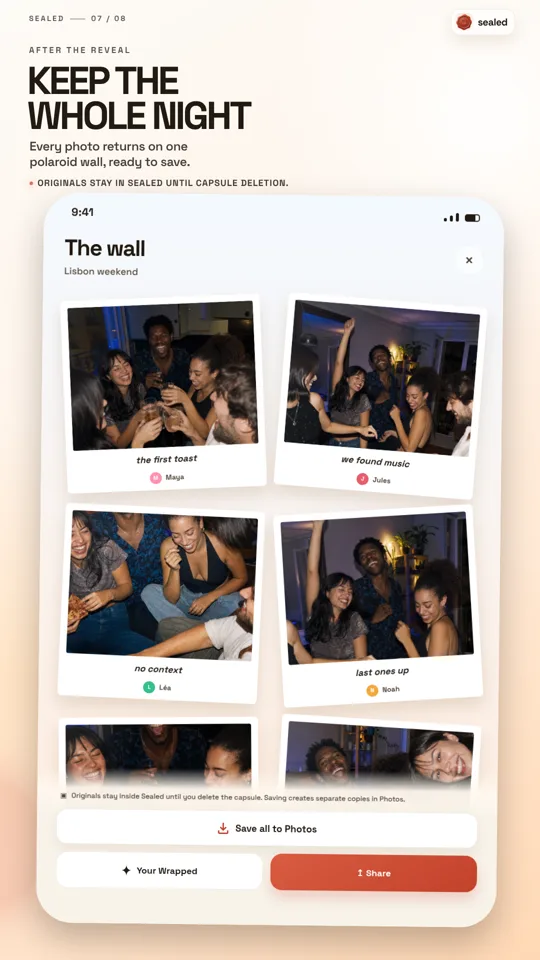
Sealed is one example of a product built specifically around this delayed, shared-reveal idea: guests shoot photos throughout an event, nobody previews what was captured, and the group opens the collection together afterward. That framing matches what a lot of once-style wedding photo requests are actually asking for, though it is only one way to build the same underlying ritual.
The core question before choosing a once wedding photo app
Before acting on any specific once wedding photo app, the practical question is not just 'does it work' but 'does it match how this particular wedding wants photos to be experienced.' Some couples want zero visibility until a formal album reveal weeks later. Others want the capsule opened the same night, right after the reception ends, as a group activity. These are different products in practice even if they share the same basic mechanic.
It also matters who is doing the deciding. A once-style photo app usually asks every guest to install something or interact with a link, so the couple (or whoever is organizing) is effectively setting a rule for other people's phones and photos. That is a bigger ask than a normal shared album, and it is worth being upfront with guests about why the delay exists and what happens to the photos afterward.
A second, quieter question is about identifiable people in the photos. Group photo tools inevitably capture faces, and it is worth remembering that having consent before photographing or sharing identifiable participants is a baseline expectation, not an optional nicety - this applies whether the photos are shared instantly or held back for a delayed reveal.
A worked example: deciding for a two-hundred-guest wedding
Here is a hypothetical to make this concrete. Imagine a couple planning a wedding with roughly two hundred guests, several of whom are elderly relatives who are not comfortable with new apps, plus a handful of guests who have specifically asked not to be tagged or shared publicly. The couple wants candid shots from the day but doesn't want the stress of moderating a live photo stream during the event.
In this example, the couple might decide on a few working rules: uploads stay open only for the day of the wedding and a short window afterward, the reveal happens at a specific pre-announced time so guests know what to expect, and the officiant or a designated person makes a brief announcement at the start of the reception explaining that photos will be held back until everyone can see them together. Guests who asked not to be shared are flagged ahead of time so photos of them can be excluded before the group reveal, not after.
This is only an illustrative scenario, not a report of how any specific event unfolded. The point of walking through it is to show that the meaningful decisions - upload window, reveal timing, exclusion requests, who explains the rules to guests - are the same regardless of which once-style app is chosen, and they need to be settled before the wedding day, not during it.
A short decision checklist
Rather than comparing feature lists, it can help to run through a short set of questions before settling on any once wedding photo app for a specific event.
- Does the app make clear when the reveal happens, and can that timing be set to match the wedding schedule rather than a fixed default?
- Is there a straightforward way for a guest to ask not to be photographed or included, and will that request actually be honored before the group sees anything?
- Who has access to the photos after the reveal, and for how long - is there a clear end point, or does access continue indefinitely?
- Does someone need to explain the ritual to guests in advance, so the delayed reveal reads as intentional rather than as a technical glitch?
- Are older or less tech-comfortable guests still able to participate, or does the app risk excluding part of the guest list?
Where the once wedding photo app idea runs into limits
No once-style photo app fully solves the underlying tension between spontaneity and control. Encouraging guests to shoot freely without preview pressure is meant to reduce the self-consciousness that comes with an audience checking every shot, but it does not remove the need for someone to actually manage consent, timing and expectations around the event. The app is a container for a ritual; it is not a substitute for the conversations that make the ritual work.
There are also practical limits worth naming plainly. Guest participation depends on people actually opening the app or link during the event, which will always be incomplete at a large wedding. Delayed reveal also means nobody can fix a bad shot or ask for a redo in the moment, since the whole point is that nobody is looking yet. And because interface availability, supported languages and specific features can change over time, it is worth checking the current listing for any app being considered rather than assuming past descriptions still apply.
Because minimal interruption is one of the more genuinely useful principles behind this idea, it is worth protecting deliberately: if the chosen app requires guests to fuss with settings, accounts or prompts throughout the event, it has quietly reintroduced the exact friction the once-style format was meant to avoid.
Reading editorial coverage of once wedding photo app services with the right expectations
It is worth noting that translated or localized articles about a once wedding photo app do not by themselves confirm that a given product's interface, app store listing or support is actually available in that language for a specific reader. If language availability matters - for a multilingual guest list, for example - that should be checked against the current store listing rather than assumed from an article, however well-written.
Similarly, any editorial piece describing this category, including this one, should be read as background and framing rather than as a verified comparison of specific competing products' pricing, features or availability, all of which change over time and are best confirmed directly before a wedding-specific decision is made.
Frequently asked questions
What is a once wedding photo app supposed to do differently from a normal shared album?
The distinguishing idea is a delay: guests take photos throughout the event, but nobody - including the couple - sees them until a later, shared reveal moment, rather than photos appearing in a live feed as they're taken.
Do guests need to consent before their photos are shared in a wedding photo capsule?
Yes. Having consent before photographing or sharing identifiable people should be treated as a baseline requirement for any group photo activity, delayed reveal or not, and organizers should make it easy for guests to opt out.
Should I assume a wedding photo app is available in my language because I read an article about it in that language?
No. An editorial or translated article being available in a language does not confirm that the app's actual interface, store listing or support are offered in that same language - check the current store listing directly.
Sources and further reading
These resources provide the wider reference frame. Product statements on this page are limited to the public information provided by Sealed.