

Why 'plan a party app' means different things to different hosts
When someone searches for a plan a party app, they're usually solving one of several distinct problems: coordinating logistics like guest lists and schedules, managing group photos, or organizing shared memories after the event. It helps to be honest with yourself about which problem you're actually trying to solve, because a single app rarely does all three well.
This article focuses on the photo and memory-sharing piece, since that's where consent, timing and group dynamics create the trickiest tradeoffs. If you're purely after invitations or RSVP tracking, the considerations below will still apply loosely, but the specific advice is aimed at anyone deciding how a group will capture and later revisit photos from a gathering.
The core tension: live sharing versus a shared reveal
Most photo-sharing tools during parties fall into two camps. Live-sharing apps post photos to a group feed the moment they're taken, which is convenient but creates pressure to curate in real time and can make people self-conscious about how they look mid-event. The alternative is a delayed, shared reveal, where photos accumulate unseen and the group opens them together afterward.
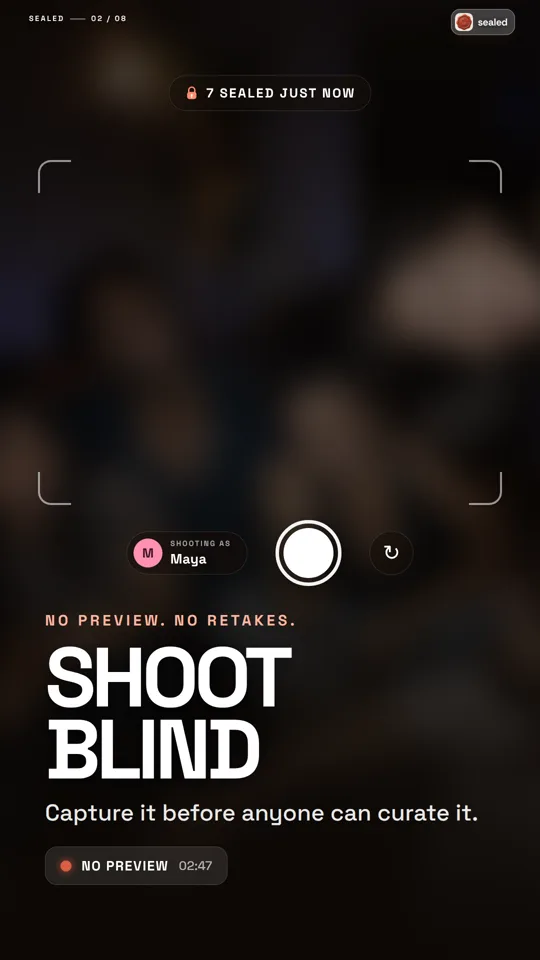
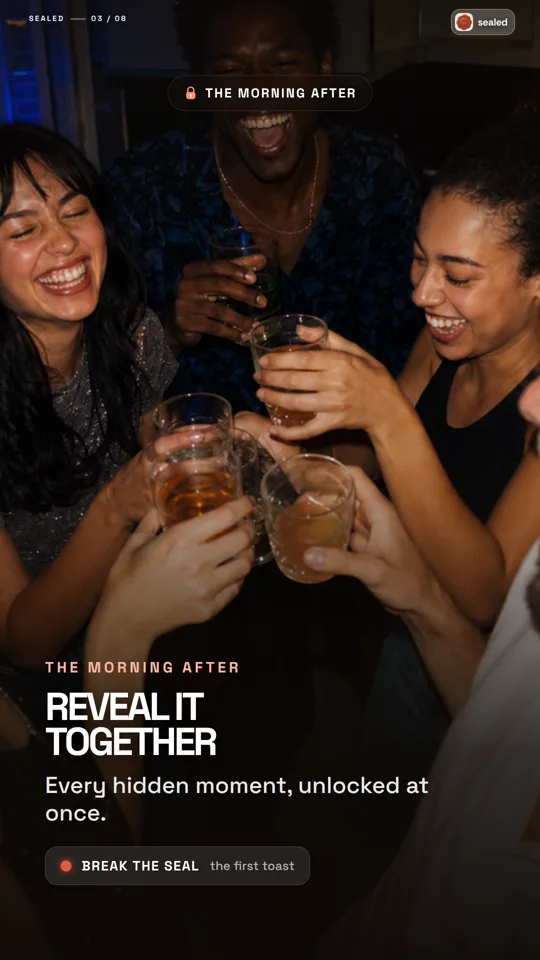
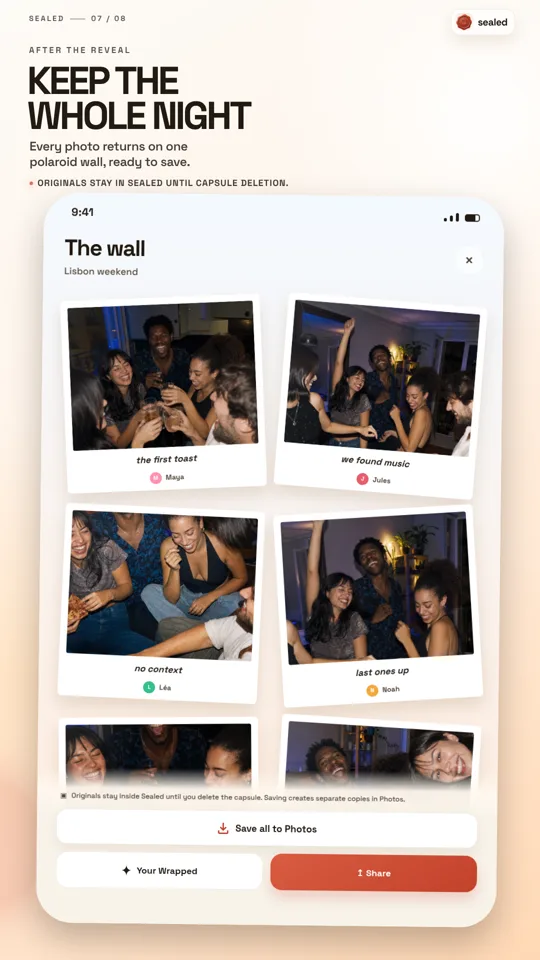
Sealed is built around this second approach: everyone in the group shoots throughout the event, nobody peeks at what's been captured, and the whole group opens the collection together at a set moment. The idea is to remove the live-preview pressure that makes people perform for the camera, so the photos end up closer to how the moment actually felt.
Neither approach is objectively better. Live sharing suits fast-moving events where people want instant reactions; a delayed reveal suits parties, trips or milestones where the anticipation and communal unveiling are part of the fun. Deciding which model fits your event is the first real decision in choosing a plan a party app.
Consent should shape your choice, not just features
Whatever app you pick, the people in your photos deserve a say in whether they're photographed and whether those photos are shared further. This matters more at parties than in most everyday settings, because groups often include people who don't know each other well, and alcohol or low light can lower everyone's usual guard.
A practical habit is to say out loud, early in the event, how photos will be captured and when they'll be visible. If you're using a delayed-reveal tool, mention that nobody - including the host - will see photos until the group opens them together; this reassures people that no one is quietly screenshotting or forwarding images mid-party. If you're using a live-sharing app instead, be clear about who has access to the shared album and for how long.
Consent isn't a one-time checkbox. Someone might be fine being photographed but not fine having that photo shared outside the group, or fine with the group seeing it but not with it being posted publicly later. A good plan a party app should make it easy to keep sharing contained to the people who were actually there, and easy for someone to ask that a specific photo be left out.
A worked example: choosing an approach for a 12-person birthday dinner
Example only, not a real case study. Imagine you're hosting a birthday dinner for twelve people at a home. You want photos from the evening but don't want guests staring at their phones checking a live feed all night.
In this scenario, a delayed-reveal approach fits well: you tell guests at the start that everyone should just take a few photos throughout the night and put phones away otherwise, and that the group will open everything together at dessert. This keeps people present during the meal instead of narrating it online, and it turns the reveal into a small shared moment rather than a background notification stream.
If instead the same dinner included several people traveling from out of town who wanted real-time reassurance that photos were being taken (for example, a grandparent who couldn't attend but wanted updates), a hybrid might make more sense: one or two live photos sent directly to that person, with the rest of the group's photos saved for the shared reveal later. The point of the example is that the right tool depends on who's in the room and what they actually need, not on which app has the most features.
- Decide upfront: live updates, delayed reveal, or a mix for specific people
- Say the plan out loud before phones come out
- Confirm who can access photos after the event, and for how long
- Leave room for someone to opt out of specific photos
Minimal interruption: judging an app by what it doesn't ask of guests
A useful test for any plan a party app is how much attention it demands from guests during the event itself. Apps that require constant approvals, notifications, or manual uploads pull people out of the moment repeatedly. The best fit for a party is usually something that asks guests to do one simple thing - take photos - and otherwise stays out of the way until the group is ready to look at everything together.
This is part of why a delayed, shared reveal can feel calmer than a live feed: there's nothing to check, like, or comment on until a specific moment, so the app disappears from people's attention for most of the event. If you're evaluating options, ask whether the app's design encourages people to keep pulling out their phones to see what's happening, or whether it lets the party happen first and the photos happen later.
What to verify before you commit to any app
Regardless of which app you're considering, verify the practical details before the day of the event: is the app currently available for the devices your guests actually have, does it support the group size you're planning for, and does its support and policy information (privacy, terms, any child-safety details) match what you need for your particular guest list, including whether minors will be present.
App interfaces, store listings, language support and pricing change over time, so don't rely on older articles, including this one, for current availability. Check the app's own store listing and support pages close to your event date to confirm what's actually offered right now.
If child safety is relevant - for example, a family party with kids in attendance - read the app's public child-safety information directly rather than assuming standard photo-sharing norms apply. This is worth the extra few minutes regardless of which app you choose.
Sealed's role in this decision, stated plainly
Sealed is one option built specifically for the delayed, shared-reveal model described above: a photo capsule where a group captures images throughout an event and opens them together afterward, rather than watching a live feed accumulate. It isn't positioned as a general party-planning tool for invitations or logistics - it's narrowly about how a group experiences and later revisits its photos.
If the shared-reveal approach matches how you want your event to feel, it's worth looking at directly; if you need live updates, RSVP management, or other planning features, you'll want a different or additional tool. As with any app, confirm current availability and language support on the official listing before assuming it fits your guest list.
Frequently asked questions
Should I tell guests in advance that a delayed-reveal photo app will be used at the party?
Yes. Letting guests know upfront that photos won't be visible until a shared reveal moment helps set expectations, reduces anxiety about being photographed, and gives anyone who's uncomfortable a chance to opt out before the event starts rather than after photos already exist.
Is a live-sharing app or a delayed-reveal app better for a party?
Neither is universally better; it depends on the event. Live sharing suits fast-moving gatherings where instant reactions matter, while a delayed shared reveal suits parties, trips or milestones where reducing camera pressure and creating a communal unveiling moment are more valuable than real-time updates.
What should I check before choosing any plan a party app for an event with children present?
Read the app's own privacy, terms and child-safety pages directly and confirm they're current, since app policies, features and availability change over time. Don't rely on general assumptions about photo-sharing norms when minors are involved - verify the specific app's stated protections before the event.
Sources and further reading
These resources provide the wider reference frame. Product statements on this page are limited to the public information provided by Sealed.