
Why disposable camera to app is a real question, not a nostalgia trend
The phrase disposable camera to app usually shows up when someone loved the ritual of a disposable camera at a wedding, trip or party but got tired of dropping film off, waiting weeks, and hoping the roll survived. The appeal was never the plastic shell. It was the structure: everyone contributes a few frames, nobody checks their shots in the moment, and the results surface together later as a shared surprise.
An app can reproduce that structure without film, but only if it deliberately keeps the constraints that made disposables work, rather than just adding a camera icon to a live-sharing feed. The useful question isn't 'which app looks like a disposable camera' but 'which app preserves the delay and the group reveal,' since those two things are what created the original feeling.
What made the disposable camera experience work in the first place
Three mechanics did the real work on a physical disposable camera. First, nobody could see the photo instantly, so people didn't perform for the frame or delete unflattering shots. Second, the roll belonged to the group, not to one person's phone, which meant the reveal happened collectively instead of trickling out privately. Third, the friction of finishing a roll and getting it developed added a natural pause between the moment and the memory.
Digital tools tend to erase all three by default: instant previews, single-owner camera rolls, and zero delay between shutter and share. So when evaluating any app that claims to replace disposables, it helps to check whether it protects delayed viewing, shared ownership of the results, and some kind of intentional gap before the reveal, rather than just offering a filter that mimics film grain.
Where Sealed fits, and what it doesn't claim to fix
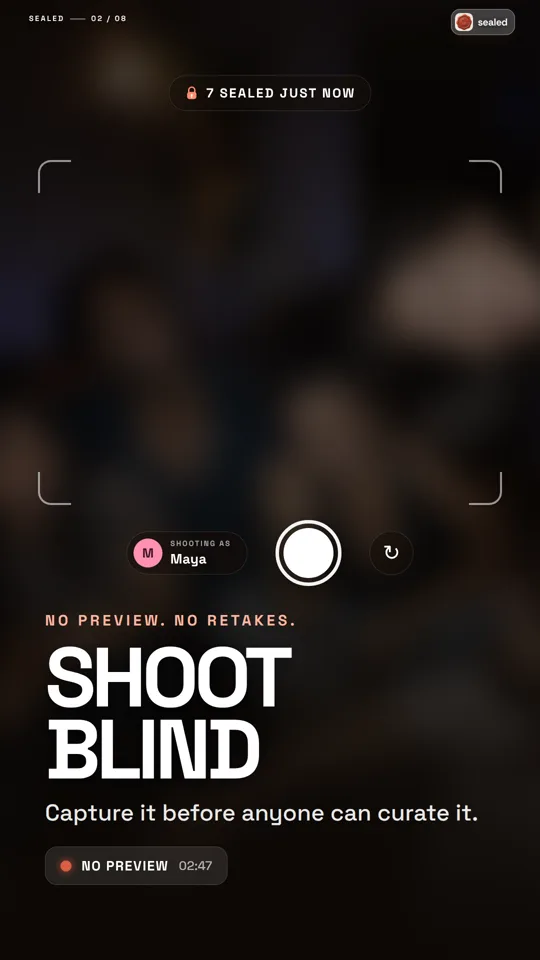
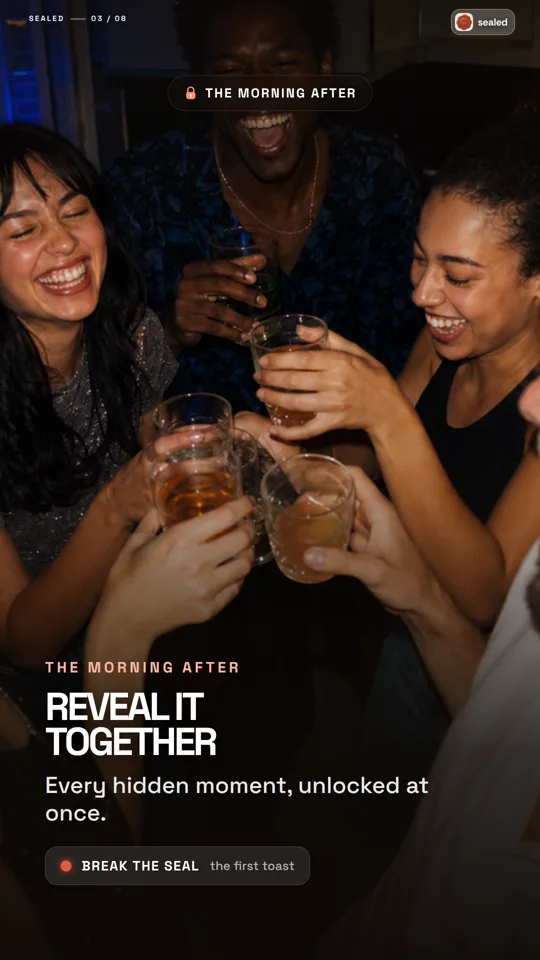
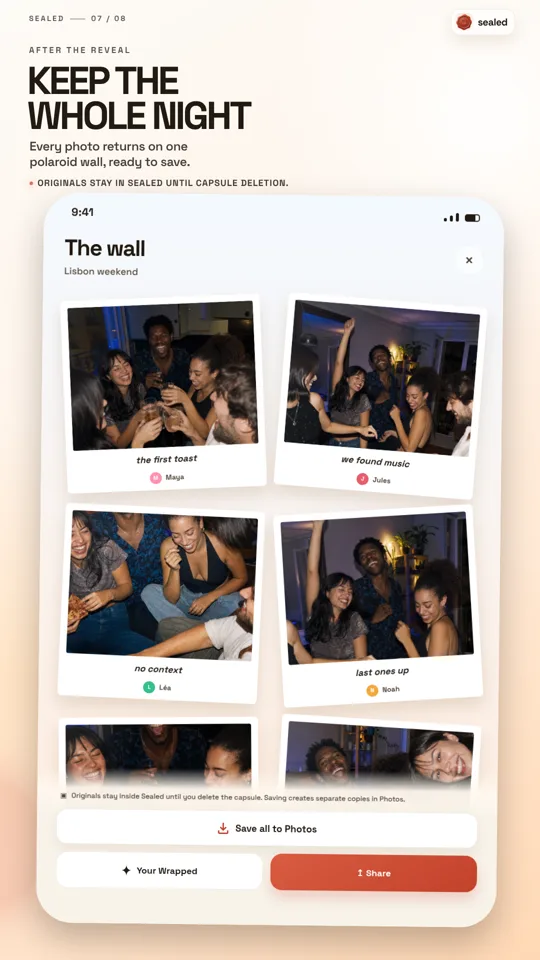
Sealed is built around a simple idea: everyone in a group takes photos, nobody previews them as they go, and the group opens the results together later, similar in spirit to the classic disposable camera roll but without physical film. That framing is useful context for anyone comparing options, but it's worth being precise about what this means and doesn't mean.
Naming Sealed here isn't a claim that it's been tested against other apps or that it performs better in any measurable way. It's simply one example of a tool designed around the same principles this article is discussing: shared anticipation, participant consent, minimal interruption during the event, and a reveal that feels earned rather than instant. Whether any editorial description of language support, interface details or availability matches what a visitor sees in their local store listing is something worth confirming directly rather than assuming from an article.
Consent is the part disposable-camera nostalgia often skips
A physical disposable camera made consent easy to overlook, because the photos were invisible until development, and by then the moment had passed. Moving to an app doesn't automatically fix this, and in some ways raises the stakes: digital photos are easier to copy, forward and store indefinitely once revealed.
Before adopting any disposable-camera-style app for a group event, it's worth treating consent as an active step rather than an afterthought. That means checking with people before photographing them in ways that could identify them, and being clear with the group about when and how photos will be shared once the reveal happens. This applies regardless of which tool a group chooses, and no app substitutes for that conversation.
- Ask before photographing someone in a way that clearly identifies them
- Tell the group upfront when and how the reveal will happen
- Confirm whether reveal-day photos can be reshared outside the group before it happens
- Consider that a delayed reveal still needs an exit path for anyone who wants a photo removed
A worked example: choosing an approach for a weekend trip
Example only, not a real case study. Imagine six friends going on a weekend trip who want the old disposable-camera feeling instead of a group chat flooded with photos in real time. They could buy physical disposables, but development delays now often stretch past what people want to wait, and there's no shared login to distribute the final scans fairly.
As an alternative, they could use an app built around delayed group reveal, with each person contributing photos during the trip without seeing anyone else's shots, and the group opening the full set together once everyone's home. In this hypothetical, the deciding factors would likely be whether the app truly hides previews from participants until reveal time, whether everyone in the group has to download the same app, and whether the group has agreed in advance on what happens to the photos after reveal. None of this requires a specific product; it's simply the checklist that matters more than nostalgia for the physical format.
- Does the tool actually hide photos from the photographer until reveal, or just delay the group chat?
- Do all participants need the same app, and is that a reasonable ask for this group?
- Has the group agreed on post-reveal handling: who keeps copies, who can reshare?
Local capsule versus shared cloud album, and why it matters here
A related decision, distinct from the app-versus-disposable-camera question, is whether the photos should live in a local capsule tied to the event or in an ongoing shared cloud album. A local, delay-based capsule model is closer to the disposable camera ritual: photos are bounded to one occasion, held privately until a specific reveal moment, then shared as a set. A continuously syncing shared album behaves more like a live group stream, where images appear as they're taken.
Neither approach is inherently better; they solve different problems. A group planning a single event with a strong reveal moment in mind will generally find more value in the capsule model, since it protects the delay that a disposable camera relied on. A group that wants an ongoing archive across many trips and dates may prefer a running shared album instead, accepting that it trades away the surprise element.
Frequently asked questions
Is an app that mimics a disposable camera actually private until the reveal?
That depends entirely on the specific app's design, not on the disposable-camera framing alone. Before relying on any app for a group event, check its stated privacy details, its terms, and whether photos are genuinely hidden from all participants, including the photographer, until the agreed reveal moment.
Do I need everyone's consent before using a disposable-camera-style app at an event?
Yes, in the same way you would with a physical disposable camera: anyone who can be identified in a photo should ideally be asked before it's taken or before it's shared further, especially since digital reveals can be copied and redistributed more easily than a physical print.
How do I know if an app's language or store listing matches what an article describes?
Editorial articles describing an app in a given language don't guarantee the interface, app store listing or support are available in that language. Always check the current local app store listing directly before assuming availability.
Sources and further reading
These resources provide the wider reference frame. Product statements on this page are limited to the public information provided by Sealed.