

Why party app ideas start with a question, not a download
Most searches for party app ideas happen a day or two before an event, when someone realizes their usual habit of posting live photos to a group chat doesn't quite fit the occasion. The real question underneath is rarely 'which app has the most filters' but rather 'how do we capture this night in a way that feels good to everyone, including the people who hate seeing themselves in photos as they're taken.' That framing changes what you should look for.
Before comparing features, it helps to separate two very different categories of party photo tools: apps built for instant sharing, and apps built for delayed, collective reveal. Instant-sharing tools optimize for speed - photos land in a feed or chat within seconds. Delayed-reveal tools optimize for anticipation - nobody sees anything until a set moment, and the group experiences the photos together. Neither is objectively better; they serve different kinds of gatherings.
Matching the app idea to the type of gathering
A rowdy birthday dinner with close friends has different needs than a work holiday party or a family reunion. For small, trusted groups, a shared album with instant uploads can be perfectly fine - everyone already knows and trusts each other, and quick sharing adds to the fun in real time. For larger or more mixed groups, where not everyone knows each other well, a delayed reveal format tends to reduce the self-consciousness that comes from knowing a photo might be visible to a stranger within seconds.
Another factor worth weighing is how much you want the party itself to be about the photos versus a background element of it. Apps that show live previews on a screen can turn photography into a performance, with people posing and checking their appearance mid-conversation. Apps that withhold the images until later let people forget the camera exists for stretches of the night, which for many hosts is the actual point of choosing a 'no live preview' style tool in the first place.
- Small trusted group, casual vibe: real-time shared album may suit you
- Larger or mixed group: delayed reveal reduces self-consciousness
- Want photography to fade into the background: avoid live-preview screens
- Want the photos to become their own moment later: build in a reveal step
Consent as a design requirement, not an afterthought
Any party app idea that involves photographing other people carries a basic obligation: the people in the frame should have a reasonable expectation that they're being photographed and how those photos might be used or shared. This matters more, not less, once alcohol, low lighting, and later-in-the-night candor are part of the picture. A tool's format doesn't remove this responsibility - it just shapes how easy it is to honor.
In practice, consent at a party is rarely a single formal conversation. It's usually a mix of visible cues (people can see a camera or phone is out), verbal check-ins ('mind if I get a shot of you two?'), and after-the-fact courtesy (asking before sharing a photo more widely, especially outside the group who was there). If you're choosing an app specifically because it delays sharing until later, that delay can actually help here - it gives you a natural pause point to reconsider whether every photo should go into the final reveal, rather than committing to share the moment it's taken.
A worked example: planning photos for a 12-person dinner party
Here is a hypothetical to make the tradeoffs concrete. Imagine you're hosting a dinner party for twelve people, a mix of close friends and a few plus-ones who don't know the group well. You want photos from the night, but you don't want the evening to feel like it's being documented in real time, and you're aware a couple of guests are camera-shy.
One reasonable approach: ask each guest to take a few candid or posed shots on their own phone throughout the night, using whichever camera they normally use - no special app required for the capture itself. Agree as a group, informally, that nobody will post or share individually until everyone's photos are pooled and looked at together, maybe over dessert or the following weekend. This is essentially the shared-reveal idea in its simplest, appless form: the mechanism is a group agreement rather than a piece of software, but it demonstrates the underlying principle - anticipation and a joint viewing moment rather than a scattered, real-time feed.
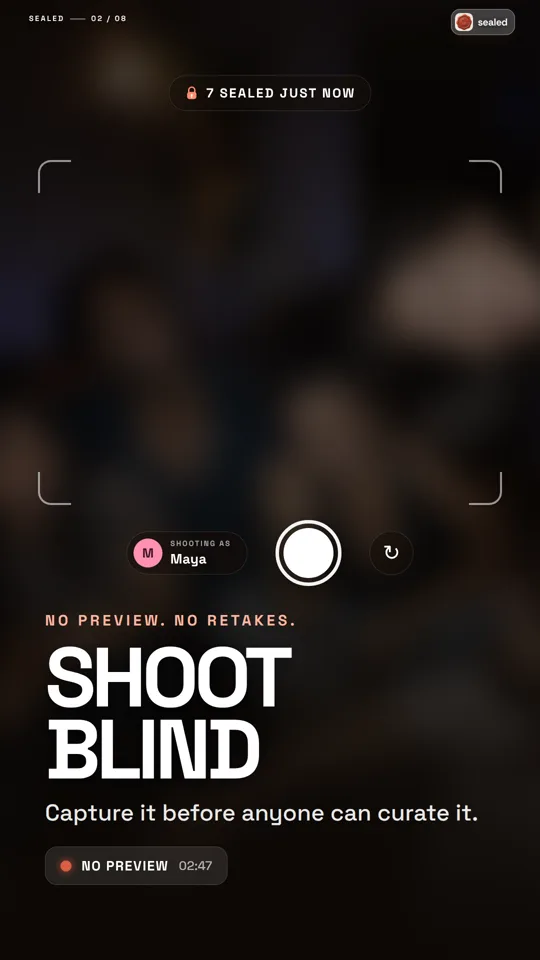
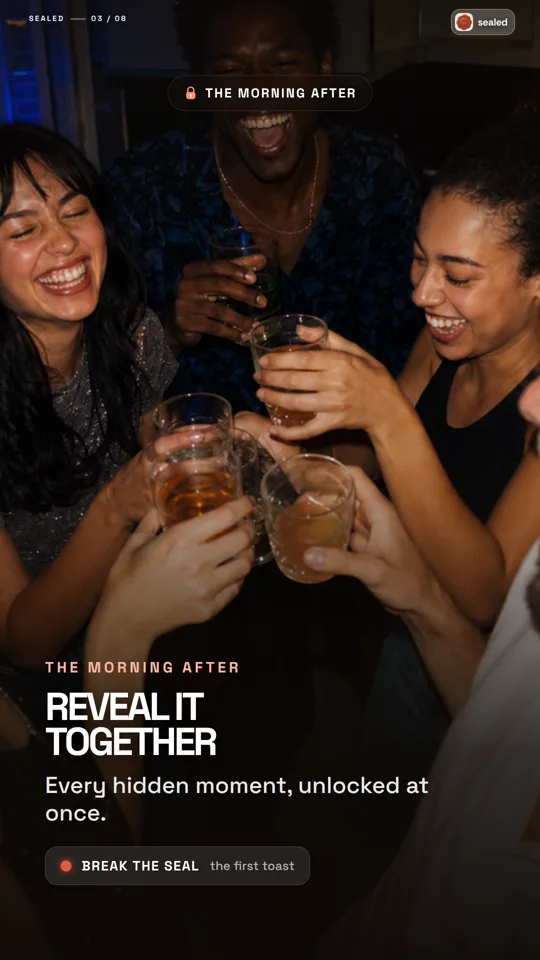
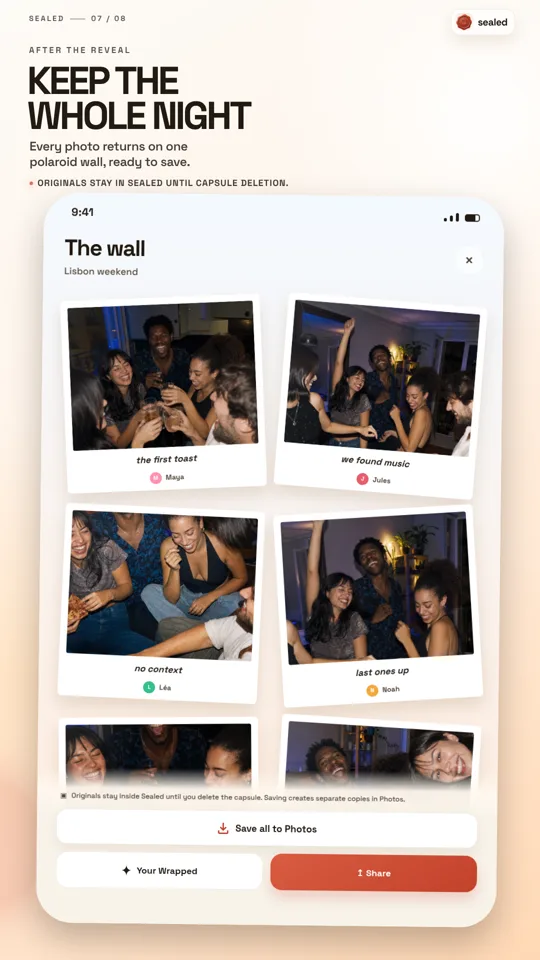
If you'd rather have a tool handle the pooling and delayed unlock automatically instead of relying on everyone remembering to hold back, that's the specific problem apps like Sealed are built around. Sealed is described publicly as a group photo capsule: everyone in the group shoots, nobody peeks at the results individually, and the photos are opened together once the capsule is set to reveal. It doesn't replace the consent conversation above - it just gives the group a structured way to enforce the 'hold back and open together' rule they might otherwise rely on an honor system for.
A short checklist before you pick an app
Whatever tool you land on, a few quick checks before the party will save you awkwardness afterward. None of these require special expertise - they're mostly about matching the tool's behavior to what your specific group actually wants.
It's also worth remembering that any editorial description of an app's language support, interface, or store listing is not a guarantee of what you'll see when you actually download it. Store listings, supported languages, and available features can change, and the only reliable way to confirm what an app currently offers in your region is to check its current listing directly rather than relying on an article.
- Does the app show photos live, or hold them until a set reveal moment?
- Can everyone in the group easily contribute, or does it require one person to manage everything?
- Is there a clear point where guests can opt out of a photo before it's shared more widely?
- Does the app or its publisher provide privacy and terms information you can actually read?
- If children may appear in photos, does the product publish child-safety information you can review?
Where a shared-reveal ritual fits, and where it doesn't
A delayed, collective reveal works best when a group already has some shared context - friends, family, a team that spends real time together - because the anticipation and the joint viewing moment are part of what makes it enjoyable. It works less well for very large, loosely connected gatherings (a 200-person work event, for instance), where coordinating a single shared reveal moment for everyone isn't practical and a simpler shared album may serve the group better.
It's also worth being honest that no app format eliminates the basic social work of a good party photo tradition: someone still has to invite people to participate, someone still has to gently ask before including a reluctant guest, and someone still has to decide when 'later' actually arrives. The app can structure and support that ritual, using the primary idea behind party app ideas focused on shared reveal, but it doesn't substitute for the group actually agreeing on how they want to handle photos together.
Frequently asked questions
What's the main difference between a live-sharing party app and a delayed-reveal one?
Live-sharing apps post or display photos as soon as they're taken, so everyone sees results in real time. Delayed-reveal apps hold photos back until a set moment, so the group experiences them together later rather than as a scattered, ongoing stream during the event.
Do I still need to ask for consent if I'm using an app that delays sharing?
Yes. A delayed reveal changes when photos become visible, not whether the people in them deserve a say. It's still good practice to let guests know they're being photographed and to check in before including someone who seems uncomfortable, regardless of which app or format you use.
Should I trust an article's claim that an app is available in my language?
Treat editorial translations or language mentions as informational only. They don't confirm that an app's actual interface, store listing, or support is available in that language in your region - check the app's current store listing directly before assuming.
Sources and further reading
These resources provide the wider reference frame. Product statements on this page are limited to the public information provided by Sealed.