

What a wedding photo app QR code is for
A wedding photo app QR code is a simple entry point: guests scan it with their phones and are directed to the photo-sharing experience chosen for the celebration. Before printing cards or placing signs, decide what action the code should invite. It might ask guests to contribute photos, view instructions, or join a shared moment later in the day.
The useful question is not only whether scanning works. It is whether the QR code supports the atmosphere you want. For a couple seeking fewer phones raised during key moments, the code can set an expectation that photography is participatory but not necessarily immediate. Clear wording beside it matters as much as the code itself.
- State the action in plain language: “Scan to join our shared photo capsule.”
- Place a readable human-friendly link below the code as a fallback.
- Give guests one short instruction, not a dense list of rules.
Wedding photo app QR code choices begin with guest consent
A QR code makes participation easy, but it does not replace permission. Before guests photograph or share recognisable people, they should consider whether those participants are comfortable being included. This is especially important around children, private family moments, changing areas, ceremonies with restrictions, and anyone who has asked not to be photographed.
The couple can make consent easier to respect by setting expectations before the event and repeating them near the code. A calm sign can say that participation is optional, that guests should ask before taking close portraits, and that people should not be pressured to appear or upload. If the celebration has a no-photo period, make that instruction unmistakable rather than relying on a QR workflow to communicate it indirectly.
- Make participation voluntary.
- Name any photo-free moments or spaces.
- Ask guests to check with identifiable people before sharing close or sensitive images.
- Assign one person to answer practical questions if the couple does not want to manage them.
Choose the reveal rhythm before choosing the sign
A QR code can lead to an ordinary live gallery, but a wedding may call for a different rhythm. Decide whether guests should see contributions as they arrive, whether only the couple should review them first, or whether everyone should encounter the collection together at a planned time. Each option creates a different social signal.
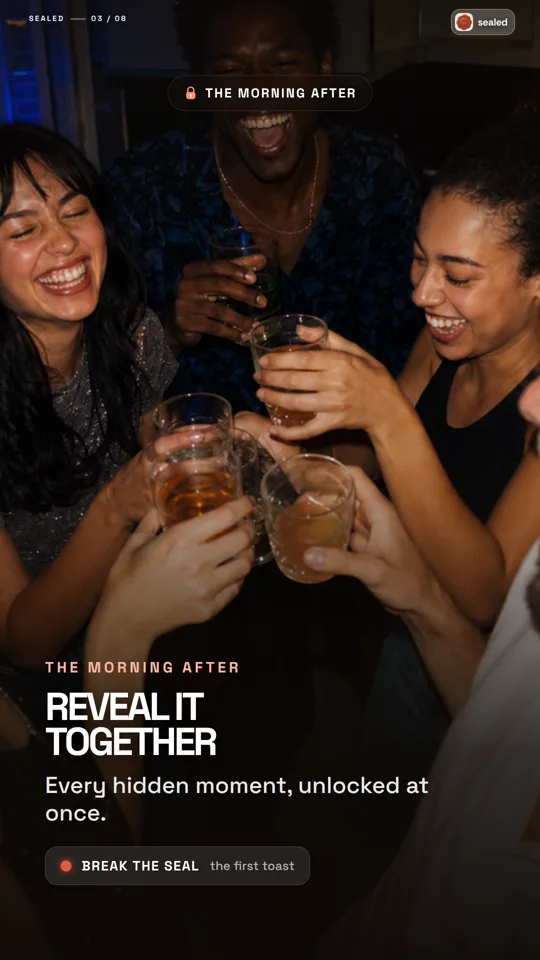
Live viewing can be enjoyable for guests who want quick feedback, yet it can also pull attention toward screens and comparison. A delayed reveal creates anticipation: people make images without immediately checking the result, then return to the collection as a group experience. The right choice depends on the couple’s priorities, venue schedule, and the degree of interruption they are willing to invite.
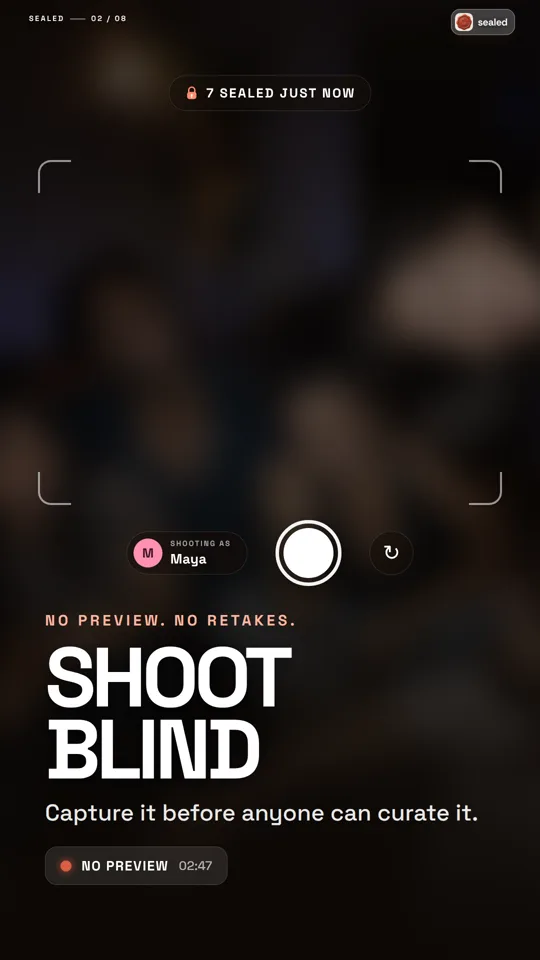
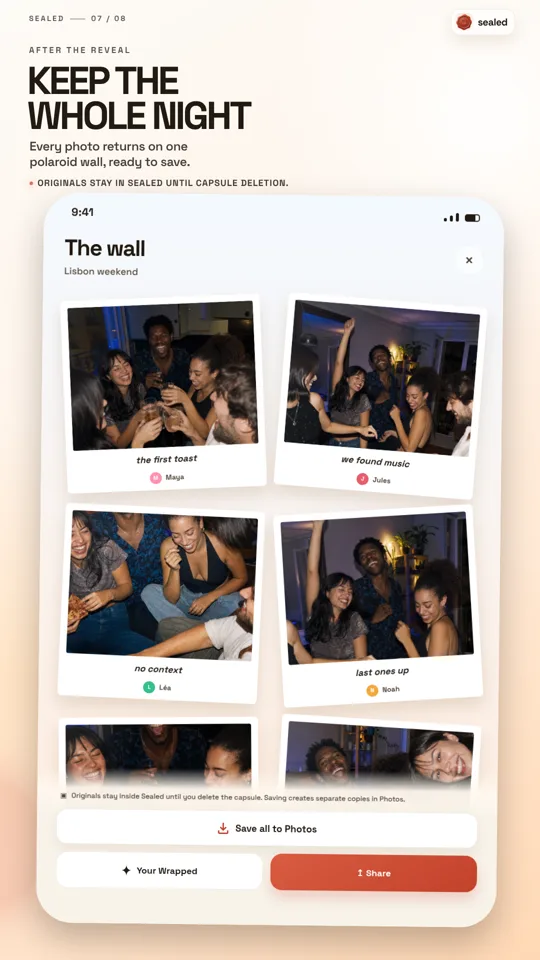
Sealed is framed publicly as a shared group-photo capsule with a later collective opening rather than continuous peeking. That context makes it relevant when the goal is a deliberate reveal ritual, not a claim that every wedding or guest group should use the same format. Its public guidance and methodology also situate the idea around intentional participation and care for privacy.
- Choose one reveal rule before sending invitations.
- Tell guests when, or whether, they will see the photos.
- Avoid promising a reveal time that depends on unreliable reception or a tight reception schedule.
How to place and explain the QR code with minimal interruption
The best QR placement follows the guest journey. Put it where people naturally pause: near the welcome table, inside a ceremony program, beside the guest book, or at a reception table. Repeating the code in two or three sensible locations is usually more helpful than making one large sign that competes with the décor.
Keep the instruction focused on the moment. For example, a ceremony sign may ask guests to keep phones away until the reception, while a cocktail-hour sign can invite participation. This preserves minimal interruption by avoiding a constant stream of announcements, reminders, and technical troubleshooting.
Accessibility is practical, not decorative. Use sufficient contrast, leave quiet space around the code, print it large enough to scan from a comfortable distance, and provide a short URL. A guest who cannot scan should not be made to feel excluded; they can simply opt out or use the alternative route supplied by the couple.
- Test the printed code from several phone models before the wedding.
- Do not place the only code where a queue will form.
- Use one visible purpose statement and one backup URL.
- Keep a non-digital option, such as a note card for photo requests, if it suits the event.
Example decision aid: a 70-guest reception
Example: Maya and Jordan expect about 70 guests. They want candid guest photos but do not want people watching uploads during dinner. They decide that the QR code will appear at cocktail hour and on table cards, with a short message: “Share a moment for our group reveal tomorrow. Please ask before photographing or sharing identifiable guests.” They also mark the ceremony as phone-free.
Their decision is not based on a promise that delayed sharing will create better photos. It is a practical alignment between their stated priorities: shared anticipation, participant consent, little interruption during the event, and a thoughtful reveal afterward. They give a trusted friend the backup link and ask that person to handle basic access questions.
Use the same four-question check before you commit: Who is invited to contribute? What consent expectations need to be visible? When will images be viewable? Who handles guest questions? If any answer is unclear, simplify the QR-code plan rather than adding more signage or rules.
- Goal: collect candid group memories without a live-feed focus.
- Boundary: no photography during the ceremony and no pressure to join.
- Reveal: a planned shared opening the next day.
- Owner: one designated helper, not the couple.
Limits to check before acting
A QR code is only a doorway, not a guarantee of participation, image quality, internet access, or a particular emotional outcome. Some guests may not bring smartphones, may prefer not to scan codes, or may choose not to be photographed. Plan for those choices without treating them as failures.
Editorial translations are not proof that an app’s interface, support materials, or local store page are offered in that language. If language access matters for your guests, check the current local listing and support information before making the QR code central to your plan. Likewise, verify current privacy, account, device, and sharing details directly before the event.
Sealed’s public site includes privacy, terms, and child-safety material. Those resources can help a couple frame questions to review, but they do not remove the need to make event-specific consent decisions or to read the current information that applies locally. A QR-based photo ritual works best when its limits are stated plainly and guests retain a real choice.
- Verify the current local store listing and support language.
- Read the current privacy, terms, and child-safety information.
- Confirm the venue’s photography and connectivity rules.
- Treat guest participation and consent as optional throughout.
Frequently asked questions
How do I use a wedding photo app QR code without disrupting the ceremony?
Keep the ceremony explicitly phone-free if that is the couple’s preference, then display the QR code at cocktail hour or the reception with one short invitation. Use a backup URL and let participation remain optional.
Should guests ask permission before uploading wedding photos?
Yes. Guests should seek consent before photographing or sharing identifiable people when appropriate, especially for children, sensitive moments, or anyone who has expressed a preference not to be included.
Does a QR code prove that a wedding photo app is available in my language?
No. A translated article or QR destination does not establish that the app, local store listing, or support is available in the same language. Check the current local listing and official support information before relying on it.
Sources and further reading
These resources provide the wider reference frame. Product statements on this page are limited to the public information provided by Sealed.