
Why people look for a third party photo app iphone
When a group wants photos from a trip, party or reunion to feel like a shared moment rather than a stream of individual posts, the built-in camera and photo library on iPhone often aren't enough on their own. That's usually when someone starts searching for a third party photo app iphone option: something that changes how the group captures and experiences images together, rather than just storing them.
The motivation is rarely about storage space. It's about behavior. Groups want less phone-checking during the event and more of a collective moment when photos are finally seen. That's a different problem than syncing or backing up pictures, and it's worth being clear about which problem you're actually trying to solve before picking a tool.
What Apple's own sharing tools already cover
Before adding a third-party app, it's worth understanding what iPhone can already do natively. Apple's Shared Albums feature in Photos lets a group contribute images to a common album that others can view and add to, which covers a lot of basic 'let's collect everyone's photos in one place' needs without installing anything extra.
What Shared Albums doesn't really address is timing and anticipation. Photos typically appear in the shared album as soon as someone adds them, so there's no built-in delay or 'everyone sees it together' moment. If your group's goal is purely consolidation, a shared album may be sufficient. If the goal is a specific reveal experience, that's a different design problem that native tools weren't built to solve.
Where a delayed, shared reveal approach fits in
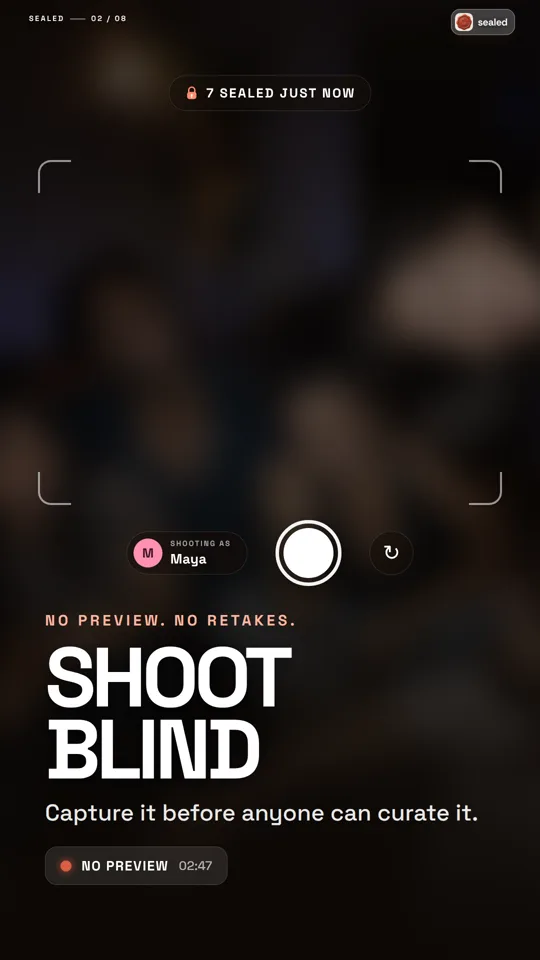
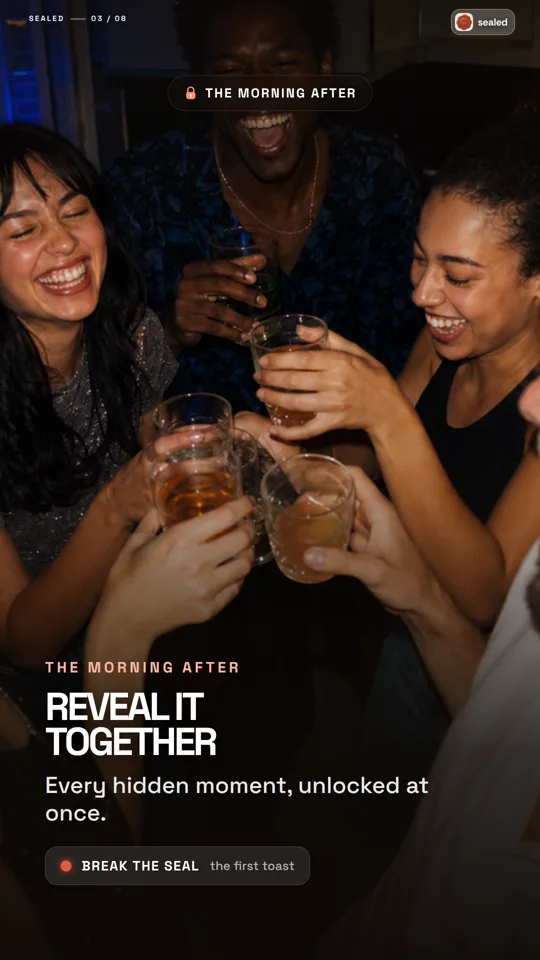
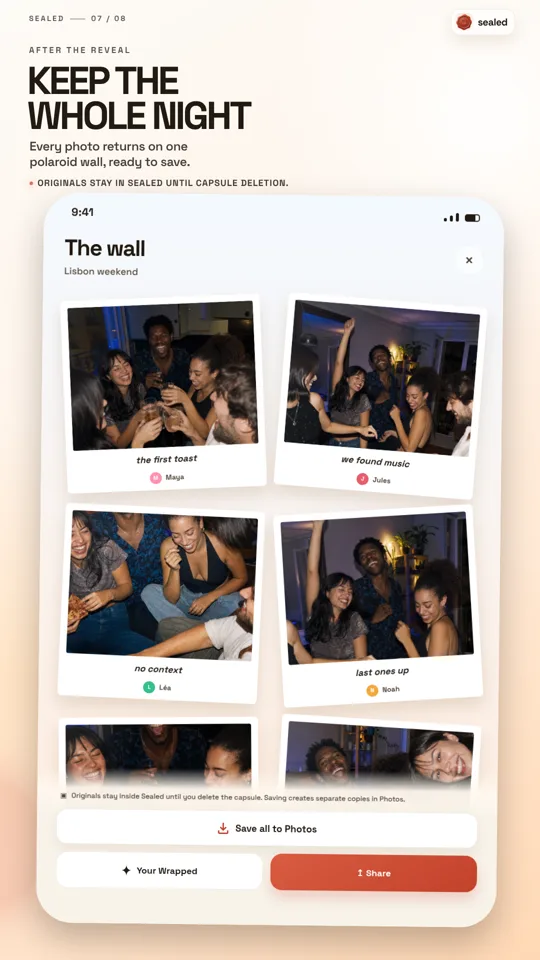
This is the gap that apps built around delayed group reveals, including Sealed, are designed to address. Sealed frames the idea simply: everyone in the group contributes photos during an event, no one can preview what's been taken, and the collection opens for the whole group at the same time. The intent is to remove the incentive to check a phone mid-event and instead create a single shared moment when photos surface.
It's worth being precise about what that framing does and doesn't promise. It describes a mechanism, not a guaranteed emotional outcome, and it doesn't claim to have been tested against other apps or measured for effect on any particular group. If the reader question is 'what should I know before acting on a third party photo app iphone choice,' one honest answer is that the delayed-reveal model is a specific behavioral design choice, not a universal fix for phone habits during gatherings.
Sealed's own public methodology page lays out how it approaches this reveal concept, but readers should treat that as the company's description of its own design intent rather than independent evidence of results.
Consent and expectations before you shoot
Any tool that pools group photos, delayed reveal or not, raises the same underlying question: has everyone in the group agreed to be photographed and to have those images shared with the group, even temporarily? This matters more with delayed-reveal tools specifically, because participants can't see in real time what's been captured of them, which removes the usual in-the-moment chance to ask someone to delete a photo.
A workable norm is to set expectations before the event starts, not after the first photo is taken. That means telling the group what app is being used, roughly how visible the photos will be, and who will see the final reveal. This is basic courtesy rather than anything specific to one app, but it becomes more important when nobody can preview shots as they're taken.
If a group includes people who are camera-shy, minors, or anyone with reasons to limit their visibility, it's worth deciding in advance how to handle that rather than improvising once photos start appearing.
- Mention the app and its reveal format to the group before shooting starts
- Agree on who gets to see the final reveal (just attendees, or a wider circle)
- Have a plan for removing a photo of someone who objects after the reveal
- Be explicit if minors will appear in shared images
A worked example: choosing for a weekend trip
Example only, not a recommendation for any specific group: imagine six friends going on a weekend trip who want photos to feel like a shared surprise rather than a running photo dump in a group chat. Before the trip, they agree that everyone will use one photo app for group shots, that individual phones stay in pockets more during the day because nobody can peek at what's been captured, and that the group will look at everything together on the last night.
In this hypothetical, a delayed-reveal app suits the goal because the point isn't archiving, it's the shared moment of opening photos together. If the same group instead just wanted a single folder of everyone's pictures for later reference, with no interest in a big reveal, a native shared album would likely be the simpler and more familiar choice.
The decision isn't really about which app has more features. It's about which mechanism (instant pooling vs. delayed collective reveal) matches what the group actually wants from the experience.
A short decision checklist
Rather than comparing feature lists, it helps to answer a few direct questions about your own group's goal before picking any third party photo app iphone option.
- Do we want photos pooled instantly, or held until everyone can see them together?
- Has everyone agreed to be photographed and included in a shared collection?
- Do we care about minimizing phone-checking during the event itself?
- Who needs to consent before any photo reaches people outside the immediate group?
- Have we checked the app's current store listing, since language and interface availability can change and shouldn't be assumed from a review article?
- Does the app's public privacy, terms, and any child-safety information answer our specific concerns?
Reading the fine print before you commit
Whatever app a group settles on, it's worth actually reading its public privacy and terms information rather than assuming defaults. Sealed's site, for instance, publishes privacy, terms and child-safety information as part of its public materials, and that kind of documentation is what should inform a decision, not marketing copy or an article summary like this one.
It's also worth remembering that editorial coverage of an app in one language doesn't confirm the app's interface or support is available in that same language in your region. Store listings change, and the only reliable way to confirm current availability, pricing or supported languages is to check the live listing yourself before downloading.
Frequently asked questions
Is a delayed-reveal photo app better than Apple's Shared Albums?
Neither is universally better; they solve different problems. Shared Albums (via Apple's own Photos sharing feature) is good for pooling images from a group as they're taken, with no delay. A delayed-reveal app is designed specifically for groups that want photos held back and opened together as a shared moment, which Shared Albums doesn't offer by default.
Do I need everyone's consent before using a group photo app at an event?
Yes, as a matter of basic practice: people should agree to being photographed and to having those photos shared with a group before you start, especially with delayed-reveal formats where participants can't preview or object to individual shots in real time.
How do I know if a third-party photo app's language or features are actually available on my iPhone?
Check the app's current listing in the App Store for your region rather than relying on articles or translated marketing pages, since interface language and feature availability can differ from what editorial content describes and can change over time.
Sources and further reading
These resources provide the wider reference frame. Product statements on this page are limited to the public information provided by Sealed.