
For your next trip, party or wedding
Next time, skip the shared album
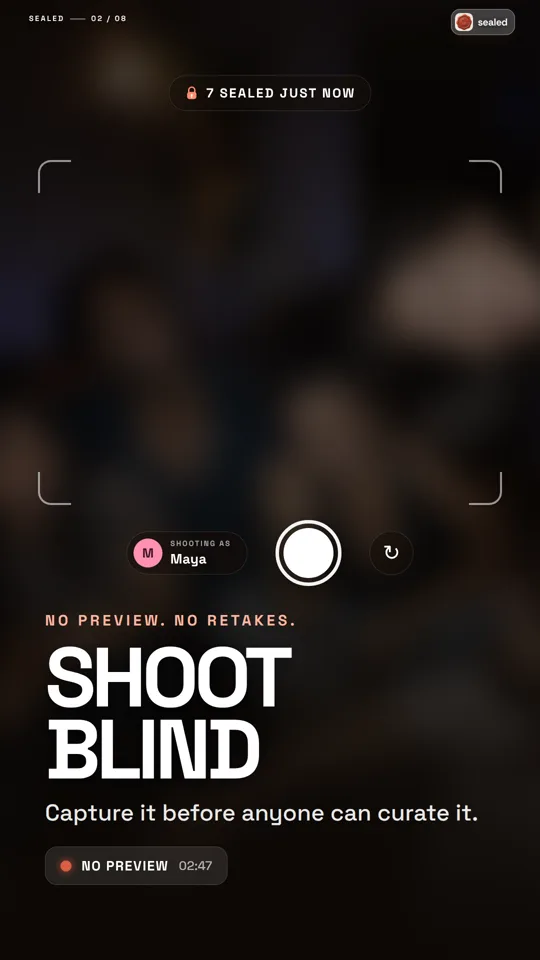
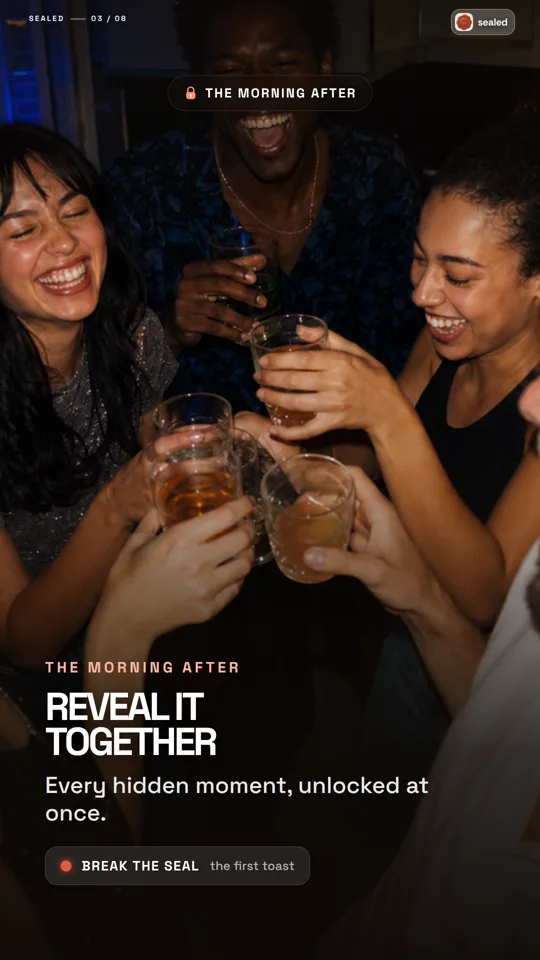
Create a Sealed capsule before the moment. Everyone shoots from their own phone, nobody sees a thing until the reveal, then the whole group opens it together.
- Each guest installs Sealed and joins with a 6-character code or a link, on iPhone or Android. Up to 30 phones, no account needed.
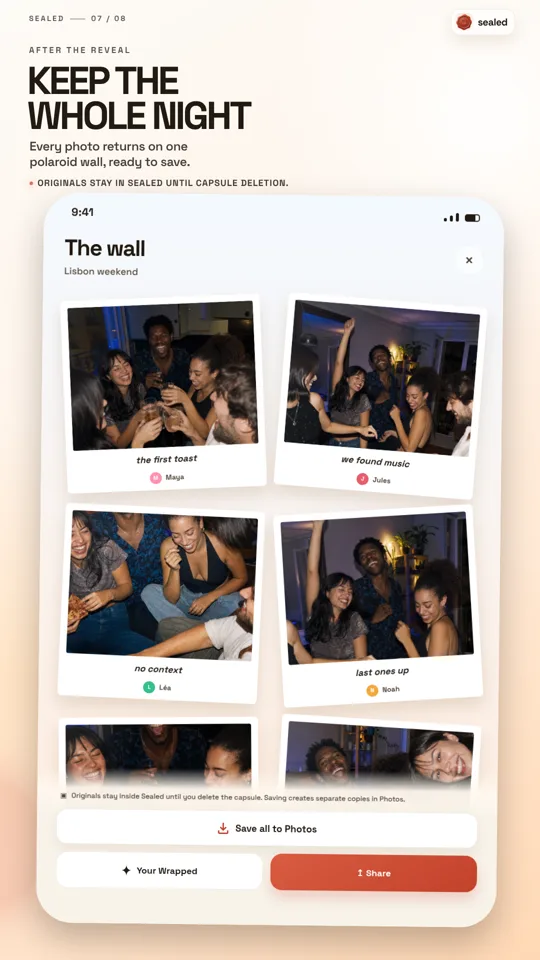
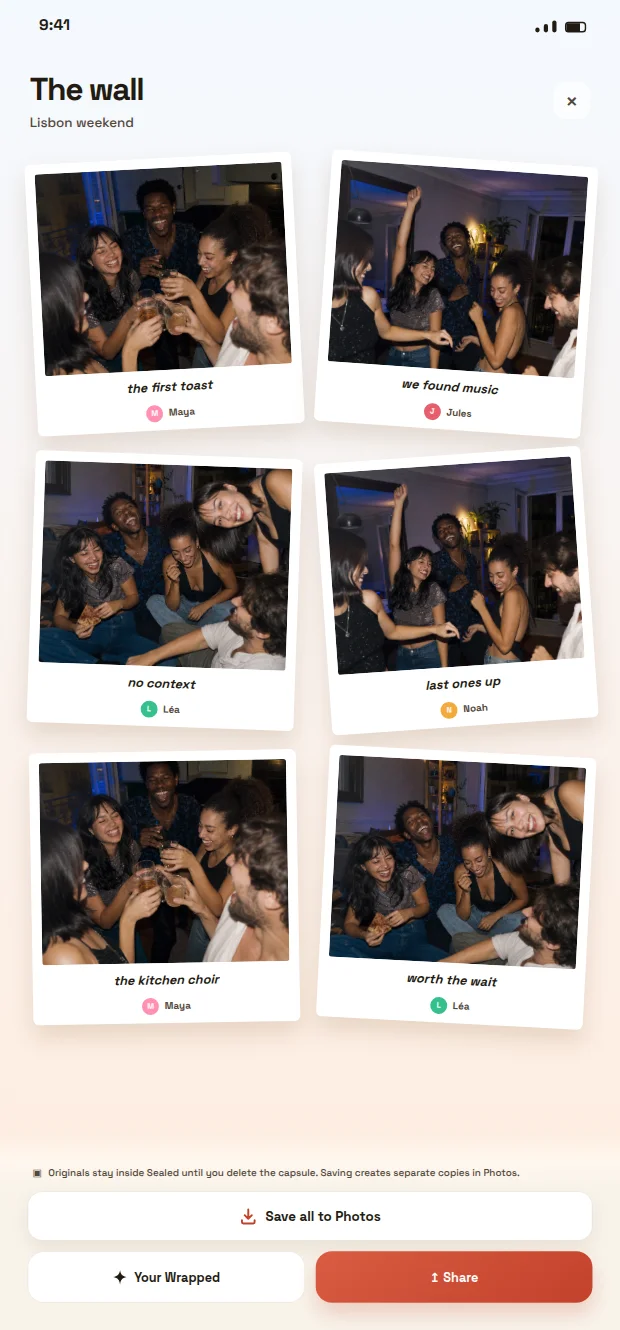
- Every photo lands on one wall, with the name of who took it. Nothing to chase afterwards.
- Photos stay sealed until the deadline, so people keep shooting instead of reviewing.
- When it opens, save the whole wall to Photos in one tap.
Scan with your phone camera to install Sealed
Free download. Sealed does not repair or recover Apple Shared Albums.
Planning an event? Wedding photo app · Birthday party photo app · Bachelorette party photo app
Why the search for the best app for shared photo album needs a sharper question
When people search for the best app for shared photo album, they often mean several different things at once: a place to dump vacation photos, a way to let a group see everyone's shots at the same time, or a tool that keeps the moment private until later. Those are not the same problem, and an app built for one can be a poor fit for another.
A more useful starting question is not 'which app has the most features' but 'what should happen to these photos between the moment they're taken and the moment the group actually looks at them together.' That timing question shapes everything else: storage, notifications, who can see what and when, and how much friction is added to an event that's supposed to be enjoyable in the moment.
Sealed approaches this from one specific angle: a group photo capsule built around delayed, shared reveal. The idea, in short, is that everyone shoots, nobody peeks, and the group opens the results together later. That's a narrower promise than 'best photo app for everything,' and it's worth being explicit about that narrowness before deciding whether it fits a given group's needs.
Local capture versus cloud sharing: a real tradeoff, not a marketing distinction
One of the more concrete distinctions worth understanding before choosing any shared photo tool is the difference between a local, on-device capsule model and a cloud-based shared album model. This isn't a minor technical detail; it changes who can access photos, when, and under what conditions, which matters a great deal for a reveal-style photo ritual.
A cloud shared album typically syncs photos as they're taken, meaning participants (and sometimes anyone with a link) can see images arrive in near real time. That's convenient for groups who want live sharing, but it works against any group trying to preserve a surprise or a delayed group reveal, since photos leak out individually as they're captured.
A local capsule model, by contrast, is designed to hold photos back until a defined moment, then reveal them together. This is the model Sealed's own guidance on local photo capsule versus cloud shared album describes as suited to intentional group photography and consent-aware reveal rituals, rather than instant sharing. Neither approach is universally 'better'; they serve different intentions.
A practical checklist for evaluating a shared photo album app
Rather than comparing app store ratings or feature checklists, it helps to evaluate any candidate app against the actual behavior a group wants during and after the event. Below is a worked example checklist, not a claim about any specific product's current features, since app capabilities and store listings change over time and should always be verified directly.
Example checklist for a group deciding on a shared photo tool:
- Does the app allow photos to be captured without immediately displaying them to the rest of the group (supports shared anticipation)?
- Is there a clear mechanism for participants to consent to being photographed and to having their images shared with the group, consistent with basic consent practice around identifiable people?
- Does using the app during the event require minimal interruption, e.g. no forced logins, tutorials or prompts mid-activity?
- Is the reveal moment intentional and controllable, so the group opens the results together rather than each person discovering photos on their own timeline?
- Does the app or its publisher provide accessible privacy, terms and child-safety information for review before a group commits to using it?
Applying the checklist: a hypothetical group example
Consider a hypothetical example: a group of eight friends planning a weekend trip wants photos from the whole group but doesn't want a stream of individual posts arriving throughout the day, and would rather experience the collection together on the last evening. This is a useful test case because it isolates the reveal-timing question from general photo-sharing convenience.
Walking through the checklist above, this group would prioritize an app that lets each person capture images privately during the day, restricts visibility until a set reveal point, and requires clear consent from anyone photographed, since a weekend trip often involves people outside the immediate group appearing in shots. Minimal interruption also matters here, since nobody wants to fumble with an app mid-activity.
Under this hypothetical, a delayed-reveal capsule model - the category Sealed describes itself as building toward - would align more closely with the group's stated goal than a live cloud album would, purely based on how each model handles timing and visibility. This is illustrative reasoning applied to the group's stated preferences, not a report of any observed outcome or test.
Consent and child safety belong in the decision, not as an afterthought
Any group photo tool, regardless of reveal timing, involves photographing identifiable people, and that carries a baseline expectation: people should have consent before photographing or sharing identifiable participants. This is especially relevant when a group photo capsule includes children, guests who aren't part of the core group, or anyone who might not want their image shared beyond the immediate circle.
Before adopting any app for this purpose, it's reasonable to check what the publisher says about privacy, terms and child-safety handling, since these documents typically explain what happens to uploaded images, who can access them, and how long they're retained. Sealed's public site includes this information, and the same due diligence is worth applying to any comparable tool a group is considering.
This isn't a legal or compliance judgment about any specific situation, and groups with more complex consent needs (for example, events involving minors in a formal or commercial setting) should look at the relevant local guidance rather than relying solely on an app's own documentation.
What editorial coverage of the best app for shared photo album can and can't tell you
It's worth being direct about the limits of an article like this one. Editorial coverage, including this piece, can describe a product's stated design intent and point to public documentation, but it cannot substitute for checking a current app store listing, since features, pricing and availability change over time and are not fixed facts an article can guarantee.
It's also worth noting that editorial translations or descriptions of a product don't establish that the app interface, store listing or support is actually available in a reader's language; that should be verified on the current local store listing before downloading anything.
Ultimately, choosing the best app for shared photo album for a specific group comes down to matching the app's actual reveal and consent model to what the group wants from the experience, not to any single 'best overall' claim, since different groups genuinely want different things from a shared photo ritual.
Frequently asked questions
What's the difference between a cloud shared album and a local photo capsule for group photos?
A cloud shared album typically syncs and displays photos as they're taken, often letting participants see images in near real time, while a local photo capsule model holds photos back and reveals them together at a defined later moment. The right choice depends on whether a group wants live sharing or an intentional delayed reveal.
Do I need consent from everyone in a group photo before sharing it in an app?
Yes, as a baseline practice, people should have consent before photographing or sharing identifiable participants, particularly when photos will be stored, synced or shared through an app. This matters more when the group includes people outside the core circle or minors.
Is Sealed available in my language or app store?
Editorial descriptions or translations of an app don't confirm current availability; the interface, store listing and support may differ by region and change over time, so it's best to check the current local app store listing directly before assuming language or availability.
Sources and further reading
These resources provide the wider reference frame. Product statements on this page are limited to the public information provided by Sealed.