
What is the best disposable camera app for your group
The honest answer is that there isn't a single best disposable camera app for everyone, because the category covers a range of different rituals wearing similar packaging. Some apps recreate the film experience for one person shooting alone, while others are built around a group filling a shared roll together. Before comparing features, it helps to decide which ritual you're actually trying to recreate: a solo nostalgia exercise, or a group event where everyone contributes and later opens the results together.
This distinction matters more than most marketing pages suggest. An app optimized for a single person's daily photo diary will make different tradeoffs than one built for a wedding table or a weekend trip with twelve friends. Asking 'what is the best disposable camera app' without first asking 'best for what kind of gathering' tends to produce disappointing matches, even among apps that look nearly identical on a store listing.
Capture limits: shot counts and who they serve
Disposable camera apps typically simulate a limited roll, echoing the 24 or 27 exposures of a physical disposable camera. The number itself is less important than how the limit is allocated. In a solo app, a shot limit just paces one person's picture-taking. In a group app, the limit (or lack of one) determines whether every participant gets a fair share of the roll, whether latecomers can still contribute, and whether one enthusiastic photographer can crowd out everyone else's photos.
When evaluating capture limits for a group event, it's worth asking who controls the roll: is it a shared pool anyone can add to until it's full, or does each participant get an individual allotment? A shared pool encourages spontaneity but can be dominated by a few people. Per-person allotments are fairer but require more setup. Neither approach is objectively better; the right one depends on group size and how much structure the event can tolerate.
Reveal timing and why it changes the experience
Reveal timing is arguably the feature that most separates disposable camera apps from ordinary photo apps. Some apps show photos immediately after the roll is 'developed,' mimicking a short film-processing wait. Others delay the reveal further, sometimes until a set date or until every participant has stopped shooting, so the group opens the results together rather than individually.
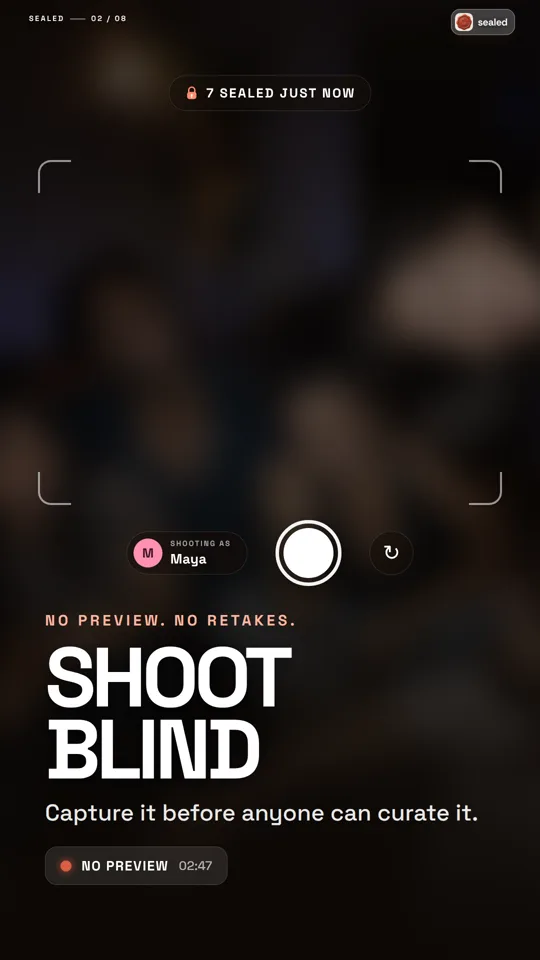
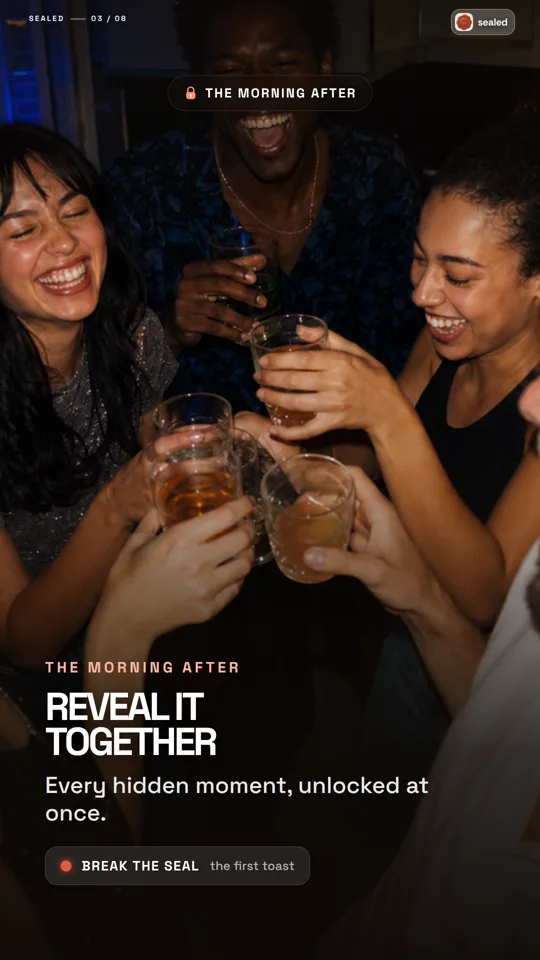
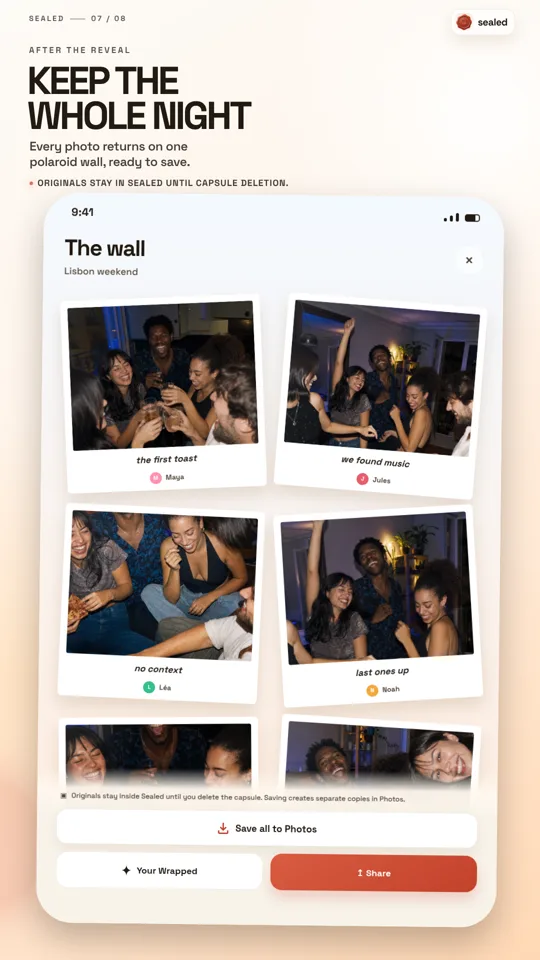
This is the core mechanism behind Sealed's approach: everyone shoots, nobody peeks, and the group opens it together. The idea is that removing live preview pressure changes how people behave while shooting, and that a shared reveal creates a moment of collective anticipation rather than a scattered trickle of individual notifications. Whether that matters to a given group depends on what they're trying to get out of the activity. A casual weekday hangout may not need a delayed reveal at all; a birthday party or a trip with an obvious 'big reveal' moment benefits from it.
It's worth being explicit that this is a design philosophy, not a claim about universal superiority. Immediate-reveal apps serve people who want the disposable aesthetic without the wait, and that's a legitimate preference. The question to ask yourself is whether anticipation and a shared moment add value to your specific event, or whether they'd just feel like an unnecessary delay.
Sharing rules and consent
Sharing rules are the least glamorous part of these apps but often the most consequential. Who can see the photos once they're revealed? Can any participant download and repost them individually, or does the group view them together first? Can someone opt out of being photographed, or remove a photo of themselves after the fact? These questions rarely show up in a feature comparison table, but they shape how comfortable people feel participating.
Consent should be treated as a baseline requirement, not an advanced setting. People should have consent before photographing or sharing identifiable participants, and a disposable camera app's sharing rules should make that easy to respect rather than working against it. Look for apps that let participants control their own visibility and that don't default to public or automatically export-everything behavior.
Groups with mixed comfort levels - say, a mix of close friends and newer acquaintances - should pay particular attention to this before choosing a tool. An app with generous sharing defaults might be fine for a tight friend group but uncomfortable for a larger or more casual gathering.
A worked example: choosing for a weekend trip
Here is a hypothetical to make the tradeoffs concrete. Imagine a group of eight friends going on a weekend trip. They want photos that feel spontaneous rather than curated, but they also want a moment where everyone sees the trip's photos together at the end, rather than each person scrolling through their own camera roll separately.
In this example, the group would want an app with a shared (not per-person) capture pool, since the goal is a collective record rather than eight individual mini-albums. They'd likely benefit from a delayed reveal timed to the end of the trip, so the 'opening' becomes its own small event. And they'd want sharing controls that let anyone flag discomfort with a specific photo before it's shared more widely, since not everyone in a friend group is equally comfortable being photographed candidly.
This example is illustrative, not a recommendation of a specific configuration for every trip. A smaller group of two or three close friends might prefer an immediate reveal with no formal structure at all, since the overhead of setup isn't worth it for a low-stakes outing.
A quick decision checklist
To bring the previous sections together, use this checklist as a starting point when comparing disposable camera apps for a specific event rather than in the abstract.
- Decide if the roll is shared or per-person, and whether that matches your group's dynamics
- Decide if you want an immediate reveal or a delayed, shared one, and why
- Check what sharing and export controls exist, and whether participants can opt out
- Confirm the app's privacy, terms and child-safety information before use with minors present
- Check the current store listing for language and availability rather than relying on marketing pages, since these details change over time
Where Sealed fits and where it doesn't
Sealed is built specifically around the group ritual described above: everyone shoots, nobody peeks, and the group opens it together, with an emphasis on shared anticipation, participant consent, minimal interruption, and a thoughtful reveal. That makes it a fit for groups who want the delayed, collective moment described in the worked example, rather than an all-purpose replacement for every disposable-style app.
It's worth being clear about the boundaries of this article's advice. It draws on Sealed's own public product description and two editorial guides comparing group photo apps, not on any first-party testing of competitors or measured outcomes. Anyone comparing specific apps, including Sealed, should verify current features, pricing and store availability directly, since those details are not fixed and this article does not attempt to state them as permanent facts.
Frequently asked questions
Is a bigger shot limit always better in a disposable camera app?
Not necessarily. A larger limit gives more room to shoot, but for group events the more important question is how the limit is allocated between participants, since a large shared pool can still be dominated by a few enthusiastic photographers while a smaller per-person allotment can feel fairer.
Why do some disposable camera apps delay the photo reveal?
A delayed reveal is meant to reduce the pressure of a live preview and to create a shared moment when the group opens the photos together, rather than each person seeing results individually and immediately. Whether this adds value depends on the event; casual, low-stakes gatherings may not need it.
What should I check about sharing and consent before using a group photo app?
Look for controls that let each participant manage their own visibility, flag discomfort with specific photos, and avoid automatic public sharing or bulk export by default. Consent should be obtained before photographing or sharing identifiable people, regardless of which app is used.
Sources and further reading
These resources provide the wider reference frame. Product statements on this page are limited to the public information provided by Sealed.