

What a time capsule photo booth is meant to do
A time capsule photo booth generally means a photo setup at a gathering where the pictures are held back instead of handed out on the spot. Guests pose, and the images, sometimes with a short note or message, come back later. That might be the next morning, at the end of a trip, or on an anniversary years away. Setups vary a great deal, so treat any single vendor's version as one option, not the definition.
Before booking, renting or improvising one, a host is really answering three questions. How long do the photos stay hidden? Who looks after them during the wait? How do guests agree to be in them? Equipment, backdrops and props come after those decisions, because the answers change what kind of setup makes sense.
Decide the length of the wait first
The delay is the most important choice, and it splits into two different projects. A short wait, from one evening to about a week, is mostly about anticipation: people remember the event, wonder what was captured, and gather again to see it. A long wait of months or years is mostly about preservation: the files have to survive changes of phone, email address, storage service and household.
For long waits, put the custody plan in writing. Name a person responsible for the files. Ask any provider where images are stored, for how long, in what format and how they will be delivered. Do not rely on today's terms staying the same. Storage policies, pricing and features change, so check the current details at booking time and again before the reveal date.
Consent when nobody can preview their own photo
Delayed reveal removes a safeguard people rely on without thinking: glancing at a shot and asking for a retake or deletion. That makes consent more important, not less. Guests should know before they step in front of the camera that the images will be hidden, who will eventually see them, and whether they might be shared further.
Practical steps help. Put a short, plain sign near the booth. Tell people they can skip it. Agree in advance whether reveal photos may be posted publicly. Where children are present, get a parent's or guardian's agreement first. Rules on photographing and publishing images of people differ by place and context. This article is not legal advice, so check what applies to your event if you are unsure.
Minimal interruption and a thoughtful reveal
The appeal of a time capsule photo booth is that it lets the event carry on. Put it somewhere people pass naturally, not in the middle of speeches or the dance floor. Keep instructions short enough to read in seconds. A booth that needs a queue manager tends to pull attention away from the occasion it is meant to record.
The reveal deserves as much planning as the capture. Pick a moment when most participants can be present, in person or together on a call, and give it a few minutes of undivided attention. A reveal shared by the group turns a pile of files into a small ritual, and that shared moment is the point of waiting.
Where a phone-based capsule fits, and where it falls short
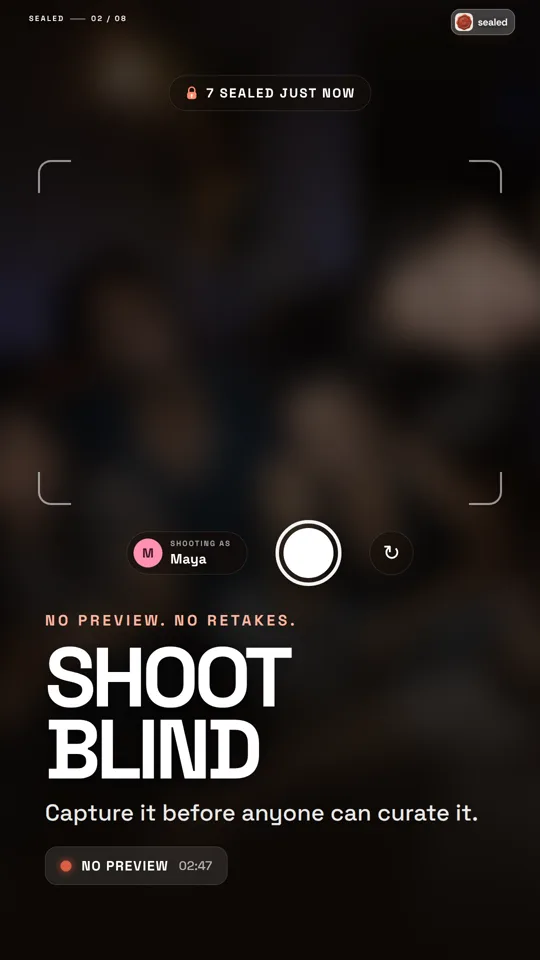
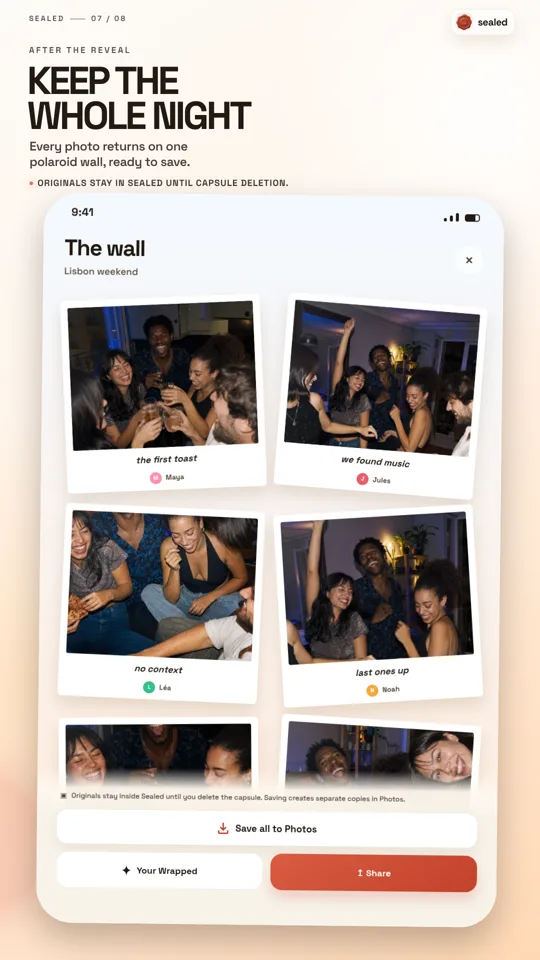
Some groups skip physical hardware and use their phones instead. Sealed, a free group photo capsule app for iPhone and Android, follows the same delayed-reveal idea. Photos go straight into the capsule without preview, retakes, filters or imports from the camera roll, and the organiser cannot peek either. The creator sets an opening time between roughly six hours and a week away. The group then watches a reveal set to music, followed by a polaroid-style wall of every shot. Only these app details describe Sealed itself; the planning advice elsewhere in this article is general event guidance, not something Sealed has studied or tested.
The limits matter for this decision. A phone capsule is not a physical booth, and its maximum wait is about a week, so it does not suit a multi-year anniversary capsule. With a local capsule, the photos stay on one phone. With a shared capsule, members join on their own phones through an invitation or code and need the app, though an account is optional. Server copies of shared photos are removed 30 days after opening, so everyone should save the images they want. Sealed's guide comparing local capsules with cloud shared albums explains that trade-off in more detail.
Example: a checklist for one weekend gathering
Hypothetical example: eight friends are planning a weekend away and want photos nobody sees until Sunday evening. Because the wait is under a week, long-term custody is a smaller concern than consent and the reveal moment, so either a rented booth or a shared phone capsule could work. This checklist is illustrative, not a recommendation for any specific setup.
- Wait length agreed: Saturday morning to Sunday 8 pm.
- Everyone told in advance that shots stay hidden and the whole group sees them.
- Agreement on whether any reveal photos may be posted publicly.
- One person named to confirm that photos are saved after the reveal.
- Reveal planned for a shared dinner, phones otherwise away.
- For a booth rental: storage, delivery and deletion terms checked in writing.
Frequently asked questions
What is a time capsule photo booth?
It is a photo setup, usually at an event, where pictures are held back and returned later instead of shown immediately. The delay can range from a few hours to several years, and setups differ between providers, so check how a specific one stores and delivers images.
Do guests need to agree before appearing in delayed-reveal photos?
Yes, it is good practice to get people's agreement before photographing or sharing identifiable participants, especially when they cannot preview or delete their own shots. Tell guests how the photos will be revealed and shared, let them opt out, and get a parent's or guardian's agreement for children. Local rules vary, so check if unsure.
Can a phone app replace a time capsule photo booth for a years-long capsule?
Not always. Some phone-based capsules, such as Sealed, open after a short window of about six hours to a week, and Sealed deletes server copies of shared photos 30 days after opening. For multi-year capsules, plan dedicated long-term storage and a named person to keep the files.
Sources and further reading
These resources provide the wider reference frame. Product statements on this page are limited to the public information provided by Sealed.