
What a wedding guest picture QR code actually does
A wedding guest picture QR code is a printed shortcut to a web address. A guest points their phone camera at it and lands somewhere: an upload page, a shared album, an app store listing or an invitation to join a group. The code does not store, protect or organise any photos itself. Everything that matters happens at the destination.
This means the useful question is not which QR code to print but what you are sending guests to. Two table cards that look identical can lead to very different experiences. One might open a public album anyone can browse. Another might require an app and keep every photo hidden until a set time. Before choosing a design, decide what the scan should lead to and what guests should expect afterwards.
Four questions to answer before printing a wedding photo QR code
Most problems with guest photo collection come from details nobody checked before the day. Guests who scan and find an unexpected sign-up screen, or who learn later that their photos were visible to strangers, will lose trust in the whole idea. Writing down the answers to a few plain questions avoids most of that.
Treat a printed code as something that can travel. A guest can photograph a table card and send it to someone who was never invited. If the destination only asks for a link, anyone holding the link may get in. Keeping photos hidden until a later reveal does not solve this: it only delays exposure, and anyone who joins with a forwarded code may still see everything once the collection opens. Place codes only where guests are, and check what control the service gives you over who joins.
- Does a guest need to install an app, create an account, or neither?
- Can guests see each other's photos straight away, or only later?
- Who can join the collection, and what happens if the code is forwarded?
- How long are files kept, and who is responsible for saving copies?
Consent and the people in the frame
A wedding gathers people with very different comfort levels around cameras. Some guests may have personal safety reasons to stay out of shared albums. Children may attend. Elderly relatives may not realise that a photo taken at the table will be uploaded and seen by everyone. Collecting photos at scale makes these differences more important, not less.
Ask before photographing or sharing identifiable people, and make that expectation visible. A short line on the invitation or the table card, such as a request to check with people before including them, sets the tone without lecturing. Respect anyone who asks to be left out, and consider naming moments, such as the ceremony itself, when guests should keep phones away. This is general etiquette, not legal advice; if you have specific concerns about privacy rules where you live, check with a qualified source.
Sealed's methodology page sets out its consent and safety guidance, covering participation, consent, capture boundaries, reveal and reuse. It works as a prompt list for these conversations whichever service your code points to.
Minimal interruption: when the code helps and when it gets in the way
A QR code should lower the effort of sharing, not add a task to the evening. Scanning works best during natural pauses: cocktail hour, waiting for dinner, the moments between speeches. It works badly when venue signal is weak, when phones are low on battery, or when guests are expected to stop and sign up for something mid-celebration.
Live feeds create a quieter kind of interruption. When guests can watch photos appear in real time, attention drifts to screens during toasts and dances, and people start judging shots instead of taking them. A collection that stays hidden until later removes that pull. Guests take photos and put the phone away, and the shared viewing becomes a planned moment of anticipation rather than a constant scroll.
Where Sealed fits, and where its limits are
Sealed treats guest photos as a capsule the whole group opens together at a set time, and its wedding guide describes it as suited to up to 30 guests joining one capsule. That makes it a better match for a small wedding or a close group than for a large reception. Each guest joins on their own phone with a six-character code or a sealedreveal.com/j/CODE link, so the app must be installed, although an account is optional. An organiser could point a printed code to that link, but Sealed's public material does not promise a particular QR format, so confirm the current joining steps in the guide before designing cards.
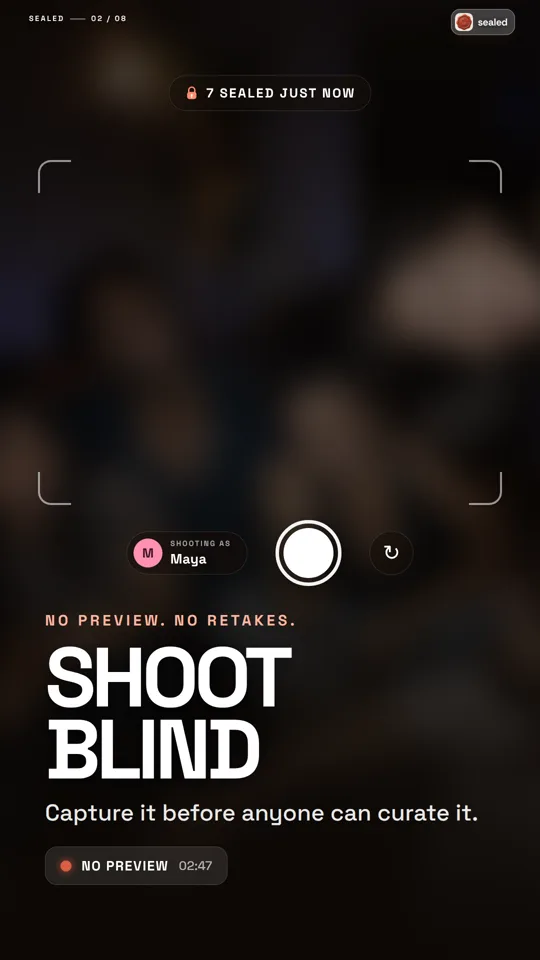
Once inside, each shot goes straight into the capsule with no preview or retake, and nobody, organiser included, can look early. The opening time is fixed when the capsule is created, anywhere from about six hours to a week ahead. The guide also documents what Sealed does not offer: there is no live gallery before the opening and no remote moderation by the host, which is one more reason to agree on consent expectations up front. Photos already in a guest's camera roll cannot be added.
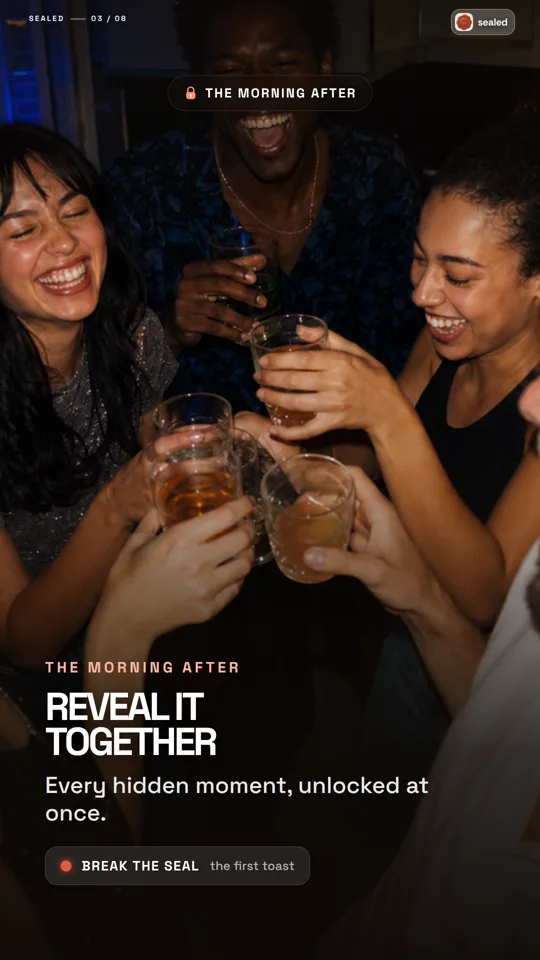
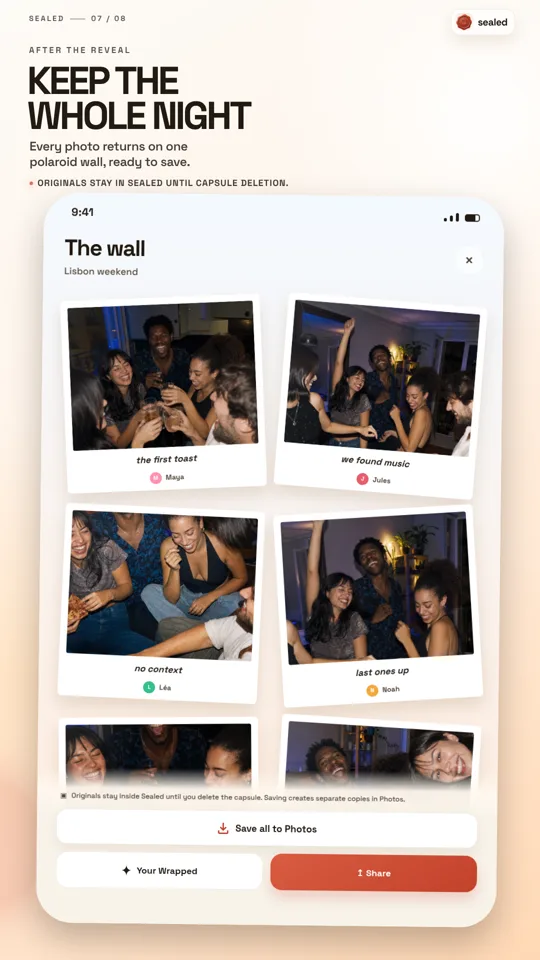
A hidden capsule delays exposure but does not decide membership: anyone who joins with a forwarded code may still see every photo at the opening. Server copies are removed 30 days after opening, so someone must save the photos the couple wants. The app is free on the App Store and Google Play.
Example: planning a QR code for a 25-guest dinner
This is a hypothetical example, not a report of a real event. A couple expects 25 guests at a small wedding dinner and wants candid photos without phones dominating the evening. They choose a delayed-reveal destination that sits within its described group size; a Sealed capsule, described as fitting up to 30 guests, would suit this dinner, whereas a 90-guest reception would exceed what one capsule is described as supporting. They set the opening for the next afternoon so the day after becomes a shared viewing over brunch, and place a card on each table rather than at the venue entrance.
The card explains three things in plain words: what to install and how to join, that photos will appear the next day for everyone together, and a request to ask before photographing people who might prefer not to be included. Because nothing can be reviewed before the opening, the couple mentions the consent request again in their welcome. One named friend helps older relatives join. After the reveal, the couple sets a reminder to download the photos they want within the storage window.
- Confirm the destination and test the code on two different phones.
- Check that the guest count fits what the service describes.
- Print a short consent line on every card.
- Choose a reveal time and tell guests when it is.
- Assign one helper for guests who struggle with setup.
- Set a reminder to save photos before any deletion window ends.
Frequently asked questions
Do guests need an app to use a wedding guest picture QR code?
It depends entirely on where the code leads. Some codes open a web upload page, while others send guests to an app they must install first. Check the destination yourself before printing, and tell guests in advance if an install is needed so they are not surprised at the venue.
Can someone who was not invited use a wedding photo QR code?
Possibly. A printed QR code is just a link, and a guest can photograph and forward it. Whether an outsider can join depends on the service behind the code. Keeping photos hidden until a later reveal only delays exposure: anyone who joins with a forwarded code may still see the photos when the collection opens, so display codes only where guests are.
How long are guest photos kept after a wedding?
Storage rules vary by service, so read the retention terms of whatever the code points to. With Sealed, server copies of photos in a shared capsule are deleted 30 days after it opens, so couples and guests should save the photos they want to keep within that period.
Sources and further reading
These resources provide the wider reference frame. Product statements on this page are limited to the public information provided by Sealed.