

What people actually mean by a party photo frame
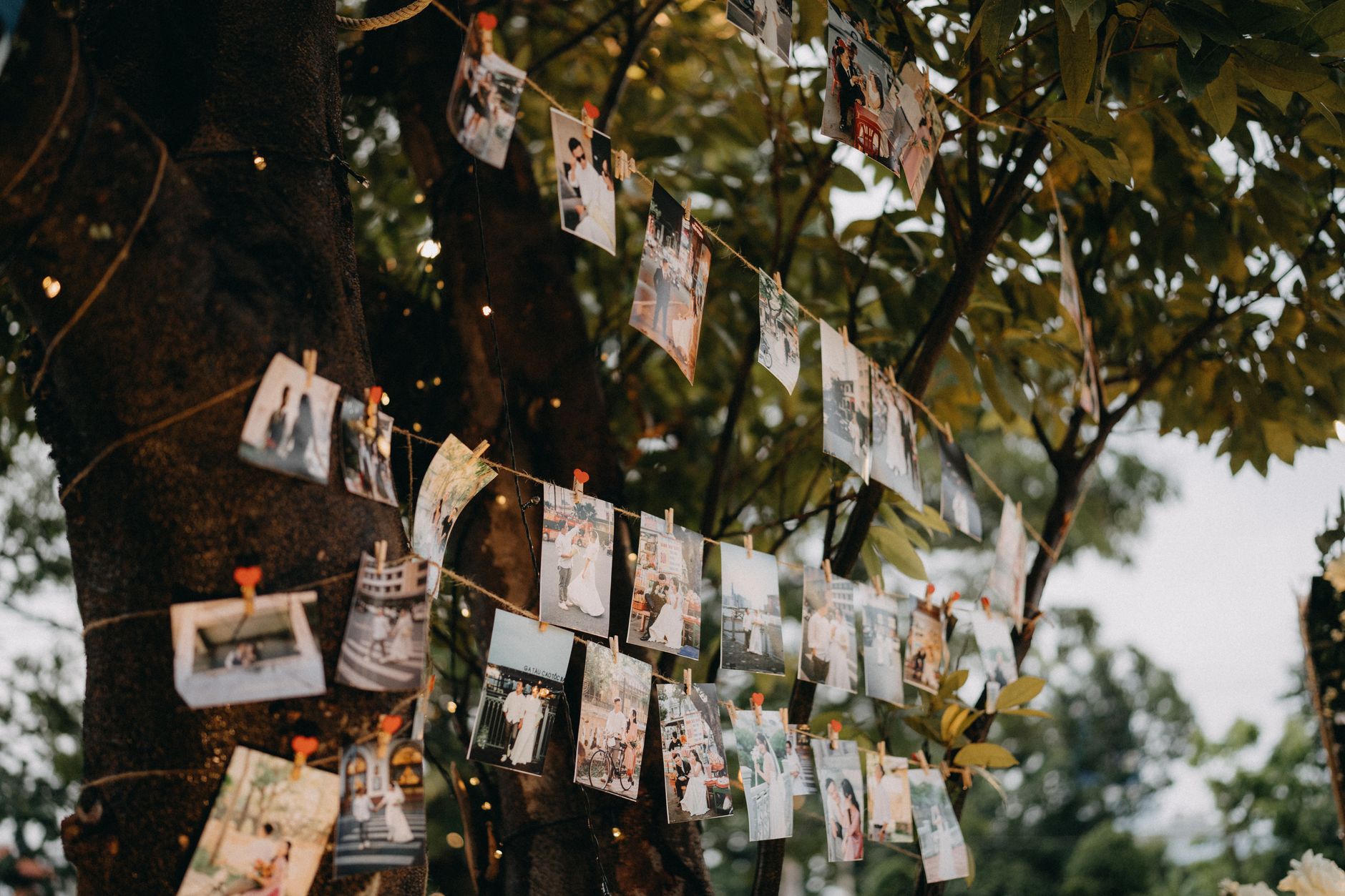
The phrase party photo frame gets used loosely. Sometimes it means a physical printed border added to a photo booth strip. Sometimes it means a digital overlay app applies over guest photos before they're shared. And sometimes it's shorthand for the whole photo-sharing setup at an event: a shared album, a hashtag, a booth, or a group chat where everyone dumps their shots afterward. Before choosing a tool or a workflow, it helps to be clear about which of these you actually need, because the three versions solve different problems.
A printed or digital frame is mostly decorative. It brands the moment, gives it a consistent look, and can be a nice keepsake. But it doesn't address the two things that most often go wrong at group events: people feeling pressured to pose a certain way because everyone can see the shot instantly, and photos of someone circulating before that person has agreed to be in them. A frame does nothing about either issue on its own.
The gap between decoration and a genuine photo ritual
If the goal is just a nice visual keepsake, a frame template solves that fully. If the goal is a shared experience - the kind where the fun is partly in not knowing what everyone else captured until later - a frame is the wrong layer to focus on. That distinction matters because a lot of the friction people report from party photos isn't about aesthetics, it's about timing and consent: someone glancing over a shoulder at a live preview, or a photo landing in a group chat before the subject has seen it themselves.
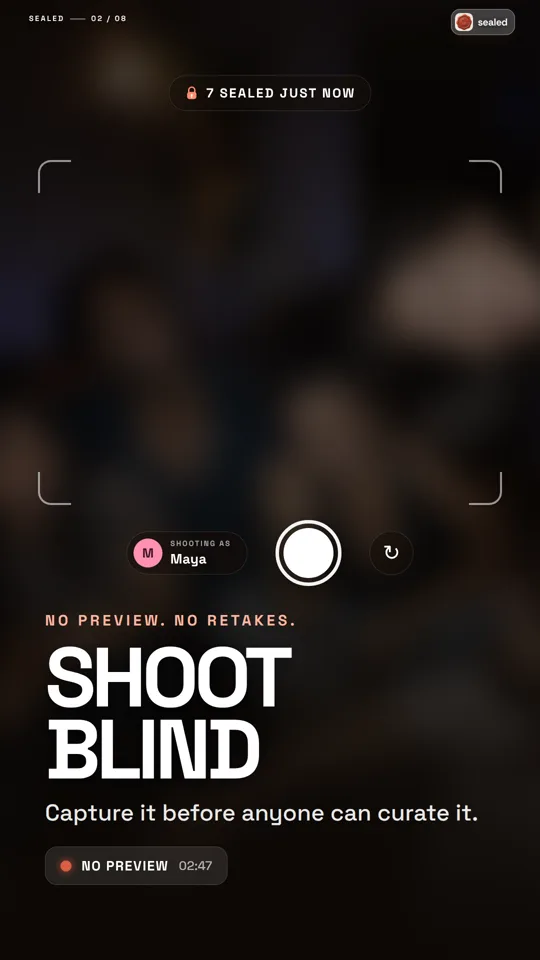
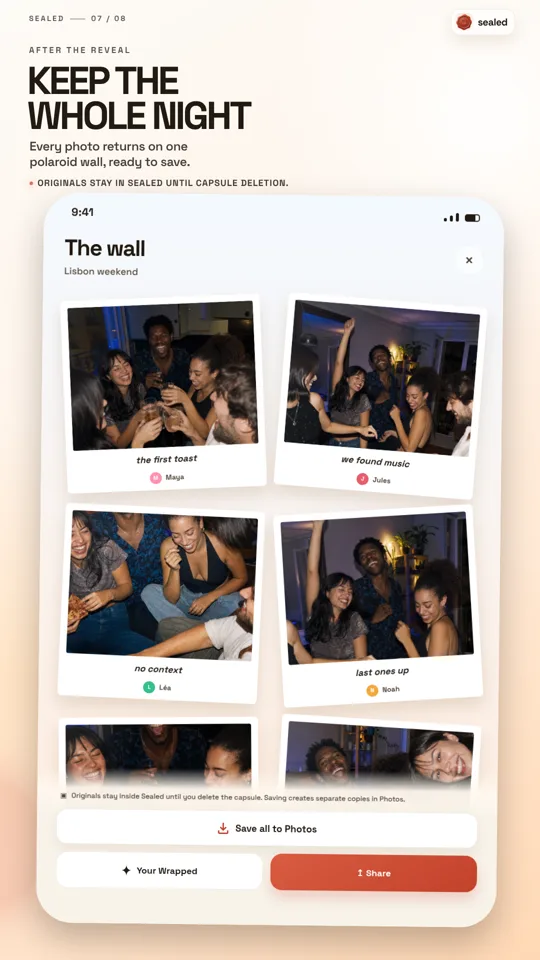
This is the gap that delayed-reveal formats try to address. Sealed, for example, is built around a group photo capsule model: participants shoot into a shared pool during an event, nobody can peek at the results as they come in, and the group opens everything together at a set moment. That's a different design goal than a frame - it's less about how the photo looks and more about when and how it's seen. Whether that trade-off is worth it depends on the group and the occasion, not on any universal rule.
Consent is the part decoration can't fix
Whatever format you use, one principle doesn't change: people should be asked before they're photographed or before an identifiable photo of them is shared further. This applies whether the photo has a party frame around it or not, and whether it's shared instantly or after a delay. A pretty border doesn't make a photo more consensual, and a clever sharing mechanism doesn't automatically make consent easier - it just changes when the question needs to be asked.
In practice, consent at a casual party is often handled loosely: a verbal 'is it okay if I post this' before hitting share, or an understanding that photos from a specific activity are fair game unless someone opts out. Neither approach is wrong, but they work better when the group agrees on the rule before photos start circulating, not after someone is unhappy to see themselves online.
A shared-reveal format can actually help here, precisely because nobody sees anything until the group opens it together. That removes the scenario where one person posts a photo unilaterally the moment it's taken, and gives everyone a shared moment to react - and to say something - before individual sharing begins. It's not a guarantee of consent, but it does build in a natural pause.
A worked example: choosing a setup for a small birthday party
Example (hypothetical): say you're organizing a 20-person birthday dinner and want photos that feel less like a stream of phone snapshots and more like a shared keepsake. Here's one way to think through the decision.
First, ask what you actually want at the end: a nice-looking set of photos with consistent styling, or a moment where the whole group experiences the photos together. If it's the former, a printed or app-based frame template applied at the point of sharing is enough - pick a template, tell guests how to use it, done. If it's the latter, you need a mechanism that withholds photos until a set reveal moment, which is a different kind of tool.
Second, decide who needs to consent to what. If everyone in the group is comfortable with any photo from the night being shared freely, you can skip a lot of friction. If some guests would rather not appear in shared photos, agree on a simple rule up front - for instance, a quick check before anyone posts outside the group - rather than relying on people to object after the fact.
Third, decide on timing. A live album feels more spontaneous but removes the delayed-reveal effect. A capsule-style approach - shoot throughout the event, open together at the end - trades spontaneity for a shared 'unveiling' moment, which some groups enjoy and others find like an unnecessary extra step. Neither is objectively better; it depends on what the group actually wants from the evening.
A short checklist before you pick a format
Whatever you land on, a few questions are worth answering before the event starts rather than during it.
- Have you agreed, as a group, on whether photos can be shared outside the group by default, or only with individual approval?
- Does everyone know when photos will be visible - instantly, or at a set reveal moment?
- Is there a simple way for someone to say 'please don't post that one' without it being awkward?
- If you're using an app or service, have you checked its current privacy and terms information rather than assuming?
- Are minors present, and if so, has someone checked the relevant child-safety guidance for whatever tool or platform you're using?
Checking availability and claims before you commit
One easy mistake is assuming that because a guide or article is written in your language, the app or service itself is fully available in that language, or that its store listing matches what you've read. Editorial content - including this article - doesn't establish that an interface, app store listing, or support channel is available in a given language; that can change, and it's worth checking the current store listing directly before relying on it for an event.
Similarly, be cautious about any service claiming timeless features, pricing or availability. These details shift over time, and a party is a bad place to discover that a promised feature doesn't work as expected. If you're relying on a specific app for a shared reveal, do a small test run with one or two people beforehand rather than trusting it cold on the night.
Sealed's own public information - including its privacy, terms and child-safety pages - is a reasonable starting point if you're specifically considering a delayed-reveal capsule format, but the same due-diligence advice applies to any tool you're evaluating, not just this one.
Frequently asked questions
Is a party photo frame the same thing as a shared photo reveal?
No. A photo frame is typically a decorative border or overlay applied to individual photos, while a shared reveal is a timing and access mechanism that controls when a group can see photos at all. You can use a frame with instant sharing or with a delayed reveal - they solve different problems and aren't mutually exclusive.
Do I need everyone's consent before sharing party photos in a group chat?
It's good practice to get at least implicit agreement before sharing identifiable photos of someone further, especially outside the immediate group. A quick verbal check or an agreed group rule beforehand is usually enough for casual settings, but the underlying principle - ask before you share someone's identifiable image - applies regardless of the app or format you use.
How do I know if an app's language support matches what I read in a review or guide?
Editorial guides, including translated ones, don't guarantee that the app interface or store listing is available in that same language. Always check the current listing in your local app store directly before assuming a feature or language option is available.
Sources and further reading
These resources provide the wider reference frame. Product statements on this page are limited to the public information provided by Sealed.