
Why couples look for a wedding party photo app
Most couples searching for a wedding party photo app aren't looking for another gallery to manage - they're trying to solve a specific problem: how to get candid, varied photos from guests without turning every table into a photo studio or losing control of who sees what and when. That's a reasonable thing to want, and it's worth being precise about what different apps actually promise versus what they simply enable.
The honest starting point is that a photo app doesn't create good photos or good behavior on its own. It structures when photos are taken, how they're collected, and sometimes when they're shown. Everything else - whether guests actually participate, whether the images are flattering, whether anyone feels awkward being photographed - still depends on the people in the room and the ground rules the couple sets.
The consent question nobody wants to ask at a wedding
Weddings involve people who didn't choose to be there as photo subjects in the way a professional model or willing participant does. Elderly relatives, children, guests who dislike being photographed, or people in the middle of an awkward dance move all deserve some say in whether their image gets captured and circulated. This isn't a legal briefing - just a practical reminder that consent matters before any identifiable person's photo is taken or shared, and that a phone app doesn't change that responsibility.
In practice, this means the couple (or whoever is coordinating) should decide upfront whether there's an opt-out signal, whether photos are shared only within the group or more broadly, and whether anyone under 18 needs a parent's say-so before their photo goes anywhere. An app that lets you scope sharing to a closed group is helpful for this, but it's still a policy the couple has to set and communicate - the tool doesn't do that thinking for you.
Timing: live sharing versus a delayed reveal
Wedding party photo app is often searched by people picturing two very different experiences. One is real-time: guests snap and upload, and everyone watches a shared feed fill up during the reception. The other is delayed: photos are taken but not viewed by anyone, including the photographer, until a set moment - often the next morning or during a planned unveiling.
Each has trade-offs worth naming honestly. Live sharing gives instant gratification and can build energy during the event, but it also means people self-edit constantly, checking how photos look before deciding to keep shooting, and it can turn some guests into curators rather than participants. A delayed approach removes the temptation to preview and re-shoot, which tends to produce more natural, less staged results - but it means the couple gives up real-time quality control and has to trust the process until the reveal.
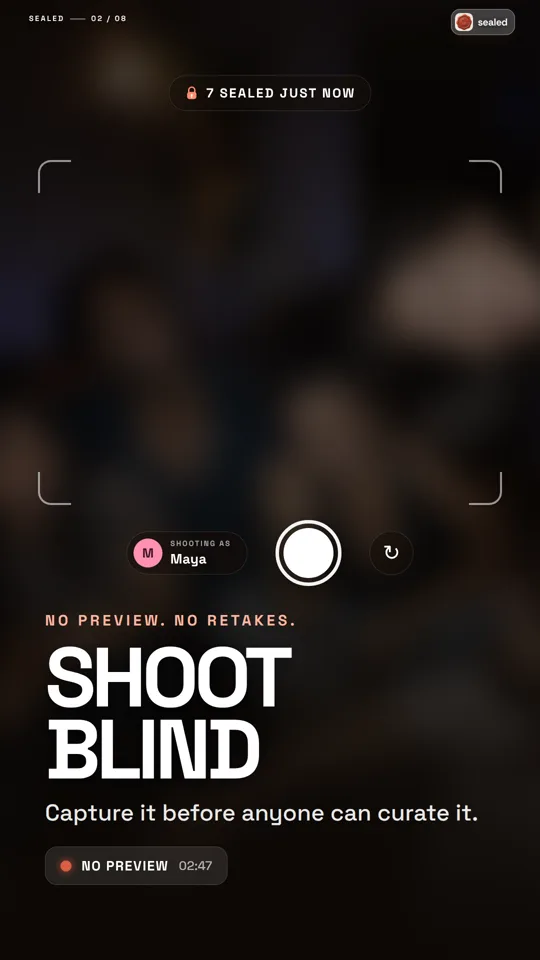
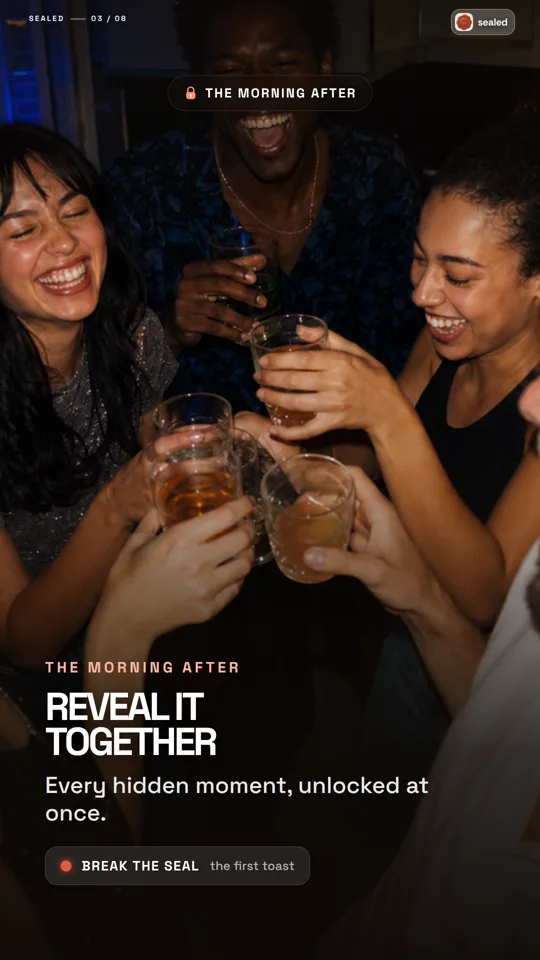
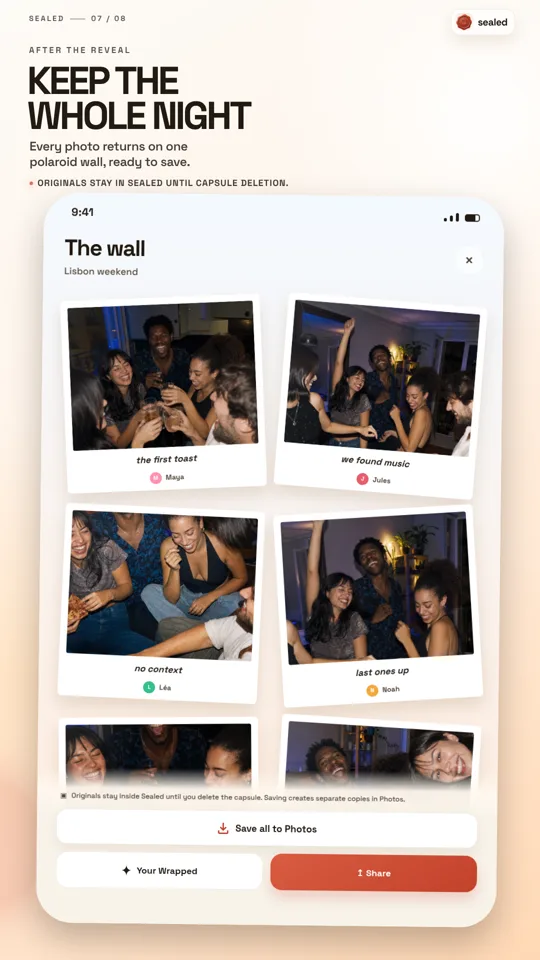
Sealed is built around this second model: a group photo capsule where everyone contributes shots but nobody previews them, and the group opens the results together later. The idea behind it - everyone shoots, nobody peeks, and the group opens it together - is meant to reduce the pressure of a live preview, not to guarantee a particular emotional payoff. Whether that structure suits a specific wedding party depends on how much the couple values spontaneity over control.
A worked example: deciding what a couple actually needs
Consider a hypothetical couple, Priya and Sam, planning a 90-guest wedding with a mix of close friends, extended family, and coworkers. They want candid shots beyond what their hired photographer captures, but they're wary of guests spending the reception staring at phones curating a feed.
Working through their options: a live-sharing app would let them see photos as they come in, which appeals to Sam, but Priya worries that older relatives won't want to upload photos of themselves in real time, and that a live feed might discourage more private or awkward moments from being captured at all. A delayed-reveal structure - where guests shoot throughout the night but nobody sees results until brunch the next day - appeals to both because it removes the self-editing pressure and turns the reveal into its own small event.
In this scenario, the couple decides to combine approaches: a professional photographer for formal shots, a delayed-reveal app for guest candids, and a simple verbal ask at the start of the reception - asking anyone who prefers not to be photographed to let a designated person know. This example is illustrative only; it isn't a claim about outcomes any specific app will produce, just one way to reason through the trade-offs.
- Decide who can opt out and how that's communicated before the event starts
- Choose live versus delayed sharing based on whether preview pressure or real-time visibility matters more to the group
- Confirm how photos are stored and who can access them after the wedding
- Check the current store listing rather than assuming language or feature availability is fixed
Minimal interruption and what to expect from guests
A recurring theme in guidance about wedding photo apps is minimizing interruption - the app should fit into the flow of the event rather than becoming a task guests have to manage. That's a reasonable principle, but it's worth setting realistic expectations: not every guest will engage equally. Some will enthusiastically photograph everything; others will forget the app exists after the welcome speech. No app design fully controls for that variance.
A thoughtful reveal - showing photos at a deliberate moment rather than dribbling them out - can help re-engage guests who didn't think much about the app during the event itself, since the payoff comes later rather than requiring sustained attention throughout. But couples should budget for uneven participation rather than assuming full guest-list coverage.
Practical limits and what to verify before you commit
Before choosing any wedding party photo app, it's worth confirming a few things that change over time and aren't safe to assume: current pricing, guest-count limits, file storage duration, and whether the interface and support are actually available in the couple's language. Editorial guides, including this one, can describe how a product's model is meant to work, but they can't guarantee that the live store listing matches that description on the day you check - availability and language support should be verified directly.
It's also worth remembering that Sealed's public materials describe privacy, terms and child-safety information as part of the site, which is a reasonable thing to review if minors will be photographed or if guests have specific privacy concerns. That's a starting point for questions, not a substitute for the couple's own judgment about their particular guest list.
Frequently asked questions
Do I need explicit permission from every guest before photographing them at a wedding?
General good practice is to have consent before photographing or sharing identifiable people, especially before those photos are shared beyond the immediate group. Practically, this often means announcing photo-taking at the start of an event and offering an easy way for anyone uncomfortable to opt out, since a formal signed release isn't realistic for every guest at a wedding.
Is a delayed photo reveal better than live sharing for a wedding?
Neither is objectively better - it depends on what the couple values. Delayed reveal removes the pressure of guests previewing and re-shooting photos, which can produce more natural results, while live sharing offers real-time visibility and energy during the event. The right choice depends on the guest list and how much control versus spontaneity the couple wants.
Should I assume a wedding photo app's language or store listing matches what a guide describes?
No. Editorial descriptions of an app's interface or language support don't guarantee the current store listing matches, since apps update over time. Always check the live app store page or the app's own site close to the event to confirm language availability, pricing and features before relying on them.
Sources and further reading
These resources provide the wider reference frame. Product statements on this page are limited to the public information provided by Sealed.