
What people actually mean by best apps for wedding pictures on phones
When someone searches for the best apps for wedding pictures on phones, they are usually solving one of two different problems, and conflating them leads to frustration. The first problem is capture: getting many guests to take decent, plentiful photos throughout the day without everyone hovering behind the professional photographer. The second problem is collection and reveal: gathering scattered phone photos into one place that the couple, and sometimes the whole guest list, can enjoy together afterward.
Some apps are built almost entirely around the first problem, offering shared albums that fill up in real time as guests upload from the reception floor. Others lean into the second problem, holding photos back so nobody sees them until a later, shared moment. Neither approach is objectively better; the right choice depends on whether the couple wants a live stream of the day or a delayed, savored reveal once everyone has gone home.
Before evaluating specific apps, it helps to decide which experience the couple actually wants, because that choice shapes almost every other decision covered below, from privacy settings to how photos get distributed afterward.
Live sharing versus delayed reveal
Live-sharing apps let guests upload photos as they take them, and the couple (or anyone with access) can watch the album grow in real time. This suits couples who want to see reactions immediately or who like the social energy of a shared feed during the event itself.
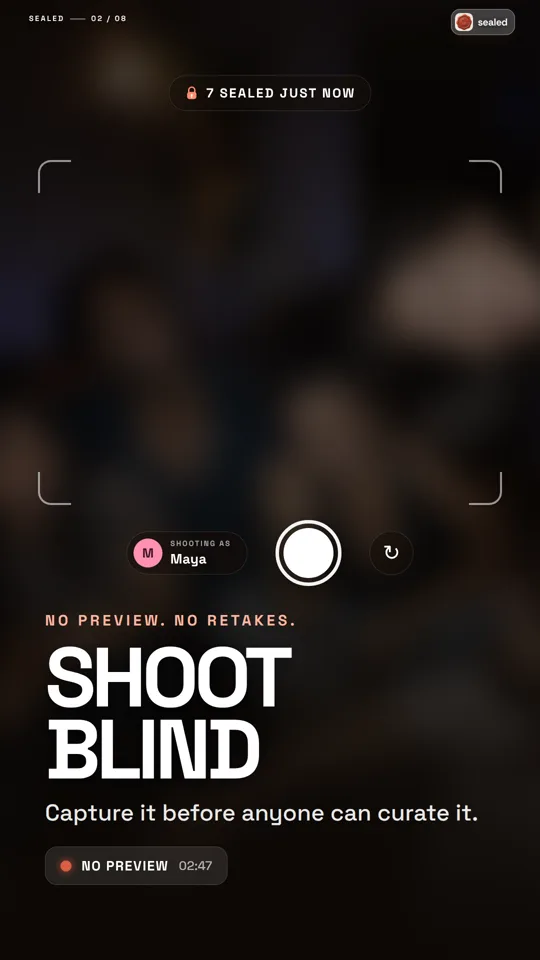
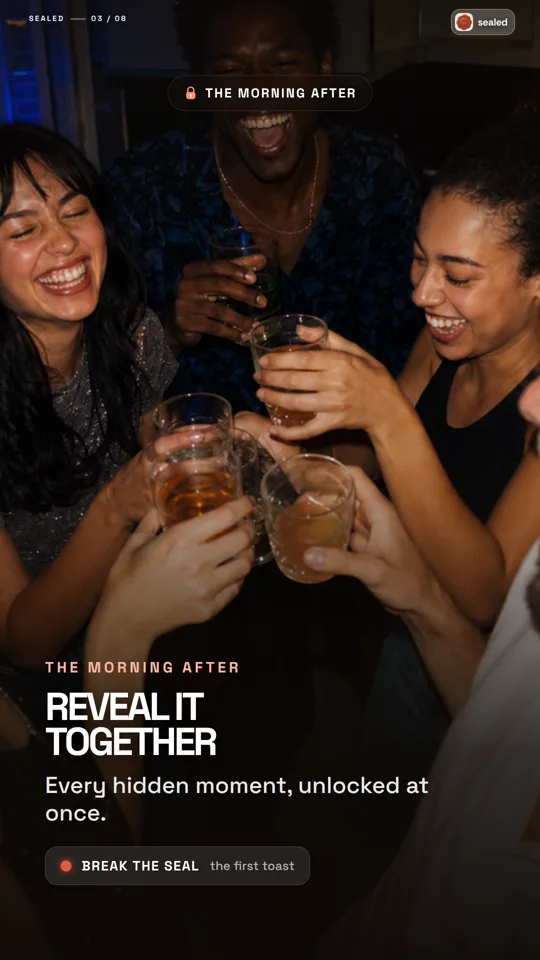
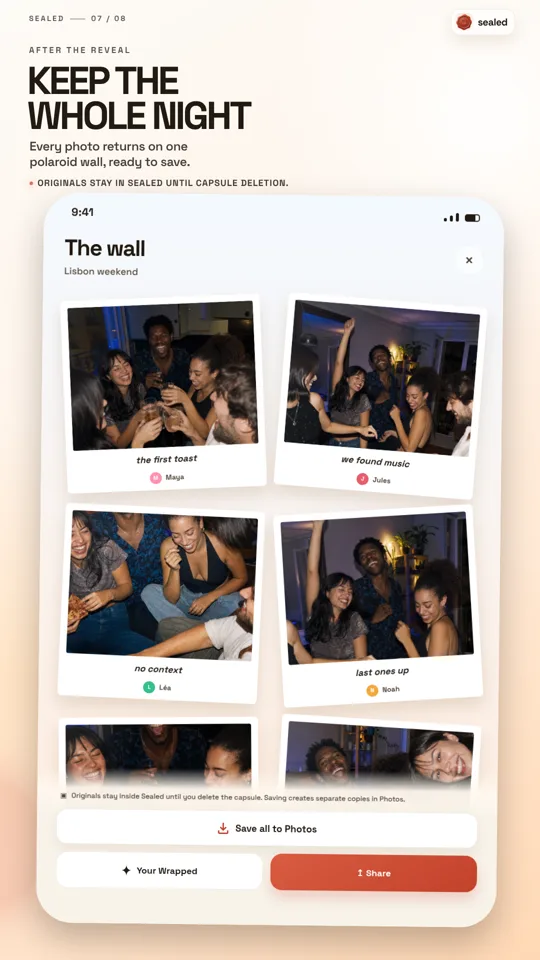
Delayed-reveal apps take a different approach: photos are collected quietly throughout the day and only become visible once a set condition is met, such as the event ending or the couple opening the collection together. Sealed, a group photo capsule built around this kind of delayed, shared reveal, is one example of this category. The idea behind it is straightforward: everyone shoots throughout the event, nobody peeks at what's been captured, and the group opens the collection together afterward, which can turn photo-gathering into a small ritual rather than a background task.
Because Sealed's public materials describe the product idea and its supporting pages (privacy, terms and child-safety information) but do not include first-party research on how well it performs against other apps, any comparison here should be read as a description of a category, not a verified ranking. Anyone evaluating it, or any similar app, should check the current store listing for the features and language support actually available in their region rather than relying on marketing copy alone.
A practical decision checklist
Rather than chasing a single 'best' answer, it's more useful to work through a short set of questions that map to how the wedding will actually run. The following checklist is a general decision aid, not a guarantee of what any specific app will do.
- Do you want guests to see each other's photos during the event, or only afterward? This determines whether you need a live-feed app or a delayed-reveal one.
- How many guests are likely to participate, and do they all need to install something, or can some just text photos to one collection point?
- Who owns and can download the final photos, and for how long will they remain accessible?
- Does the app make it easy to ask for consent before photographing or sharing identifiable guests, especially children or people who may prefer not to appear in shared albums?
- Is there a plan for offline moments, like a ceremony with no phones allowed, so the app doesn't create pressure to break that rule?
A worked example: the Saturday reception timeline
Consider a hypothetical couple planning a Saturday evening reception for around eighty guests, split between a documented ceremony and a more relaxed dinner and dance afterward. This is an illustrative example only, not a case study of any real event or app performance.
For the ceremony, the couple decides phones stay away entirely, trusting their hired photographer and asking guests verbally to hold off on taking pictures until afterward. This is a matter of etiquette and consent, not app configuration, but it sets the tone for everything that follows.
For the reception, they choose a delayed-reveal approach so that guests can shoot freely without worrying about how a candid shot looks the moment it's taken, and without the couple watching photos trickle in during their own party. At the end of the night, the couple sits down together the next morning to open the collected photos as a shared moment, rather than scrolling through them individually during the reception. In this hypothetical, the appeal isn't a technical feature but the ritual: an intentional pause between capture and viewing.
This example illustrates the principles worth applying to any real wedding: shared anticipation works when nobody sees results early, participant consent matters more than any app setting, minimal interruption keeps guests present instead of curating, and a thoughtful reveal turns a stack of phone photos into a genuine shared experience rather than a chore of sorting through camera rolls.
Consent, privacy and who sees what
Whichever app a couple chooses, consent deserves more attention than it usually gets in wedding planning. Guests, especially those who may not want candid photos of themselves circulated, should be asked, at least informally, before being photographed or before those photos are shared beyond the immediate group. This is a basic courtesy that no app can substitute for.
Privacy settings vary widely between apps, and couples should check, rather than assume, who can view an album, whether photos can be downloaded by anyone with a link, and how long the collection stays live before it's deleted or archived. Reviewing the relevant privacy and terms pages for any app under consideration, and reading them at the time of use rather than trusting older summaries, is a reasonable habit given how frequently these policies can change.
Where children are present, extra care is warranted. Public child-safety information published by an app is worth reading directly rather than assuming standard social-media norms apply, since group photo tools sometimes have different defaults for who can see or download images involving minors.
What editorial language does and doesn't tell you
It's worth noting that a guide or article written in a particular language, including this one, doesn't confirm that an app's actual interface, store listing or customer support are available in that same language. If language availability matters, whether for the couple or for guests who aren't fluent in the app's default language, it's worth checking the current store listing directly rather than inferring availability from marketing or editorial content.
This distinction matters more for weddings than for casual use, because guest lists often include people of varying ages, tech comfort and language backgrounds. An app that works well for a tech-savvy couple may still create friction for an older relative trying to upload a photo in an unfamiliar interface, regardless of what language the marketing materials were written in.
Frequently asked questions
Is a live-sharing app or a delayed-reveal app better for a wedding?
Neither is universally better; it depends on whether the couple wants to see photos as they happen or prefer a delayed, shared moment of opening everything together afterward. Live-sharing suits couples who enjoy real-time reactions, while delayed-reveal apps suit those who want guests to shoot freely without an audience watching in real time.
How should consent be handled when guests are taking wedding photos on their phones?
Consent should be treated as a basic courtesy independent of any app: guests and hosts should agree, ideally in advance, on whether candid photos of identifiable people can be taken and shared, with particular care around children or guests who prefer not to appear in shared albums. No app setting replaces asking people directly.
Does an app's language of promotion guarantee it works in that language?
No. Editorial or marketing content written in a given language does not confirm that the app's interface, store listing or support are available in that same language; check the current store listing for the region in question before assuming availability.
Sources and further reading
These resources provide the wider reference frame. Product statements on this page are limited to the public information provided by Sealed.